
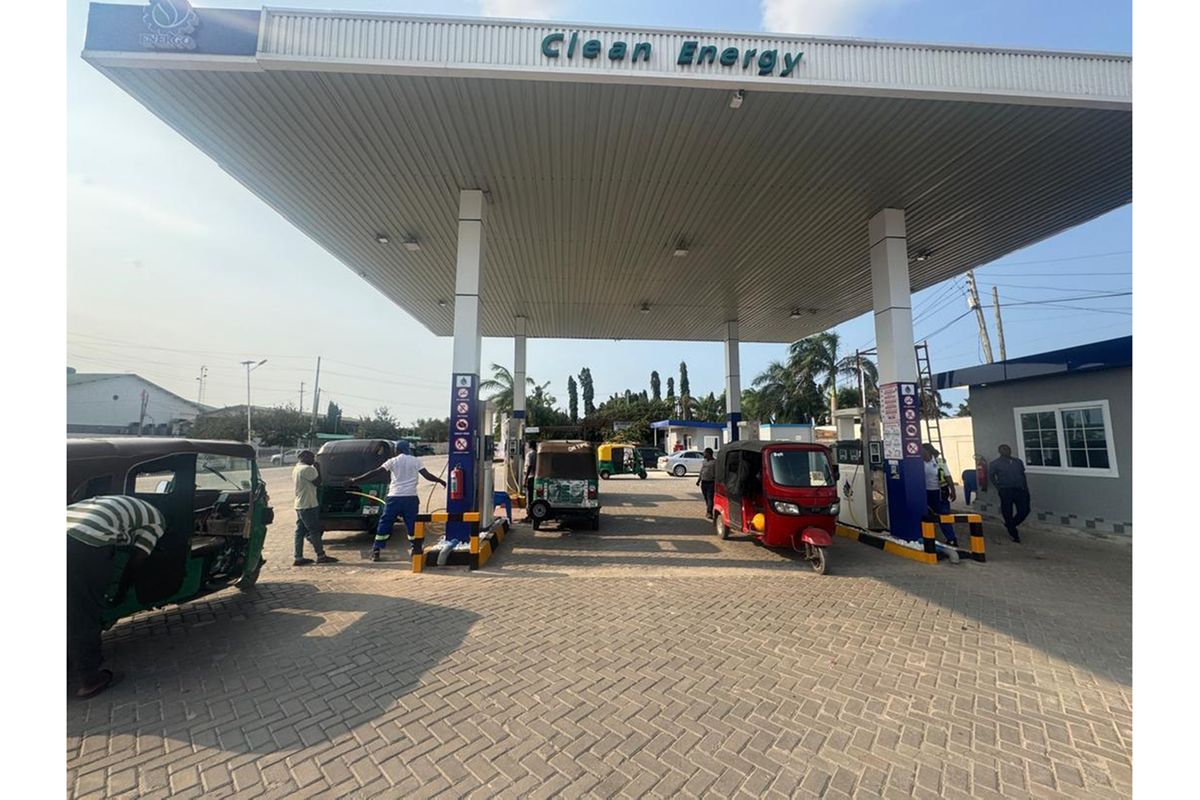
Tanzania’s drive to expand the use of compressed natural gas (CNG) in transport is beginning to move beyond fuel infrastructure and vehicle conversions into another critical part of the market: finance.
Dar es Salaam-based Energo Tanzania is emerging as one of the local companies attempting to make CNG adoption more accessible. Established in 2023, the company operates a CNG filling station at Mwenge and converts petrol-powered vehicles to run on natural gas. More significantly for the development of the market, Energo has entered financing arrangements with Equity Bank and CRDB Bank aimed at helping vehicle owners finance the cost of conversion.
The approach addresses one of the most persistent constraints on Tanzania’s CNG transition. Although the operating economics can be attractive, vehicle owners must first absorb the cost of installing a compliant CNG system. Providing credit for that investment could allow operators to fund the conversion progressively from subsequent fuel savings rather than meeting the entire cost upfront.
Conversion economics are driving demand
The attraction of CNG is primarily economic. Natural gas is substantially cheaper than petrol in Tanzania, creating potentially significant savings for vehicles covering high annual mileages.
A typical conversion has been estimated at around TSh2.6 million (approximately US$1,000). With CNG reportedly costing around half as much as petrol, the conversion investment can potentially be recovered through fuel savings within approximately 12 to 18 months, depending on vehicle utilization, fuel consumption and prevailing pump prices.
Those economics are particularly relevant to taxis, ride-hailing vehicles, minibuses and other commercial vehicles that accumulate high daily mileage. The greater the distance travelled, the faster the potential recovery of the conversion cost.
Financing therefore changes the proposition. Instead of evaluating CNG purely as an upfront capital expenditure, an operator can potentially compare the monthly financing obligation with the reduction in fuel expenditure. This could prove important in moving conversions beyond early adopters and into larger commercial fleets.
Tanzania’s converted fleet is expanding rapidly
The number of CNG vehicles operating in Tanzania has increased sharply.
By February 2026, approximately 15,000 vehicles were reported to have been converted to CNG nationally. This compares with estimates of around 5,000 vehicles in early 2025, indicating rapid expansion from a relatively small base.
The pace of conversion is nevertheless only one measure of market development. Filling capacity remains critical. A larger converted fleet requires a corresponding expansion of public and fleet-based refuelling infrastructure if CNG is to become practical beyond limited operating corridors in Dar es Salaam.
This creates a broader investment requirement encompassing conversion workshops, cylinders and conversion systems, filling stations, compressors, gas distribution infrastructure, inspection capacity and vehicle finance.
Energo’s model is therefore significant because it connects two parts of this emerging ecosystem: conversion capacity and financing.
Domestic gas strengthens the CNG proposition
Unlike countries that would need to import the underlying energy resource, Tanzania has a substantial domestic natural gas base.
The country is estimated to hold approximately 57.54 trillion cubic feet of natural gas resources. This gives transport CNG a wider economic significance beyond reducing individual motorists’ fuel bills.
Tanzania remains dependent on imported petroleum products. Greater use of domestically produced natural gas in road transport could therefore substitute part of the petrol and diesel consumed by the vehicle fleet, reducing exposure to international oil prices and the foreign currency requirements associated with petroleum imports.
The transport programme also sits within a much larger natural gas development strategy. Tanzania has spent years pursuing a proposed LNG export project involving international energy companies including Shell and Equinor. The project, estimated at approximately US$42 billion, has been awaiting the commercial and government agreements necessary for development to proceed.
Transport CNG is considerably smaller in scale, but it offers a more immediate domestic use for Tanzania’s gas resources.
Finance could become the next competitive frontier
The involvement of commercial banks could materially change the structure of Tanzania’s CNG market.
Conversion companies have traditionally had to convince customers that future fuel savings justify an immediate capital outlay. Financing allows that investment to be distributed over time and potentially aligned with the cash flow generated by lower operating costs.
For lenders, this could also create a new category of green or energy-transition asset finance. The underlying economics are particularly compelling where the borrower operates a vehicle commercially and its mileage and fuel expenditure can be demonstrated.
The model could eventually extend beyond individual motorists to taxi associations, ride-hailing drivers, bus operators, corporate fleets and other high-utilization vehicle operators.
There are still constraints. Conversion quality and certification must remain consistent as the market grows. Refuelling infrastructure needs to expand alongside the vehicle population, while lenders will need workable approaches to credit assessment, equipment security and residual risk.
But Tanzania increasingly has several of the components required for a viable CNG mobility market: domestic gas resources, a widening converted vehicle population, substantial fuel-price savings, expanding refuelling infrastructure and, increasingly, access to conversion finance.
Energo Tanzania remains a relatively young participant in that market. Its importance lies less in its current scale than in the commercial model it represents. If conversion finance can be structured so that repayments are supported by the savings generated at the pump, Tanzania’s CNG transition could become increasingly driven by commercial economics rather than government subsidy.
That would mark an important stage in the development of the market: **CNG moving from an alternative-fuel initiative into a financeable transport asset proposition.**