Chinese electric-vehicle and battery manufacturer BYD is exploring an industrial presence in the Democratic Republic of Congo that could extend from electric buses and vehicle assembly to battery manufacturing, energy storage and power-generation systems, bringing one of the world’s largest new-energy companies into the DRC’s effort to build industries around its enormous mineral endowment.
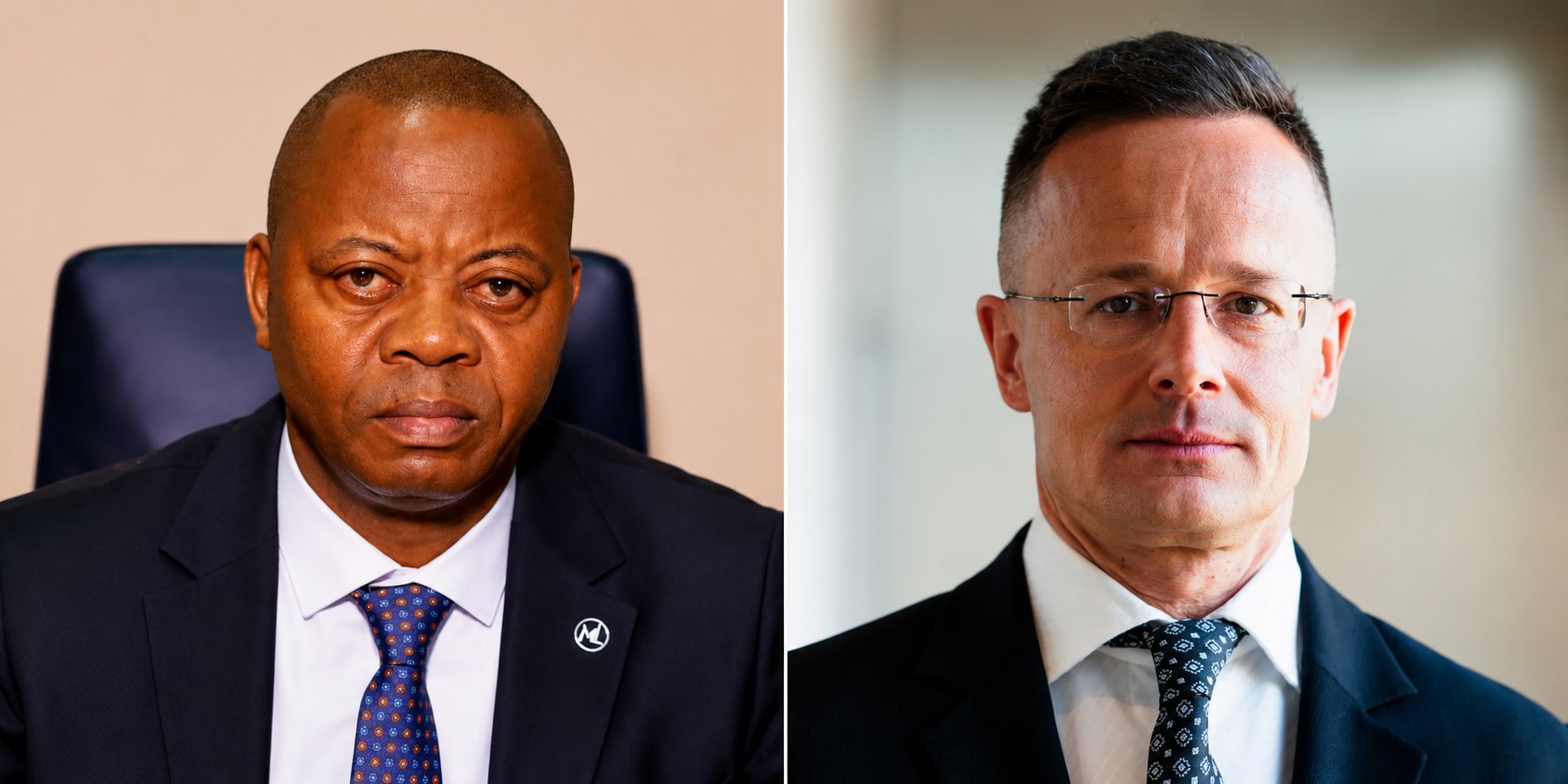
The discussions were confirmed by the DRC’s National Agency for Investment Promotion, ANAPI, following a meeting in Kinshasa on September 10, 2026. The session was chaired by ANAPI Deputy Managing Director Évariste Katshienda, while BYD was represented by Peter Szijjarto, Executive Head of External Relations and New Business Development. Areas under consideration include electric buses, local vehicle assembly, battery manufacturing and assembly, and energy-storage and electricity-generation systems.
No factory has yet been announced. BYD has not disclosed an investment amount, production capacity, location or implementation timetable, and further technical discussions are expected to determine infrastructure requirements, investment parameters and regulatory arrangements. The significance at this stage lies in the scope of the discussions, which extend well beyond vehicle distribution.
BYD reported revenue of RMB804 billion, approximately $111 billion, in 2025 and sold about 4.6 million new-energy vehicles during the year. More than one million were sold outside China, while overseas sales exceeded 780,000 units during the first half of 2026. Cumulative production reached 17 million new-energy vehicles in July 2026, as the company continued expanding manufacturing and commercial operations beyond its Chinese home market.
The DRC occupies an equally consequential position at the other end of the electrification economy. US Geological Survey data estimate that the country produced 226,000 tonnes of cobalt in 2024, representing approximately 75% of global mine production, alongside almost three million tonnes of mined copper. The DRC was the world’s second-largest mined-copper producer, accounting for about 13% of global output.
Cobalt alone does not explain BYD’s potential interest. The company’s Blade Battery uses lithium-iron-phosphate chemistry rather than the nickel-cobalt chemistries historically associated with many electric vehicles. The stronger proposition is the combination of the DRC’s copper and wider mineral resources, prospective battery-material industry, large energy requirements and undeveloped market for electric transport and stationary storage.
Kinshasa has been trying to convert those advantages into manufacturing for several years. The DRC and Zambia have pursued a transboundary Battery and Electric Vehicle Special Economic Zone intended to establish production of battery precursors and eventually batteries and electric vehicles. The two governments have worked with the UN Economic Commission for Africa and Afreximbank on the initiative, while the DRC created the Congolese Battery Council to coordinate development of the domestic value chain.
An earlier BloombergNEF study commissioned with support from UNECA, Afreximbank, the African Development Bank and other institutions illustrated why the proposition attracted attention. It estimated in 2021 that a 10,000-tonne-per-year cathode-precursor plant could be built in the DRC for about $39 million, compared with $112 million in China and $65 million in Poland. The estimate reflected proximity to raw materials, construction costs and access to hydroelectricity. Those figures are not current construction quotations, but they demonstrate the potential economics behind locating more processing near the mineral source.
The pressure to diversify downstream has become more pronounced as the DRC confronts volatility in the cobalt market. After oversupply depressed prices, the government suspended cobalt exports in February 2025 and subsequently introduced quotas. USGS says the system allows up to 96,600 tonnes of contained cobalt annually in 2026 and 2027, including 9,600 tonnes allocated to national strategic reserves. The intervention demonstrated the country’s influence over global supply while also highlighting its exposure to commodity-price cycles.
Electricity presents a different challenge. World Bank data show that only 22.5% of the Congolese population had access to electricity in 2024. A country supplying critical inputs to global electrification therefore faces severe power constraints within its own economy, making BYD’s proposed energy-storage and generation activities potentially as consequential as vehicle production.
BYD brings relevant capabilities beyond automotive manufacturing. Its operations encompass batteries, stationary storage, renewable-energy technologies, electronics and electric transport. Combining generation or storage infrastructure with buses and charging systems could be particularly relevant in Kinshasa, where expanding electric public transport would require dependable power, charging depots, maintenance facilities and supporting electrical infrastructure.
The DRC also already hosts a large Chinese mining presence. CMOC’s Tenke Fungurume and Kisanfu operations produced a combined 650,161 tonnes of copper and 114,165 tonnes of cobalt in 2024, according to USGS data. Other Chinese companies operate throughout the country’s copper and cobalt belt. BYD would represent a different stage of Chinese industrial participation if the discussions produce investment in batteries, vehicles or energy systems rather than another project concentrated principally on mineral extraction.
That possibility coincides with BYD’s wider international expansion. The company is increasingly complementing exports from China with manufacturing and assembly closer to overseas customers, while its African commercial presence continues to broaden.