Range Rover Electric enters a luxury EV market where numbers are no longer enough
The first battery-electric Range Rover arrives with 550PS, a 118.5kWh battery and up to 600km of range. Those figures make it competitive rather than dominant. Its more consequential proposition is whether one of the luxury SUV market’s defining products can make the transition to electric power without changing what customers believe a Range Rover should be.
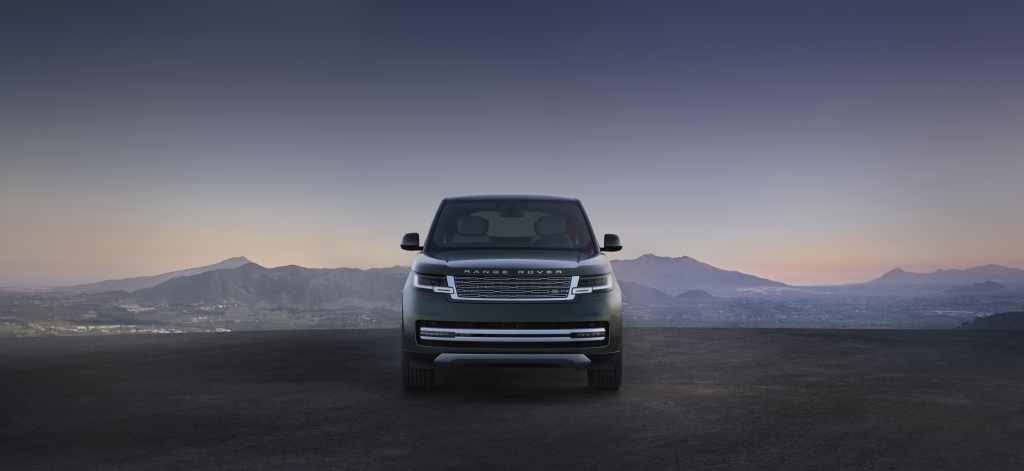 Range Rover Electric · JLR
Range Rover has spent more than five decades refining a particular interpretation of the luxury SUV: substantial without being overtly sporting, highly capable without presenting itself primarily as an off-roader, and increasingly positioned as an alternative to traditional luxury saloons as much as to other SUVs.
Its first fully electric model therefore arrives with an unusual challenge. Range Rover does not need to demonstrate that an electric SUV can be fast. That argument has already been settled by an increasingly crowded field of high-performance battery vehicles. It needs to demonstrate that removing the combustion engine does not remove the characteristics on which the Range Rover franchise has been built.
The Range Rover Electric takes a deliberately conservative approach to that transition. Rather than creating a visibly separate electric flagship, JLR has integrated battery propulsion into the established Range Rover architecture. The familiar proportions, cabin philosophy and overall visual identity remain largely intact, with the engineering change taking place beneath a shape that existing customers already know.
That restraint could prove important. At a time when several manufacturers have used electrification to reinvent their design language, Range Rover is making a different argument: customers should not have to accept an unfamiliar vehicle simply because they choose a different propulsion system.
A large battery, but not a specification race
The engineering underneath the familiar exterior is substantial. Two permanent-magnet electric motors provide all-wheel drive and combined output of up to 550PS and 850Nm, placing the vehicle comfortably within modern performance-SUV territory without making acceleration its central selling point.

Energy comes from a 118.5kWh usable lithium-ion battery. An 800-volt electrical architecture supports high-power DC charging, with JLR claiming a 10–80% charge in approximately 22 minutes under suitable conditions. Maximum range is quoted at around 600km under WLTP testing, while JLR’s own real-world estimate is closer to 535km.
Those figures are strong, but they do not put the Range Rover at the top of every category. That is increasingly the point. The luxury EV market has matured to the stage where no single specification defines leadership.
Capability rather than extremes
The most revealing comparison is with the Mercedes-Benz G 580 with EQ Technology. Both vehicles are electric versions of luxury SUVs whose reputations were established long before battery propulsion became commercially important. Both therefore carry an unusually heavy burden of continuity.
Mercedes-Benz has taken the more theatrical route, using four individually controlled electric motors and highly visible off-road functionality. Range Rover is more restrained. JLR has concentrated on preserving the breadth of capability already associated with the vehicle, including terrain management and a 900mm wading depth.
That wading figure is significant not because most owners will regularly drive through almost a metre of water, but because it answers a more important question: what has electrification forced Range Rover to give up? JLR’s answer is that the core capability should remain intact.
Where the Range Rover sits against its rivals
The comparison is increasingly less about identifying a single winner and more about understanding the different priorities manufacturers are building into electric luxury SUVs.
| Model | Core strength | Market character |
|---|---|---|
| Range Rover Electric | Refinement, range and all-terrain breadth | Traditional Range Rover luxury translated into EV form |
| Mercedes-Benz G 580 EQ | Four-motor off-road control | Technical and highly specialised |
| Porsche Cayenne Electric | Performance and charging capability | Dynamic, engineering-led luxury |
| BMW iX | Technology and road comfort | Purpose-designed electric luxury SUV |
| Cadillac Escalade IQ | Battery capacity and long range | Large-scale North American luxury |
| Lotus Eletre | Performance and response | Sporting electric luxury |
The Porsche challenge
For buyers primarily interested in engineering performance, the Porsche Cayenne Electric presents one of the clearest challenges. Porsche has approached electrification as another opportunity to extend the performance envelope, placing acceleration, charging speed and dynamic ability near the centre of the vehicle’s identity.

Range Rover takes a different position. Its advantage is not that it can outrun the Porsche, but that acceleration is only one part of a much broader ownership proposition. Comfort, isolation, off-road capability and long-distance usability carry greater weight in the way the vehicle is positioned.
That distinction becomes more relevant as very high electric performance becomes easier to achieve. A sub-five-second acceleration time is no longer unusual among premium EVs. Refinement, chassis tuning, software integration and usability are becoming more meaningful ways to separate products.
BMW shows the alternative EV approach
The BMW iX demonstrates a different strategy. BMW created a visibly distinct electric luxury SUV rather than an electric version of an existing flagship. Its design and interior therefore signal electrification far more overtly.

Range Rover’s advantage is almost the reverse. Existing customers can move into an electric drivetrain without abandoning the shape, driving position and visual identity they already associate with the vehicle. Whether that continuity proves more durable than a more overtly futuristic EV identity will become clearer as battery vehicles become increasingly normal.
Cadillac uses scale
In North America, the Cadillac Escalade IQ illustrates what very large battery capacity can deliver. Its battery is substantially larger than the Range Rover’s and supports an unusually long claimed driving range.

The trade-off is that the Escalade IQ is also a much larger vehicle, designed around North American expectations of size, space and presence. The comparison shows that range alone does not tell the whole story. Battery capacity brings advantages, but also adds weight, cost and material demand.
Lotus broadens the competitive field
Lotus represents another change in the luxury EV market. Electrification allows newer or repositioned brands to deliver very high performance without relying on decades of combustion-engine development.

That has widened Range Rover’s competitive environment considerably. A decade ago, its most obvious rivals came from a relatively small group of long-established European luxury manufacturers. Electric propulsion has made it easier for a wider set of brands to compete on power, technology and cabin sophistication.
The African market question
The Range Rover Electric is particularly interesting in African luxury markets because the brand already has strong recognition while public charging infrastructure remains highly uneven between countries.
For owners in major metropolitan markets with reliable home or destination charging, the transition to an electric Range Rover is increasingly manageable. The more difficult question emerges when the vehicle is used beyond the main urban corridors, where high-power charging may still be limited.
In that environment, real-world range, home charging, destination charging and dealership support become more important than the maximum DC charging figure. The vehicle may be capable of accepting very high charging power, but that matters only when the infrastructure can provide it.
For JLR distributors in African markets, that means the sales proposition extends beyond the vehicle itself. Charging installation, customer education, technician training, battery diagnostics and route planning become part of the ownership experience.
More than a new powertrain
The significance of the Range Rover Electric also extends beyond the vehicle. Production remains at Solihull, but JLR has adapted its manufacturing operations for a period in which combustion, hybrid and battery-electric models coexist. Employees have been retrained for electrification, while battery and electric-drive capability has been incorporated into the company’s broader manufacturing system.
That flexibility could be strategically important. JLR does not need to force Range Rover customers into a single powertrain at the same pace in every market. Electric, plug-in hybrid and combustion derivatives can coexist while demand develops differently across regions.
A Range Rover first, an EV second
On headline specifications alone, the Range Rover Electric does not dominate the luxury electric SUV market. Cadillac can offer more claimed range. Porsche can provide considerably greater performance in its upper derivatives. Mercedes-Benz has built an unusually sophisticated electric off-road drivetrain, while BMW has longer experience with a purpose-designed electric luxury SUV.
Range Rover’s argument is broader. It combines approximately 600km of claimed WLTP range, high-power charging, strong performance, serious all-terrain ability and the cabin experience customers already expect from the marque.
Most importantly, it does so without demanding that owners accept an entirely new interpretation of what a Range Rover should be.
For buyers who expect an electric flagship to look radically different, that familiarity may appear conservative. For existing customers who want electric propulsion without surrendering the design, comfort, status and capability that brought them to the brand, it is likely to be exactly the point.
The first electric Range Rover is therefore less an attempt to reinvent the luxury SUV than an effort to prove that electrification no longer requires reinvention.