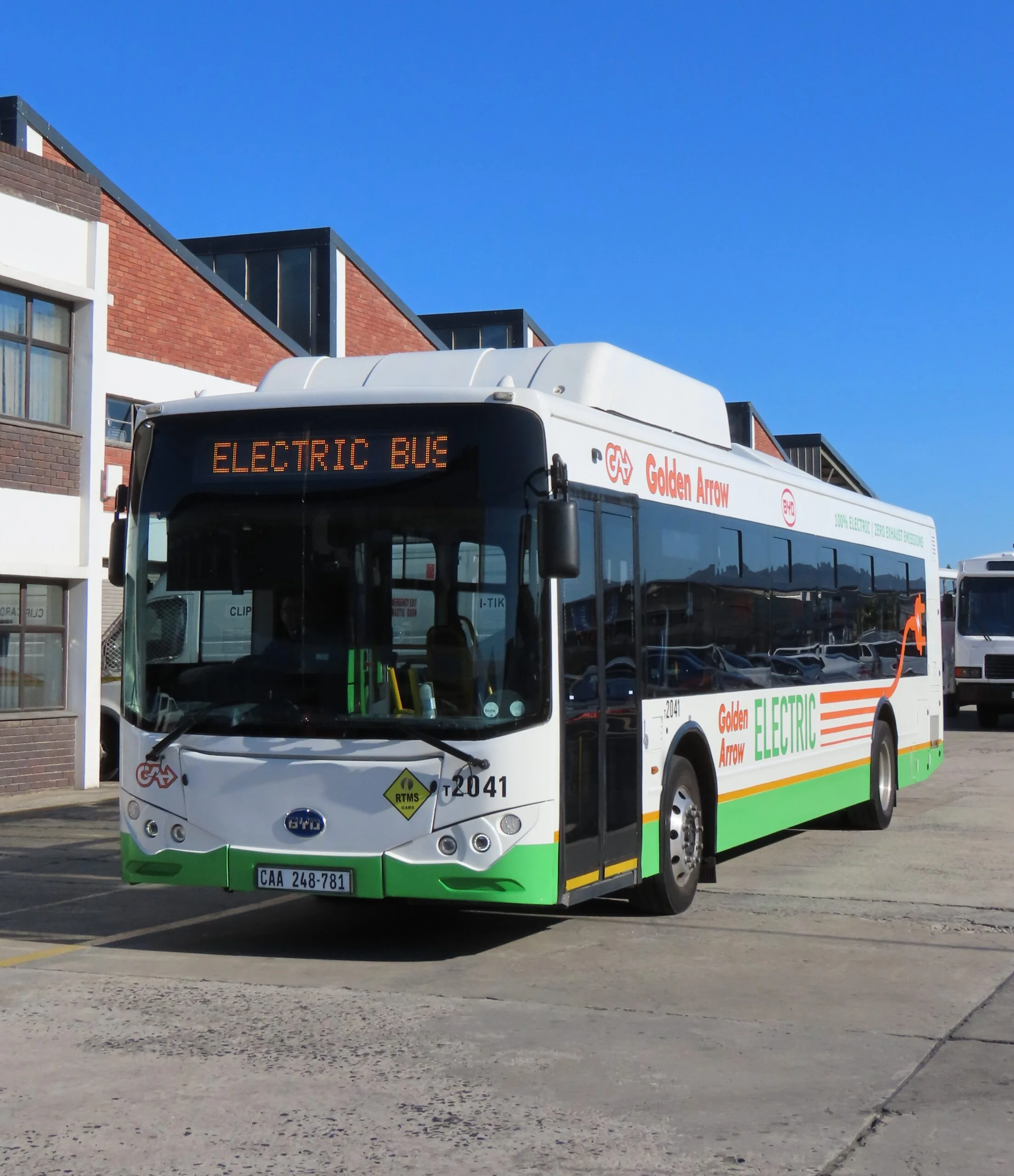
Golden Arrow Bus Services(GABS) is accelerating the modernization of Cape Town’s commuter network with a commitment to acquire up to 60 new buses every year. Announced on November 13, 2026, the long-term renewal strategy centers on phasing out aging internal combustion vehicles in favor of battery-electric buses and upgraded transit technology.
For an operator whose roots in the Mother City stretch back to 1861, the move signals a decisive structural shift. Serving approximately 230,000 passengers daily across 1,300 routes, Golden Arrow has historically replaced 60 to 65 buses annually to maintain a reliable fleet age. Moving forward, however, those replacements will lean heavily toward zero-emission mobility.
According to public relations manager Bronwen Dyke-Beyer, the annual procurement target forms the backbone of a decade-long vision designed to keep pace with Cape Town’s shifting urban mobility demands. The strategy builds directly on insights gathered from an extensive pilot program involving 120 BYD electric buses, which have logged nearly four million kilometers in real-world service across the city.
The operational data from those trials proved compelling enough to pivot the company’s purchasing strategy away from diesel. Company engineer Gideon Neethling confirmed that Golden Arrow is already out on tender for an additional 40 to 60 electric buses, with deliveries slated to begin after April 2027.
Beyond reducing tailpipe emissions, the transition addresses one of the steepest challenges in South African public transit: volatile operating costs. Historically, keeping its fleet running required roughly 25 million liters of diesel each year, leaving both the operator and its passengers vulnerable to global fuel price swings.
Data from Golden Arrow’s electric bus deployment revealed substantial savings across the board compared to conventional diesel vehicles:
-
- Energy costs dropped by approximately 70%.
- Spare parts expenses were cut in half.
- Maintenance labor decreased by roughly 30%.
By curbing fuel exposure and streamlining workshop maintenance, the company aims to protect fare stability for working-class commuters who rely on the service daily.
To keep its growing electric fleet on the road without straining municipal power grids, Golden Arrow has paired its vehicle procurement with major infrastructure upgrades. The operator has invested in high-capacity charging hubs alongside grid-tied solar installations at its Cape Town depots, ensuring the new generation of buses can operate reliably for years to come.