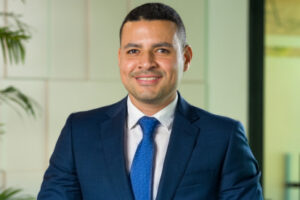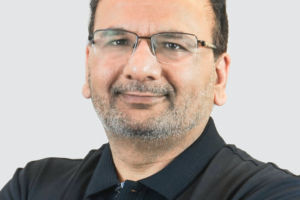
Ankush Arora and the Reinvention of Al Mansour Automotive
As software, energy systems and new forms of access reshape the automotive economy, Ankush Arora is repositioning one of Egypt’s best-known distribution groups from a vehicle seller into a broader mobility platform.

- Role
- Chief Executive Officer, Al Mansour Automotive
- Base
- Egypt
- Experience
- More than three decades in the automotive industry across multiple markets and geographies
- Focus
- Distribution, mobility services, technology integration and organisational transformation
Arora’s strategic challenge is not to dismantle Al Mansour Automotive’s distribution strength, but to build on top of it — adding new layers of mobility, digital capability, financing and customer access as the definition of the car itself begins to change.
From Automotive Powerhouse to Mobility Architect
The strategic question for Al Mansour is no longer simply how many vehicles it can distribute, but how many ways it can remain relevant to customers whose relationship with mobility is changing.
Ankush Arora does not describe himself as a disruptor, yet the transformation underway at Al Mansour Automotive places him directly inside one of the most consequential shifts in the modern automotive economy.
Arora leads a company that has spent decades building scale, brand relationships and distribution strength in Egypt. That legacy remains valuable. What is changing is the context in which the business has to operate. Vehicles are increasingly defined not only by mechanical engineering, but by software, energy systems, digital interfaces and connected services.
For a traditional distributor, that shift changes the role of the intermediary. The business is no longer simply moving vehicles from manufacturer to customer. It must increasingly connect multiple systems: financing, software, service, data, charging, lifecycle support and new forms of vehicle access.
That is the direction Arora is taking Al Mansour Automotive. The company is expanding beyond its historical strength in distribution and retail toward a mobility-solutions model designed to serve customers through multiple ownership and usage structures.
The ambition is not to replace the traditional car sale. It is to layer additional products around it: leasing, subscription-type access, flexible mobility and service propositions that respond to different income levels, usage patterns and customer expectations.
That transition is particularly important in urban markets across the Middle East and Africa, where the economics of car ownership are being influenced by congestion, affordability, financing conditions, digital adoption and the rapid growth of app-based transport alternatives.
When Access Begins to Matter More Than Ownership
Younger consumers are forcing automotive companies to rethink a business model built for generations around the assumption that vehicle ownership was the ultimate objective.
One of the clearest changes Arora sees is generational. Younger consumers, especially Gen Z, are not necessarily approaching mobility with the same assumptions as earlier buyers. For many, flexibility, convenience and access can matter more than permanent ownership.
That alters the demand curve for automotive companies. Subscription models, shared mobility, leasing flexibility and on-demand transport all sit alongside conventional ownership rather than outside it. A distributor that only knows how to sell a vehicle once may therefore find itself increasingly disconnected from how customers actually want to consume mobility.
Arora’s response is to widen the architecture of the business. Instead of defining the customer relationship by the point of sale, Al Mansour can engage through multiple stages and multiple products over time.
This does not mean private ownership is disappearing. In Egypt and many other markets, the car remains economically and socially important. But the available choices around it are expanding, and digital platforms are making those choices easier to compare and access.
For Al Mansour Automotive, this creates an opportunity to use its existing customer base, infrastructure, service capability and manufacturer relationships as a foundation for mobility products that would be difficult for a pure technology start-up to replicate quickly.
The Vehicle Is Becoming a Software, Energy and Data Platform
Renewable energy, artificial intelligence and telecommunications are converging around the vehicle, forcing distributors to develop capabilities far beyond traditional sales and aftersales.
Arora views the automotive industry’s transformation through three converging systems: renewable energy, artificial intelligence and telecommunications. Together, they are changing what a vehicle is and how value is created around it.
Electric vehicles bring the energy ecosystem into the automotive business. Connected vehicles bring telecommunications and data into the customer relationship. Artificial intelligence increasingly influences design, diagnostics, user experience, fleet management and the way digital platforms interact with drivers.
The result is a more fragmented value chain. Battery developers, software companies, charging operators, platform businesses and mobility financiers now sit alongside manufacturers, distributors and dealers. Traditional boundaries are becoming harder to maintain.
For Al Mansour Automotive, this creates both risk and opportunity. The risk is that value migrates away from the distributor toward technology platforms and service providers. The opportunity is to become the local integrator capable of bringing those pieces together for customers and OEM partners.
That means future competitiveness will depend not only on physical assets such as showrooms and workshops, but on digital capability, financing structures, service design and the ability to work with new technology partners.
Arora sees this transition not as a short cycle but as a long structural reset. Companies that treat it as a temporary technology trend risk becoming progressively less relevant as the industry reorganises around new sources of value.
A Structured Routine Behind a Business in Transition
While the industry around him becomes more complex, Arora’s personal operating rhythm remains deliberately structured, early and highly disciplined.
Arora’s day begins at 4:00 a.m. By 4:30, he is already active and often speaking with partners in Asia, taking advantage of the time difference with markets such as China and Japan.
He reserves these early hours for strategic work, before the noise of the operating day begins. By sunrise, he shifts into physical routine, often combining a walk with a nine-hole round of golf before returning home for breakfast and reaching the office at about 8:00 a.m.
The structure is more than personal habit. It reflects the balance he tries to maintain between long-range thinking and operational accessibility. In the office, he combines formal meetings with an open-door style that encourages spontaneous conversations with staff.
His leadership philosophy is also shaped by long-standing principles rather than fashionable management language. Integrity, respect and discipline are values he credits to his father and regards as non-negotiable in both business and personal life.
That foundation matters because the transformation he is leading is cultural as much as technological. A company built around traditional distribution has to learn new capabilities without losing the operational discipline that made the legacy business successful in the first place.
As Al Mansour approaches its fifth decade, Arora’s challenge is therefore one of controlled reinvention: preserve what still creates value, discard assumptions that no longer do, and build enough organisational adaptability to survive a mobility economy that is changing its definition of both the vehicle and the customer.
Al Mansour Automotive
An established Egyptian automotive group repositioning itself around a wider definition of mobility, service and customer access.
Al Mansour Automotive has built its reputation over decades as one of Egypt’s most influential automotive distribution businesses, supported by major brand relationships, retail scale and a substantial service footprint.
Under Ankush Arora, that legacy is being used as a platform rather than treated as a finished model. The company’s future increasingly depends on how successfully it can combine traditional distribution with financing, digital capability, flexible access models and broader mobility services.
The transformation does not require Al Mansour to stop being a distributor. It requires the business to become more than one: a company capable of connecting OEM products with software, service, financing, energy systems and evolving customer behaviour across Egypt and the wider region.
Vehicle Distribution
The established core of the business, built around manufacturer relationships, market access and local execution.
Retail & Aftersales
Customer-facing sales, service and lifecycle support that anchor long-term relationships beyond the initial vehicle purchase.
Mobility Services
New models of access designed around leasing, flexibility, subscription-type propositions and changing patterns of vehicle use.
Digital Capability
Technology, connectivity and data are becoming increasingly important across the customer and vehicle lifecycle.
Energy Transition
Electrification brings batteries, charging and wider energy infrastructure into the distributor’s strategic landscape.
System Integration
The emerging role of the distributor as the local coordinator of OEMs, technology partners, financiers and mobility services.