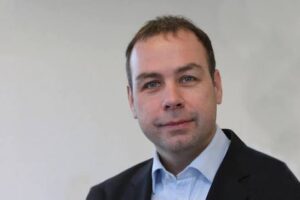
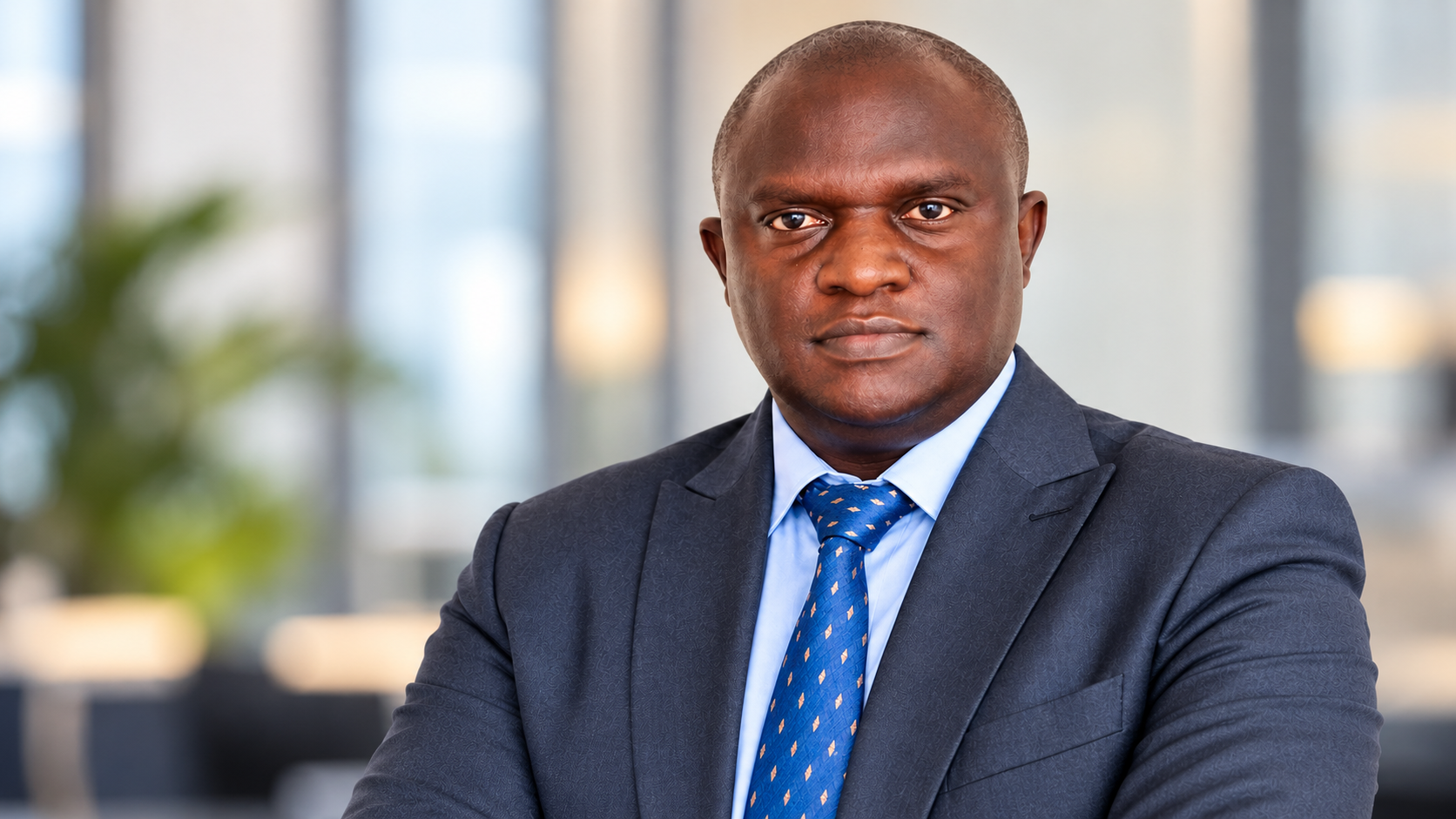
Daniel Moki’s appointment as Acting Managing Director of Associated Vehicle Assemblers brings him back to a business he already knows, but with considerably broader responsibilities than when he previously worked within its supply-chain operation.
His professional journey through Simba Corporation has taken him from operational and supply-chain responsibilities at Associated Vehicle Assemblers, into group-level leadership overseeing supply chain and logistics across the wider organization, and now back to AVA to lead the vehicle assembly company itself.
Moki has accumulated more than two decades of experience across operations and supply chain, working in automotive industry, amongst others, in East Africa. His areas of work have included warehousing and distribution, inventory management and optimization, fleet operations, automotive parts and workshops, sales and operations planning and business-process management. AVA’s corporate biography describes him as having extensive experience in fast-paced operating environments across the region.
His career eventually brought him into Associated Vehicle Assemblers, the Mombasa-based contract assembly company owned by Simba Corporation.
At AVA, Moki worked in supply-chain leadership and became part of the company’s Management Committee. The position gave him exposure to an unusually complicated automotive operation. Unlike an assembly plant dedicated to one manufacturer, AVA builds vehicles for numerous original-equipment manufacturers, requiring it to manage different completely knocked-down kits, production schedules, components and manufacturer quality systems through the same industrial operation.
Moki subsequently moved into the wider Simba Corporation structure.
His responsibilities expanded to group-level supply-chain leadership, where he became Group Head of Supply Chain. AVA’s announcement of his eventual appointment as Acting Managing Director specifically notes that he spent more than a decade leading Simba Corporation’s Supply Chain and Logistics function.
That move was significant because Simba Corporation’s supply-chain requirements extend beyond the operation of AVA.
The group has interests across automotive distribution and assembly, hospitality and other businesses, while its motor operations have represented manufacturers including Mitsubishi, FUSO, Mahindra, Proton and Ashok Leyland. Supply-chain leadership within such a group encompasses the movement and management of vehicles, components and spare parts as well as inventory, warehousing, distribution and the operating processes connecting those activities.
Moki’s professional record shows that his responsibilities also expanded beyond the supply-chain function itself. He served on Simba Corporation’s Talent Review Committee and Ethics and Integrity Committee, as well as the Simba Motor Division’s Strategy Implementation Committee. He remained connected to AVA as a member of its Management Committee.
There is also evidence of measurable operational improvement during his supply-chain leadership.
In 2023, Moki was invited to speak at the Supply Chain and Logistics East Africa Summit in Nairobi about Simba Corporation’s experience implementing lean processes in its supply chain. The conference material credited the programme with doubling productivity, with Moki presenting the strategies and operating changes behind the improvement.
Lean management is fundamentally concerned with removing waste from processes—unnecessary movement, waiting, excess inventory, duplication and other activities that consume resources without creating corresponding value. In an automotive supply chain, where substantial amounts of working capital can be tied up in vehicles, components and spare parts, improvements in productivity can affect much more than warehouse efficiency.
Moki’s work now, increasingly combines these operational disciplines with organizational leadership. His return to AVA in 2026 therefore represents another step in a career that has repeatedly widened in scope.
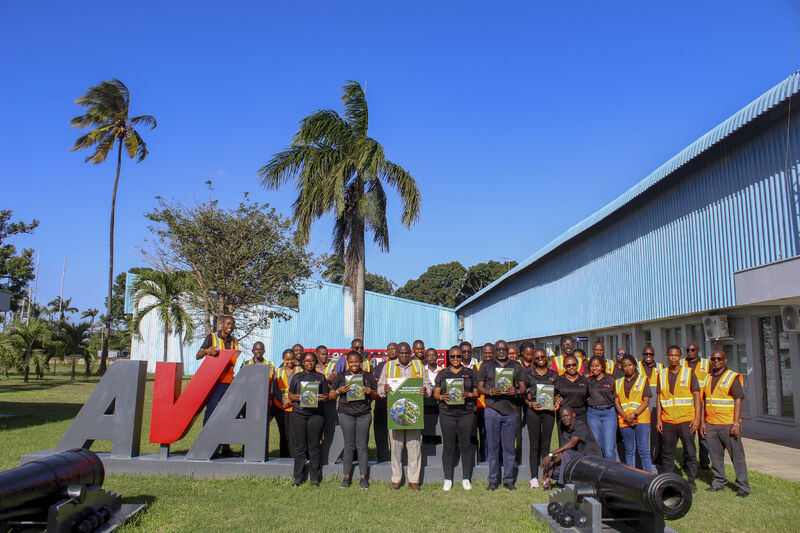
AVA was established in 1975 and began producing trucks and pickups in 1977. Simba Corporation has owned the company outright since October 2017. The plant at Miritini operates principally as a multi-brand contract assembler, building vehicles from completely knocked-down kits supplied by manufacturers.
AVA says it now handles 82 models from 23 original-equipment manufacturers based in nine countries.
Its programmes include Toyota and Hino vehicles for CFAO Mobility Kenya; Mitsubishi, FUSO, Mahindra, Proton and Ashok Leyland products associated with Simba Corporation; and vehicles from manufacturers including Scania, Tata, Daewoo, Beiben, Dongfeng and Shacman. The operation also assembles three-wheelers and has added electric-vehicle programmes involving BasiGo and Rideence.
The plant has installed annual capacity of 30,000 vehicles. AVA says it produced 6,491 vehicles in 2025, equivalent to 22 per cent utilization, while accounting for approximately 43 per cent of all vehicles assembled in Kenya. It employs 415 permanent workers, with its workforce increasing beyond 500 when production requirements demand additional personnel.
One his challenges will be to increase capacity utilization. A plant capable of assembling 30,000 vehicles produced 6,491 in 2025. AVA’s challenge is therefore not simply adding physical manufacturing capacity but attracting sufficient vehicle programmes and production volumes to use more of the industrial infrastructure it already possesses.
Another is electric mobility.
In May 2026, AVA announced an estimated KSh1 billion investment in a dedicated electric-vehicle contract assembly line. The company said the facility would use current-generation technology and employ 60 trained technicians. Existing programmes include Henrey electric hatchbacks and 16-seater Joylong electric vans for Rideence Africa and Ma3e electric vans for BasiGo.
Moki has indicated that AVA was deliberately developing EV manufacturing capability before demand fully matured rather than waiting for individual manufacturers to finance infrastructure for each production programme. He also identified a longer-term ambition of moving beyond vehicle assembly towards greater manufacturing in Kenya using local skills.
That approach is consistent with AVA’s contract-manufacturing model.
Instead of requiring every manufacturer entering Kenya to establish a dedicated plant, AVA provides common assembly infrastructure that can be used across different vehicle programmes. For manufacturers whose initial Kenyan volumes may not justify their own factories, the model provides an alternative route into local production.
For AVA, however, every additional manufacturer also creates more operating complexity.
More vehicle programmes mean more components, more inventory, more production planning, more supplier relationships and more quality systems. AVA says it has worked with more than 40 different automotive manufacturer quality systems and has maintained IATF 16949 certification since 2018.
That operating environment makes Moki’s route to the managing director’s position particularly relevant.
He has already previously worked within AVA’s supply-chain operation. He subsequently moved outward into responsibility for supply chain and logistics at Simba Corporation group level, where his record includes a lean-process programme credited with doubling supply-chain productivity. His responsibilities expanded further through participation in group talent, ethics and strategy structures.
Now he has returned to the assembly business with responsibility for the entire operation.
There is an important difference between the AVA Moki previously knew and the one he has returned to lead.
The company remains a contract vehicle assembler, but the range of work is widening. It now describes its activities as extending beyond conventional assembly into electric vehicles, conversions, bodybuilding, marine engineering, local-parts manufacturing and supply-chain and logistics solutions.
Electric mobility introduces another layer.
Moki’s previous work centred largely on making supply chains more productive. His current role increasingly places him inside the debate over how much of the automotive supply chain Kenya can build locally.
Bringing completely knocked-down vehicle kits into the country creates local assembly activity, but greater industrial value requires progressively developing domestic suppliers capable of manufacturing more of the components going into those vehicles.
Moki has publicly connected AVA’s EV plans with that broader manufacturing ambition, arguing that Kenya should eventually move from assembly towards manufacturing and develop the local skills required to support it.
AVA has set out ambitions around higher assembly volumes, new manufacturers, electric vehicles and deeper local manufacturing. For an executive whose career has largely been concerned with making complex operating systems work, the circle has closed at a considerably higher level.