Executive profile
Sudhir Mehta and EKA Mobility’s Electric Road into Africa
The Indian industrialist has moved from supplying the vehicle industry to building complete electric buses, trucks and commercial vehicles. Zanzibar is now the first visible African test of whether his partnership-led manufacturing model can travel.
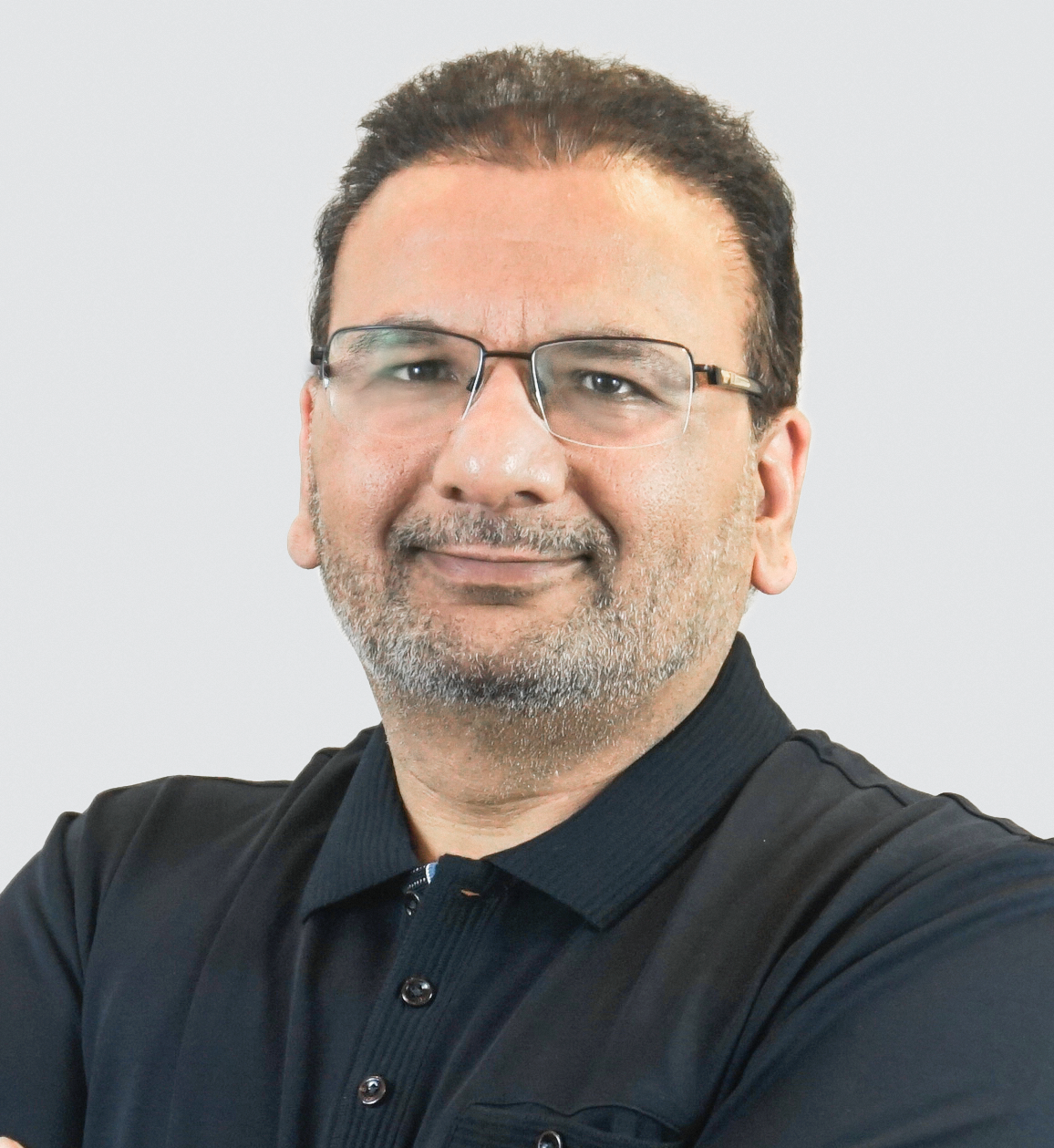
Sudhir Mehta did not enter electric mobility from the usual start-up route. By the time EKA Mobility emerged, he had already spent decades inside the less glamorous but essential machinery of vehicle manufacturing: seating systems, interiors, specialist conversions, engineering, supplier coordination and factory production. EKA is the most ambitious expression of that experience—a move from making systems for other manufacturers to controlling the architecture, software and commercial proposition of complete electric vehicles.
That history gives EKA a different foundation from many young electric-vehicle companies. It was not built around a single battery pack, drivetrain or digital application. It grew out of Pinnacle Industries, the Pune-based group Mehta developed into a supplier of commercial-vehicle seating and interiors, speciality vehicles, railway seating, electric-vehicle components and engineering services. The transition into complete vehicles was therefore not a leap from software into steel; it was an escalation from components and integration into full-vehicle responsibility.
Mehta is now attempting something still relatively rare among emerging-market electric manufacturers: to build a broad family of electric commercial vehicles, retain control of important vehicle and software systems, bring in international capital and technology, and establish modular production close to customers. Africa has become a crucial proving ground for that strategy.
An industrialist before the electric-vehicle founder
Mehta studied economics and computer science at DePauw University in the United States before completing an MBA at the University of Chicago. The combination is reflected in the way he discusses mobility. Engineering decisions are rarely separated from utilisation, financing tenure, residual value or operating cost. His public arguments for electric transport tend to begin with the economics of the fleet rather than the novelty of the vehicle.
He joined the family enterprise during the 1990s and built Pinnacle Industries across a series of automotive and industrial activities. The company became particularly associated with commercial-vehicle seating and interiors, but its capabilities expanded into customised and special-purpose vehicles. This gave Mehta experience in designing around a customer’s duty cycle, coordinating suppliers and producing vehicles whose success depends on everyday reliability rather than showroom appeal.
His reach extended beyond his own companies. Mehta served as president of the Mahratta Chamber of Commerce, Industries and Agriculture, one of Pune’s principal industry institutions. That role reinforced a characteristic visible throughout the EKA story: he operates as a coalition-builder, comfortable bringing together manufacturers, technology providers, financiers, public authorities and local partners.
For Mehta, the electric commercial vehicle is not a self-contained product. It is the centre of a system involving finance, charging, software, operations and service.
Why buses came first
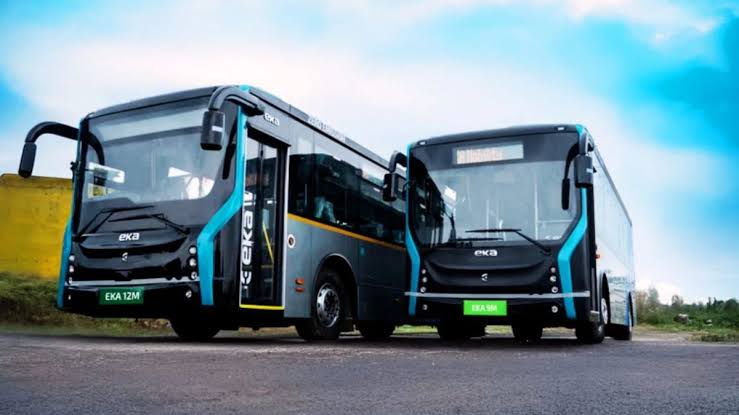
EKA’s early public identity was formed around the electric bus. The nine-metre E9, launched in 2022, gave the young brand a tangible product and placed it in a segment where electrification can produce a large operational effect. A bus accumulates substantial daily mileage, carries many passengers and often returns to a fixed depot, making its energy use and charging requirements more predictable than those of many private vehicles.
Mehta initially identified private staff transport, schools and airports as markets that could move before large government programmes. These operations offered visible environmental gains and controlled routes without forcing EKA to wait entirely on public tenders. He was explicit that the company did not want to place all its prospects in the government market, even while preparing to compete for city-bus contracts.
The reasoning exposed one of the hardest commercial questions in electric buses. Battery cost raises the initial purchase price, while much of the economic benefit arrives later through lower energy and maintenance expenditure. Conventional loan terms do not necessarily match that curve. Mehta argued for longer-tenor, lower-cost green finance and for a division of responsibility in which the manufacturer builds and supports the bus, a financier funds it and a specialist operator runs it.
This is more than a concern for India. Across Africa, high interest rates, foreign-exchange exposure and the upfront cost of depot charging can overwhelm the operating savings promised by an electric fleet. A manufacturer entering the continent therefore needs a bankable delivery model as much as it needs a capable vehicle. EKA’s interest in pay-per-kilometre and transport-as-a-service structures places finance near the centre of its African proposition.
Turning EKA into a platform
EKA has steadily widened its range beyond city buses. Its current portfolio extends from three-wheel cargo vehicles and small commercial vehicles to low-floor buses, a coach and heavy electric trucks, including a 55-tonne tractor. The company says it now offers 14 electric commercial-vehicle products. The breadth is deliberate: shared platforms, battery configurations, controls and software can be adapted across passenger and freight applications.
The technology proposition is presented in three layers. EKA ECO covers the modular vehicle platform. EKA Intellify refers to software and vehicle intelligence. EKA Connect provides the data and fleet-management layer. Mehta has increasingly emphasised the importance of owning vehicle-control software, which governs energy use, thermal management, drivetrain response, diagnostics and the interaction between a vehicle and its charging environment.
Control of software can reduce dependence on a single supplier and allow a vehicle to be calibrated for different routes, payloads and climates. It also increases EKA’s responsibility. A wider product range creates more combinations of hardware and software to validate, while every new market adds different operating conditions, regulations and service requirements. The advantage of breadth can become a burden if aftersales capability does not grow at the same pace.
The Mitsui and VDL alliance
The most important external validation of Mehta’s strategy arrived in December 2023. EKA, Japan’s Mitsui & Co. and the Netherlands’ VDL Groep announced a long-term partnership involving more than US$100 million in investment over several phases, together with equity participation and technology cooperation.
The partners brought distinct capabilities. EKA contributed Indian engineering, procurement and manufacturing. VDL brought experience from the European electric-bus industry. Mitsui added capital, international networks and the commercial reach of a global trading and investment group. The alliance was designed to position India as a manufacturing and sourcing base for electric vehicles rather than restrict EKA to its domestic market.
For Mehta, the transaction strengthened the balance sheet and the credibility of a young vehicle brand. It also provided access to technology and industrial experience that would take years to develop independently. Mitsui subsequently supplied a further investment tranche reported at Rs2 billion in 2024.
The alliance does not remove the risks of expansion. Electric buses consume working capital, large contracts are vulnerable to charging and depot delays, and every vehicle delivered creates a long aftersales obligation. EKA reported fivefold volume growth in its 2025–26 financial year, a bus order book of roughly 6,000 units for delivery over two years and a broader order book above 10,000 electric commercial vehicles. Those figures show momentum, but an order book is not the same as vehicles operating reliably in customer fleets.
Africa moves from export target to operating market
Zanzibar provides the first reference
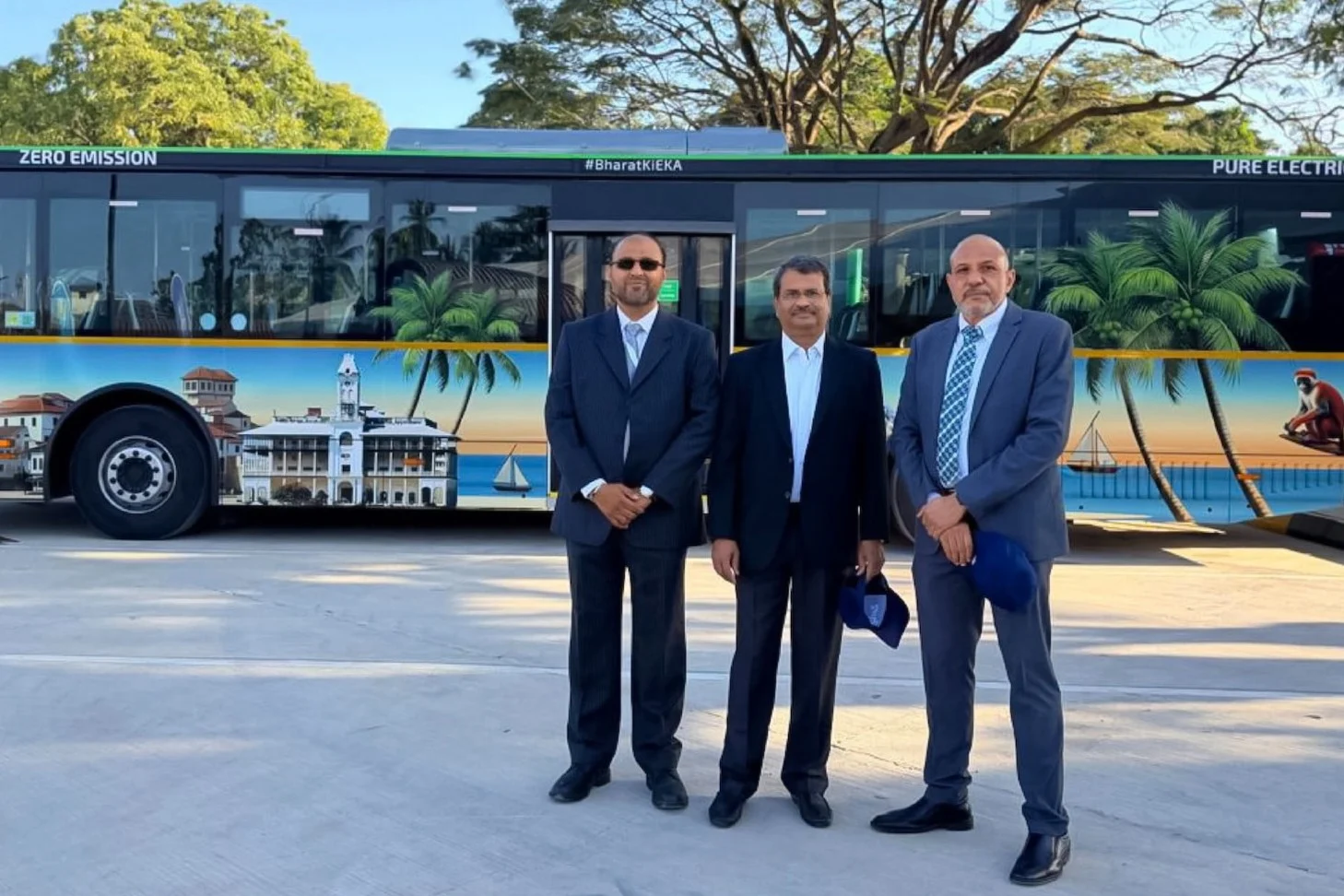
EKA’s African story became operational in July 2026, when 15 twelve-metre electric buses were flagged off in Zanzibar. They represented the first tranche of a reported 35-bus order, with commercial operation scheduled to begin on 1 August. The deployment gave EKA its first confirmed African public-transport fleet and offered Zanzibar a visible opening move towards bus electrification.
The fleet is modest beside the scale of EKA’s Indian ambitions, but strategically valuable. It gives the company an African government reference and a live test of its buses in heat, humidity and salt-laden coastal air. It also places EKA’s service system under scrutiny. Charging uptime, battery performance, driver training, spare-parts availability and the time required to diagnose and repair faults will matter more than the launch ceremony.
Zanzibar’s authorities have discussed a much larger eventual electric fleet. For now, the defensible numbers are the 15 delivered buses and the reported order for 35. Any expansion beyond that should be treated as an ambition until further vehicles are ordered, shipped and placed into service.
Ethiopia is the localisation test
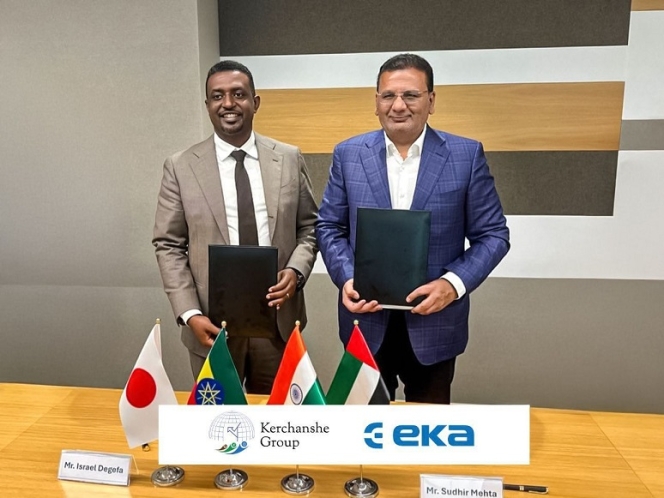
EKA’s agreement with Kerchanshe Trading in Ethiopia is broader in industrial scope but remains at an earlier stage of execution. The parties have announced plans to distribute, assemble and service electric buses and trucks, including the establishment of a completely knocked down assembly operation. Kerchanshe provides local market knowledge and an established Ethiopian business platform; EKA brings vehicle designs, kits, manufacturing systems and technical support.
The logic is compelling. Ethiopia has a renewable-heavy electricity system, a strong policy interest in reducing dependence on imported petroleum and a large transport market. Local assembly could create technical skills and reduce the political and commercial limitations of supplying only finished imported vehicles.
Yet CKD assembly is valuable only if the announcement becomes an operating factory. Access to foreign currency for components, depot charging, parts stocking, workforce training and sufficient fleet demand will determine whether the project moves beyond kit assembly. Its industrial depth should ultimately be judged by what is localised: body work, wiring, interiors, diagnostics, battery service, supplier development and engineering—not simply by the number of kits put together.
The wider pipeline
EKA executives have referred to business development in Uganda and to prospective structures across East, West and Southern Africa. Public evidence available at the time of writing does not establish operating EKA fleets or commissioned plants in those additional markets. They belong in the company’s pipeline, not in its deployment count.
The distinction is important. African electric-mobility announcements often compress several very different stages into the word “entry”: a demonstration, distributor appointment, memorandum, tender bid, signed order, shipment, commissioning and regular service. EKA has completed that chain in Zanzibar. Ethiopia has reached partnership and proposed assembly. The rest of the continental programme is still being developed.
Can the model travel?
EKA arrives with several advantages that could translate well into African fleets. Indian manufacturers understand cost-sensitive commercial-vehicle markets, demanding roads, crowded urban operations and high utilisation. EKA can offer products ranging from last-mile cargo vehicles to full-sized buses and heavy trucks. Its modular factory concept also speaks directly to governments seeking local employment and technical transfer without the volume required for a conventional high-capacity plant.
Mitsui’s international network and VDL’s technical involvement can help reassure buyers that a young brand has depth behind it. EKA’s willingness to combine vehicle supply with local assembly and service partnerships may also distinguish it from manufacturers interested only in exporting complete units.
The real contest, however, will not be won on vehicle price alone. African operators buy uptime. A bus that is inexpensive to acquire but immobilised by a controller, charger or unavailable body part becomes costly very quickly. EKA will need regional parts holdings, trained technicians, remote diagnostics, clear warranty authority and financing that protects operators from currency and technology risk.
Mehta’s central bet is that an electric commercial-vehicle manufacturer must control enough of the product to adapt quickly while remaining open enough to assemble the right partners around each market. EKA wants its own platforms, controls and fleet intelligence, but it draws on VDL for technology, Mitsui for capital and reach, and local firms for distribution, assembly and service. It is a hybrid of vertical integration and coalition-building.
The model is well suited to a young industry whose technologies and commercial structures are still settling. It is also difficult to manage. Every additional product, battery configuration, software release, country and assembly partner creates more complexity. Mehta must ensure that EKA’s ambition does not outrun its capacity to industrialise each vehicle and sustain it after delivery.
His journey from automotive components to complete electric vehicles is best understood as a calculated industrial escalation. Pinnacle supplied the manufacturing roots. EKA supplied the clean-sheet opportunity. Mitsui and VDL supplied external leverage. Africa now supplies the international test. The verdict will be written not in launch speeches, but in kilometres completed, buses available, faults resolved and local capability created.