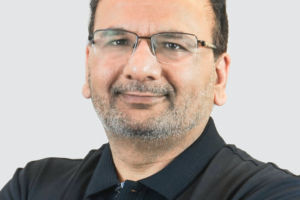
Adil Popat: Architect of a Family Legacy Repositioned for Modern Mobility and Services
From a family-founded motor business to a diversified East African platform spanning vehicle distribution, assembly, lifecycle services, hospitality and electric mobility, Adil Popat’s career has been defined by deliberate reinvention rather than sudden disruption.

- Role
- Executive Chairman, Simba Corporation
- Base
- Kenya
- Leadership
- Executive leadership from 2007; Executive Chairman from 2017
- Portfolio
- Automotive, assembly, industrial services, hospitality and long-term investments
Adil Popat’s contribution has been to take a legacy vehicle-trading business and repeatedly move it further up the value chain — from importation to distribution, from distribution to aftersales and assembly, and from conventional automotive operations toward electric mobility and broader service businesses.
Turning a Family Legacy Into a Modern Operating Platform
Popat inherited a business with history and brand recognition. His task was to make that inheritance relevant to a market where value was moving beyond the initial vehicle sale.
Adil Popat’s career inside Simba Corporation began long before he formally took executive control. By the time he assumed leadership in 2007, he had already spent years working inside a business whose identity was deeply connected to the Kenyan motor trade.
The company itself traces its roots to 1948, when his father, Abdul Karim Popat, began trading used vehicles in Nairobi. The decisive step came two decades later, in 1968, when the business secured the Mitsubishi franchise in Kenya. That relationship helped establish Simba as one of the country’s early formal vehicle distributors and gave the group the automotive foundation on which much of its later expansion was built.
Popat’s leadership was not defined by abandoning that legacy. It was defined by changing what the legacy could support. The organisation gradually moved away from a business model centred primarily on importing and selling vehicles toward one with a much broader operating base.
That meant greater emphasis on parts, service, workshop capability, fleet support and maintenance systems. In a market increasingly shaped by foreign-exchange pressure, import regulation and tightening margins on new vehicles, the value of aftersales and lifecycle services became more important.
By 2017, when Popat became Executive Chairman, the direction was already clear. Simba Corporation was no longer simply a motor distributor. It had become a diversified group with automotive, assembly, hospitality and investment activities, held together by an emphasis on operating businesses rather than passive ownership.
From Vehicle Distribution to Lifecycle Mobility Services
Under Popat, the automotive business has evolved beyond franchise representation toward a broader model built around service, support and a more diversified brand portfolio.
One of the most important shifts under Popat has been the move from a single-franchise mindset toward a broader multi-brand automotive strategy. Over time, the group has worked with manufacturers including Mitsubishi, BMW, Renault, Mahindra and FUSO, as well as other commercial and industrial vehicle and equipment brands.
The logic is practical. Different brands provide exposure to different customer groups, vehicle classes and economic cycles. Passenger cars, commercial vehicles, fleet products and industrial equipment do not respond to the same market forces at the same time. A diversified portfolio creates resilience while also allowing the business to respond more quickly to changes in demand.
But the more important evolution has been in what happens after the vehicle is sold. Workshops, parts, maintenance, technical support and fleet service have become increasingly central to the operating model. In commercial fleets especially, uptime and total cost of ownership matter more than the transaction price alone.
This is where Popat’s restructuring of the business has been most consequential. Distribution becomes the entry point into a longer relationship. Aftersales becomes a source of both margin and customer retention. Fleet support creates recurring engagement, while technical capability makes the distributor more difficult to replace.
The result is an automotive business positioned less as an importer and more as an operating partner to customers whose vehicles have to keep working in demanding conditions.
Assembly as the Next Layer of the Automotive Business
Associated Vehicle Assemblers in Mombasa has given the group a manufacturing foothold and a platform from which to participate in localisation and emerging electric-vehicle programmes.
A major structural step under Popat’s leadership has been deeper involvement in vehicle assembly through Associated Vehicle Assemblers in Mombasa. The facility creates an operating capability very different from pure vehicle importation: it requires production systems, supplier coordination, technical skills, quality control and long-term manufacturer relationships.
For global manufacturers looking at East Africa, local assembly can reduce dependence on fully built imports while creating a route into the regional market. For Simba Corporation, it also moves the group further into the industrial value chain and creates an asset around which multiple partnerships can be built.
The platform has become particularly important as Kenya’s mobility market begins to experiment with electrification. Popat has overseen investment into an electric-vehicle assembly line in Mombasa, reported at approximately US$7.7 million, with assembly activity extending into electric buses, vans, tuk-tuks and passenger vehicles for different partners.
Early institutional fleet deployments in Kenya have signalled the beginning of that transition. The volumes remain small compared with the established combustion-engine market, but the industrial significance is larger. Local capability gives the group a way to participate in the shift rather than simply wait for imported electric vehicles to define the market.
That fits the wider pattern of Popat’s career. New businesses have generally been built by extending existing capabilities into adjacent areas rather than by making abrupt moves into unrelated sectors.
Building a Parallel Hospitality Business
Hospitality gave Simba Corporation a second major operating pillar — one driven by service quality, tourism and business travel rather than automotive cycles.
Popat’s diversification of Simba Corporation did not stop with the automotive value chain. The group also built a significant hospitality portfolio, including Villa Rosa Kempinski in Nairobi, Olare Mara Kempinski in the Maasai Mara and Acacia Premier in Kisumu.
The logic is different from automotive but complementary at portfolio level. Hospitality brings exposure to premium tourism, business travel and services, creating a revenue stream that moves according to different economic and customer cycles.
Villa Rosa Kempinski has become one of the group’s most visible assets and a landmark property in Nairobi’s luxury hotel market. Its significance lies not only in the property itself, but in what it says about the organisation’s willingness to build operating capability outside its traditional sector.
This distinction matters. Hospitality requires its own management culture, service standards, customer proposition and capital discipline. Popat’s portfolio approach has been to allow those businesses to operate according to their own logic while still fitting inside a broader long-term ownership structure.
Simba Corporation
A family-founded enterprise repositioned around mobility, assembly, services, hospitality and long-term operating assets.
Simba Corporation’s evolution under Adil Popat is best understood as a sequence of adjacent moves. Vehicle trading became formal distribution. Distribution expanded into multi-brand representation and lifecycle services. Automotive operations moved further into local assembly. Industrial capability created a route into electric mobility. Hospitality established a second major services platform.
The unifying idea has been to strengthen what the group already knows how to do and then use that capability to enter the next layer of the value chain. That approach has created a business less dependent on a single franchise, a single revenue stream or a single economic cycle.
Today, the group’s direction reflects the changing economics of mobility in East Africa: more emphasis on local assembly, service, fleet support, technical capability and emerging electric-vehicle partnerships, while retaining a diversified portfolio outside automotive.
Vehicle Distribution
Multi-brand automotive representation across passenger, commercial and other mobility segments.
Aftersales & Fleet Support
Parts, workshops, maintenance and longer-term customer support across the vehicle lifecycle.
Vehicle Assembly
Local manufacturing capability through Associated Vehicle Assemblers in Mombasa.
Electric Mobility
Emerging participation in electric bus, van, tuk-tuk and passenger-vehicle assembly programmes.
Hospitality
Premium hotel and tourism assets spanning Nairobi, the Maasai Mara and Kisumu.
Long-Term Investments
A portfolio approach built around operating businesses and durable strategic partnerships.