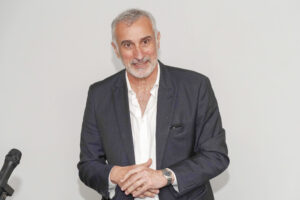
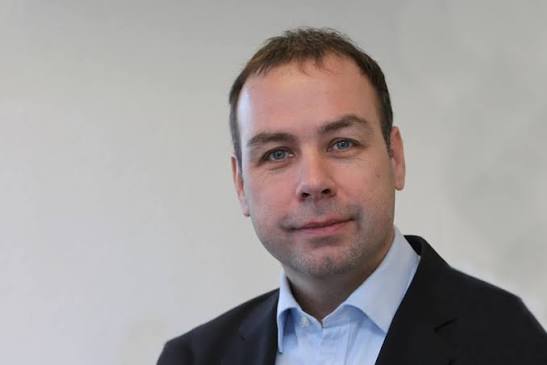
When Markus Thill took responsibility for Bosch’s African business in 2014, he inherited one of the German technology group’s oldest international relationships and one of its more difficult strategic questions.
Bosch had been doing business in South Africa since 1906, almost as long as it had operated outside Germany, but Africa remained a relatively small part of a company whose engineering had become embedded in automobiles, factories, workshops, buildings and homes around the world. The continent offered the population growth, urbanization and industrial potential that multinational companies routinely described as an opportunity, but converting those demographics into a large technology business required something considerably more difficult than exporting products from Europe.
Thill’s assignment was to work out where Bosch fitted.
He arrived with an unusual preparation for the job. He was not an automotive engineer who had spent his career manufacturing fuel-injection systems or braking components, nor an executive raised through Bosch’s traditional sales organization. His academic background was mathematics and physics. He completed a doctorate in physics, summa cum laude, at the University of Paris and began his working life researching statistical physics at the Hebrew University of Jerusalem.
The scientist subsequently became a strategy consultant.
Thill worked at OC&C Strategy Consultants from 1995 before moving to Roland Berger, where his work included strategy, operations, mergers and acquisitions for companies ranging from large multinational corporations to private-equity and venture-capital investors. He joined Bosch in 2005 as a vice-president in corporate strategy. Two years later, he became one of the executives who established Robert Bosch Venture Capital, Bosch’s corporate investment arm, serving as managing director from 2007 until 2014.
Then Bosch gave the strategist and venture investor Africa.
The timing was significant.
Bosch generated about €350 million in African sales in 2014 and employed approximately 760 people on the continent. The company’s footprint was still relatively concentrated, particularly in South Africa, but expansion was already under way. Kenya, Angola and Mozambique had recently been added to its direct presence; Nigeria followed with an office in Lagos, while Algeria, Ghana and Tunisia were among the markets Bosch was preparing to enter.
Thill approached the continent differently from the administrative divisions commonly imposed upon it.
He has repeatedly argued for looking at Africa as a whole rather than dividing the opportunity primarily between North Africa and sub-Saharan Africa. By 2020, Bosch had offices, production facilities, workshops or warehouses in 13 African countries, with activities spanning its mobility, industrial technology, consumer goods and energy and building-technology businesses.
The distinction matters because Bosch is difficult to describe as a single business.
A mechanic may know the company through spark plugs, batteries, filters, diagnostic equipment and workshop systems. A mine may encounter it through hydraulics and industrial automation. A contractor may use Bosch power tools. A vehicle manufacturer may purchase components that the eventual owner never knows Bosch produced. Buildings have used its security and control systems, while newer parts of the group are increasingly concerned with software, electrification, hydrogen and industrial decarbonization.
Running Bosch in Africa consequently means finding markets for several very different businesses across economies at radically different stages of industrial development, and where South Africa remains the anchor.
In 2025, Bosch generated R6.9 billion, equivalent to about €352 million, in South African sales alone. The country contains one of the group’s important African manufacturing operations at Brits in North West province, where Bosch produces electromechanical automotive components. Its industrial-technology presence includes the Bosch Rexroth operation and the Rexroth HUBB in Kempton Park, Gauteng.
The HUBB is one of the more tangible industrial investments made during Thill’s African tenure.
The R200 million facility consolidated Bosch Rexroth operations while creating a centre for hydraulic, pneumatic, automation and mechatronics expertise. Its capabilities include rebuilding industrial equipment to effectively zero-hour condition, while its product-development and support operations connect a network of about 40 branches across Africa with Bosch Rexroth’s engineering and manufacturing centres internationally.
This is a less visible part of Bosch than the products carrying its name on retail shelves, but arguably a more important measure of its African industrial position.
Mining equipment, factories, ports, agricultural machinery and other capital-intensive operations cannot simply replace complex machinery every time a component reaches the end of its first operating life. The ability to repair, remanufacture and support industrial equipment locally determines how long machinery remains productive and how much foreign exchange an economy continually spends replacing it.
That relationship between imported technology and local capability has become a recurring theme in Thill’s African work.
Automotive provides the clearest example.
Bosch occupies an unusual position in the vehicle industry because it sits on both sides of the factory gate. It supplies technologies to vehicle manufacturers, but it also has an enormous interest in vehicles after they have been sold. Replacement parts, diagnostics, workshops and servicing constitute an automotive economy quite separate from manufacturing new cars.
In Africa, that second market is particularly important.
Thill has pointed to a continental vehicle population exceeding 50 million vehicles requiring maintenance every year. Much of that fleet is old, and a significant share of the parts circulating through African markets is of inconsistent quality. He has argued that professionalizing the aftermarket can therefore create employment while improving vehicle maintenance and safety.
It is a characteristically practical interpretation of Africa’s automotive opportunity.
Much of the discussion about developing an African vehicle industry concentrates on new assembly plants. Assembly matters, but the existing vehicle fleet already creates an enormous economy of mechanics, parts distributors, diagnostic centres, workshops and informal repair businesses. Improving the productivity and technical standards of that economy does not require waiting for Africa to manufacture millions of new cars.
The longer-term objective, however, is manufacturing.
Thill has become increasingly involved in the institutional effort to develop a larger African automotive industry through the African Association of Automotive Manufacturers. In August 2026 he was elected AAAM Vice-President for Components for the 2026–2028 term, joining a leadership structure spanning North, West, East and Southern Africa.
His appointment is significant because components are where much of the economic argument for African vehicle manufacturing ultimately succeeds or fails.
Putting imported vehicle kits together creates jobs and can establish an automotive market, but deep industrialization requires progressively manufacturing more of what goes into the vehicle locally. Wiring, electronics, seats, glass, tyres, batteries, plastics, metal components, braking systems and eventually increasingly sophisticated electronics create supplier industries that extend the economic impact beyond an assembly plant.
Africa remains fragmented in this respect. South Africa and Morocco have developed substantial automotive manufacturing ecosystems, while Egypt has a long assembly history and several other countries are attempting to establish or rebuild vehicle industries. But individual national markets are often too small to support efficient production across the entire automotive value chain.
That makes regional integration particularly important.
The African Continental Free Trade Area creates the possibility, at least in principle, of approaching the continent less as dozens of small protected automotive markets and more as interconnected production and consumption centres. That proposition is remarkably consistent with Thill’s longstanding insistence that Bosch should look at Africa as a whole.
There is another reason his background has become increasingly relevant.
The automobile itself is becoming a technology product.
Bosch built much of its automotive importance during the internal-combustion era through systems around fuel injection, engine management, braking, electronics and control. The transition towards electrification, software-defined vehicles, automated driving and hydrogen changes the component mix dramatically.
For African countries trying to establish automotive industries, the danger is therefore obvious. Entering manufacturing too slowly can mean building industrial capacity around technologies whose global importance is already declining.
Thill’s role increasingly sits inside that tension: Africa needs affordable mobility now, while industrial policy has to anticipate what vehicles will become over the next several decades.
Bosch itself is refusing to make that transition a simple battery-electric wager. Globally it has invested across battery-electric mobility, fuel cells, hydrogen engines and hydrogen production and industrial technologies. In Africa, that broader technology position is allowing Thill to explore applications far removed from passenger cars.
Kenya provides a particularly interesting example.
In 2026, Bosch began promoting green hydrogen applications for Kenyan industry, concentrating on processes requiring substantial quantities of heat and steam. Its proposition encompasses water treatment and electrolysis, hydrogen storage and infrastructure, fuel cells and hydrogen internal-combustion engines for mobility, hydrogen-ready boilers, generators and industrial process heat.
One potential application is tea.
Kenya’s tea factories require heat to dry enormous quantities of tea leaves, much of it currently produced by burning biomass including eucalyptus wood. In August 2026, a Bosch delegation led by Thill discussed a project involving the Kenya Tea Development Agency to investigate green hydrogen for tea-processing heat.
The significance of such an application is easy to overlook.
Hydrogen is frequently discussed in Africa in terms of vast export projects designed to produce molecules for European or Asian markets. Using hydrogen to dry Kenyan tea reverses the question: whether new energy technology can first improve an existing African industry.
The same approach could eventually extend into coffee roasting, food processing and other industrial processes requiring heat.
It also reveals something about how Thill appears to have interpreted Bosch’s African opportunity over the past twelve years.
Africa does not necessarily need stripped-down versions of technology created for other markets. Neither does every sophisticated technology automatically have an African business case. The challenge is matching engineering to a sufficiently valuable local problem.
That principle also shaped Bosch’s experimentation with African start-ups.
In 2019, Bosch Africa ran a smart-mobility competition that drew businesses from across the continent. The winners were Hello Tractor, which developed a platform connecting tractor owners with farmers requiring mechanized services, and Kenya’s BuuPass, which digitized passenger transport booking. Each received US$15,000 and entry into an accelerator programme.
For someone who had spent seven years running Bosch’s venture-capital operation, the logic was familiar.
Neither company needed to manufacture a car. Both were attempting to improve the utilization of existing mobility assets through software.
That distinction matters in Africa, where one of the largest constraints on mobility and mechanization is not always the absence of equipment but the difficulty of financing, accessing and efficiently using it.
Thill has also placed considerable emphasis on skills.
Bosch has used exchanges in which African managers receive training in Germany before returning to the continent, while Thill himself has participated directly in science and mathematics education. In 2018, for example, he spent more than 18 hours teaching schoolchildren encryption and decryption during science programmes in Pretoria and Johannesburg.
The physicist had not entirely disappeared into management.
There is nevertheless a harder way to judge his tenure.
Bosch has been in South Africa for 120 years, yet the continent remains far from matching the depth of the company’s industrial footprint in Europe, China, India or North America. Many African markets continue primarily to consume technologies manufactured elsewhere. Industrialization has proceeded unevenly, infrastructure remains a constraint and the enormous demographic promise repeatedly attached to Africa has not automatically translated into purchasing power for sophisticated industrial products.
Those limitations make Thill’s job fundamentally different from running Bosch in a mature industrial economy.
The opportunity is large precisely because so much infrastructure and industrial capacity still has to be built. The difficulty is that the absence of that infrastructure can itself prevent the market from developing.
A power tool requires construction activity. Automotive components require vehicle production. Factory automation requires factories. Hydrogen equipment requires affordable renewable electricity, infrastructure and customers willing to make long-term investments.
Technology follows industrialization while simultaneously being expected to help create it.
Thill has spent more than a decade negotiating that circular problem.
His own career makes him unusually suited to it. The physicist understands technology; the consultant understands markets; the former venture capitalist is accustomed to placing bets before outcomes are certain; and the corporate strategist understands that a company cannot build the same business in Lagos, Casablanca, Johannesburg and Nairobi simply because all four cities happen to be on the same continent.
Yet his insistence on looking at Africa as one economic opportunity has become more relevant, rather than less, as regional trade and industrial integration move higher up the policy agenda.
In 2014, when Thill arrived, Bosch employed about 760 people across Africa and generated approximately €350 million in continental sales. Twelve years later, South Africa alone generated €352 million in sales in 2025, although Bosch does not publicly disclose sufficiently comparable current continent-wide figures to make a clean calculation of African growth over his entire tenure.
That absence of comparable numbers is worth respecting. It would be tempting to present Bosch’s expansion as an uncomplicated growth story, but Africa has rarely offered multinational industrial companies such a straight line.
A better measure of Thill’s tenure may be the change in the questions Bosch is asking.
The company he inherited was opening sales offices in new African markets and looking for customers for products developed elsewhere. The business he now leads is discussing African automotive component localization, industrial remanufacturing, digital mobility businesses and whether green hydrogen can replace eucalyptus wood in a Kenyan tea factory.
In 2026, Bosch is also celebrating 120 years since it first entered South Africa. Thill has personally been responsible for only about a tenth of that history, but his period has coincided with a more fundamental question about what the next century of the relationship should look like.