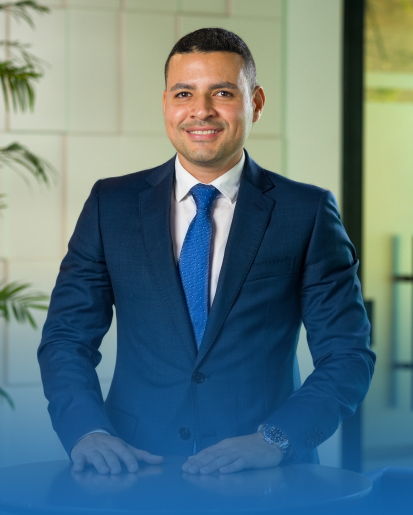
 When Mohamed El Naggar took charge of Raya Auto in late 2019, there was little about the business to suggest that within a few years it would become the Egyptian partner of one of China’s most technologically ambitious electric-car manufacturers. Raya Auto was young, having been established only the previous year, and its electric-mobility interests were concentrated largely in motorcycles, three-wheelers, golf carts and other relatively small vehicles. Egypt itself was still working through some of the elementary regulatory questions that accompany a new form of mobility, including how electric motorcycles should be licensed for use on public roads.
El Naggar was also not a conventional automotive executive. He had spent much of his career selling technology and services rather than cars, rising through Raya’s sprawling collection of businesses in account management, enterprise sales, outsourcing and regional commercial management. It was an unusual apprenticeship for someone who would eventually find himself trying to build an automotive company, but it has become increasingly relevant as the distinction between the motor vehicle and the technology product inside it has narrowed.
El Naggar joined the wider Raya organization years before moving into automotive. His career included roles at Raya CX and Raya Information Technology, where his responsibilities extended to enterprise customers in sectors including banking, before he became Regional Commercial Director at Raya CX in 2017. Raya says he holds a bachelor’s degree from Misr International University, an MBA in International Business from the University of South Wales and has undertaken executive education at Harvard Business School.
By November 2019 he was leading Raya Auto’s electric-mobility business, entering an automotive market in which the electric vehicle was still peripheral to the Egyptian industry. The company’s early activity illustrates how different that market was. In 2020, El Naggar said Raya Auto had submitted documentation to Egyptian standards, industrial-development and traffic authorities as it sought a regulatory framework under which electric motorcycles could be licensed. The question was not yet how quickly electric motorcycles could take market share, but whether the administrative architecture existed to put them legally on the road.
Raya was nevertheless committing capital. In 2020, the company announced an investment of about EGP50 million in a motorcycle and three-wheeler assembly line, with further investment contemplated as it expanded local production. Its factory in 6th of October City was reported at the time to have capacity for about 20,000 vehicles annually. By 2022, the company’s electric-mobility interests had broadened to include buses, golf carts and vehicles serving tourism and commercial applications, while El Naggar was speaking about new products and possible export markets.
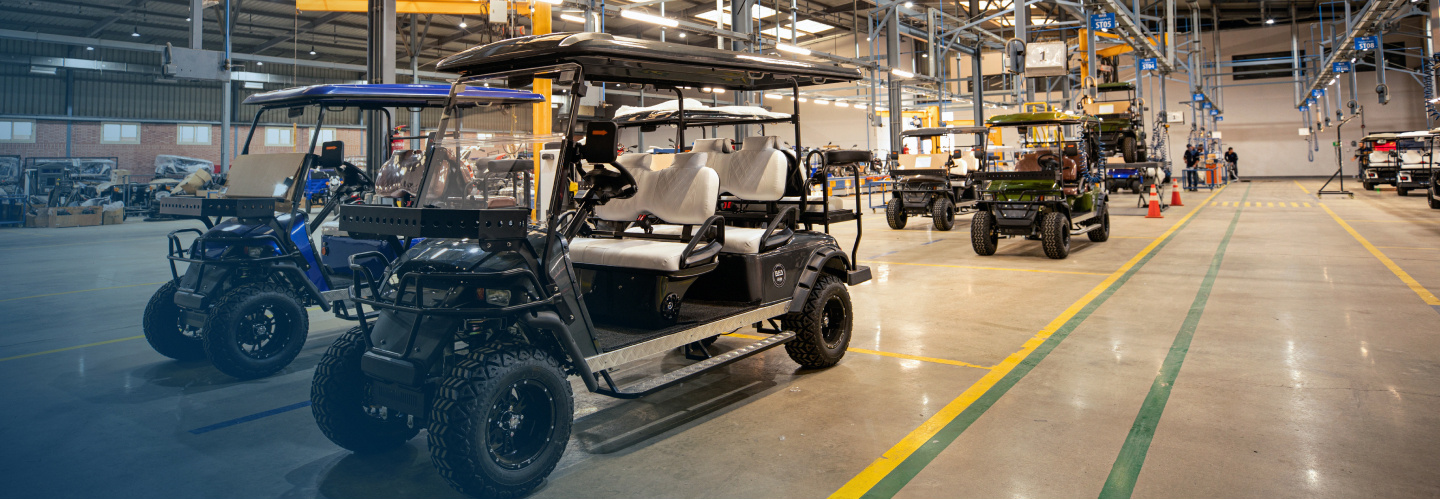
Raya Auto, has played a pivotal role in Raya Holding’s diversified portfolio since 2018. This ISO-certified Egyptian company, with a substantial investment of EGP 420 million, specializes in the electric mobility industry. Raya Auto assembles and operates international modern vehicle brands, introducing them to Egypt’s market. The acquisition of a 10,000 sqm factory, assembling four-, three-, and two-wheel light transport vehicles, has positioned Raya Auto as a key player within Raya Holding. Beyond contributing to revenue diversification, the company is committed to providing environmentally friendly products to Egyptian consumers, aligning with global sustainability goals.
Those early years are important to understanding what followed. Raya Auto’s electric strategy did not begin when Chinese passenger EVs became fashionable export products. The company had already spent several years working through the less glamorous end of electrification: assembly, small electric vehicles, regulatory questions and the practical difficulty of developing a market that did not yet possess all of the infrastructure required to support it.
Then came XPENG.
The Chinese manufacturer was itself a relatively young automotive company, established in 2014 and built around a proposition that increasingly blurred the boundaries between automobile manufacturing, software, artificial intelligence, connectivity and advanced driver-assistance systems. By the early 2020s, China’s domestic EV industry had become intensely competitive, forcing companies such as XPENG to look increasingly towards international markets.
Raya began discussions with XPENG well before the brand became visible on Egyptian roads. According to Raya, negotiations lasted approximately two years. In January 2024, XPENG announced Raya Auto as its Egyptian partner as part of an international expansion that also brought new distribution arrangements in markets including the United Arab Emirates, Jordan, Lebanon and Azerbaijan. Egypt became XPENG’s first African market.
The choice was deliberate. El Naggar has subsequently said that Raya had opportunities to work with several electric-vehicle manufacturers, including brands that later entered Egypt, but selected XPENG because of its products, international ambitions and willingness to understand the requirements of individual markets.
That decision amounted to two bets at once. Raya was betting that Egyptian consumers would begin accepting battery-electric passenger cars in meaningful numbers, but it was also betting on which of China’s many emerging automotive companies would survive the country’s ferociously competitive EV industry and develop into a credible international manufacturer.
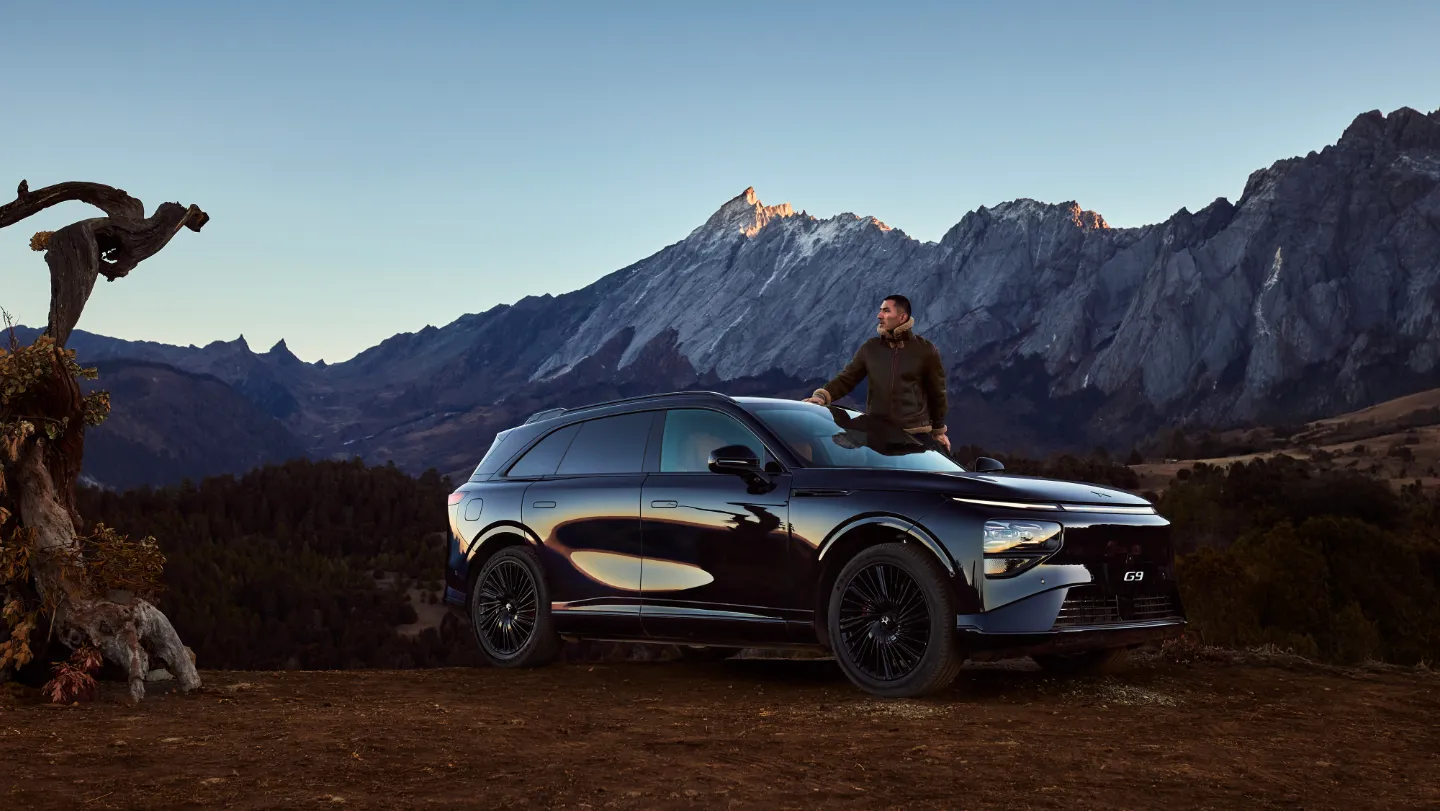
The first XPENG vehicles introduced in Egypt in 2024 were the P7 electric sedan and G9 SUV. The G6 followed, and the range continued to expand. By September 2026, El Naggar said XPENG had reached eight models in the Egyptian market as Raya expanded the supporting network of showrooms, dealers and service facilities.
The commercial transformation of Raya Auto over the same period provides a useful measure of how far the company travelled.
Raya Auto recorded revenue of approximately EGP793 million in 2023. In 2024, revenue rose to about EGP1.37 billion, an increase of roughly 72 per cent. Gross profit increased from approximately EGP154 million to EGP291 million, while EBITDA rose from about EGP97 million to EGP179 million. Electric vehicles had by then grown to account for 58 per cent of Raya Auto’s revenue.
Revenue increased again to approximately EGP1.79 billion in 2025, and Raya Holding reported EGP992 million in revenue from Raya Auto during the first half of 2026, representing another 16 per cent year-on-year increase. El Naggar said in August 2026 that a business which had been among Raya Holding’s smallest companies by revenue and profitability five years earlier had become one of the group’s five largest businesses.
The claim is El Naggar’s own assessment of Raya Auto’s position within the group, but the financial trajectory supports the broader picture of a business that has become considerably more substantial during his tenure.
It also reflects a larger transformation taking place well beyond Raya.
For decades, African automotive distribution was dominated by relationships with Japanese, European, American and, later, Korean manufacturers. The distributor’s competitive advantages were familiar: franchise rights, showrooms, spare-parts inventories, workshops, financing relationships and the ability to navigate importation and regulation.
Chinese electrification is changing some of those requirements. The vehicle increasingly arrives as part mechanical product, part battery system and part software platform, while manufacturers themselves are moving internationally at a speed that creates opportunities for local companies willing to make decisions before brands have established conventional market positions.
El Naggar’s background consequently looks less unusual today than it might have done when he moved into Raya Auto. An executive accustomed to selling enterprise technology, negotiating commercial partnerships and managing regional service businesses found himself in an automotive industry becoming progressively more technological.
XPENG’s evolution in Egypt is increasingly demonstrating that convergence. In 2026, Raya expanded beyond conventional battery-electric models with the introduction of XPENG vehicles incorporating its Super Extended Range Electric Vehicle technology. The G7 and P7+ brought an architecture designed to retain electric propulsion while using an internal-combustion engine as a generator to extend the vehicle’s effective operating range. Egypt became one of the important early overseas markets for the technology.
For a market such as Egypt, the significance goes beyond another drivetrain choice. Pure battery-electric vehicles remain dependent upon charging availability, consumer confidence in range and the economics of batteries. Extended-range systems offer manufacturers another route into markets where those conditions are developing unevenly, potentially allowing electric propulsion to spread without waiting for a comprehensive national charging network.
El Naggar, however, is now contemplating a more difficult transition than introducing another model.
Raya wants to manufacture electric vehicles in Egypt.
In 2025, El Naggar disclosed plans for an electric-car assembly project targeted for 2026, with the proposed investment expected to be financed equally through Raya’s own resources and bank financing. Contemporary reports put the contemplated investment at at least US$50 million. Raya was separately reported to be considering investment of about US$25 million in 30 fast-charging stations over three years.
These figures remain plans rather than capital that should automatically be treated as already deployed, an important distinction as Raya moves from announcing an industrial ambition to executing it.
Local assembly changes the economics and risks of the business considerably. Importing finished vehicles requires capital, distribution capability and confidence in demand. Manufacturing requires those things together with sufficient volumes, suppliers, production discipline, skilled labour, financing and a regulatory environment capable of sustaining long-term investment. A distributor can change its model mix relatively quickly when consumer preferences move. A factory is a much less reversible commitment.
Egypt nevertheless gives the proposition a strategic logic. The government has been seeking greater localization of vehicle manufacturing while attracting international manufacturers and component suppliers. Its large domestic market, existing automotive industrial base and geographic position between Africa, the Middle East and Europe offer an argument for production that extends beyond domestic sales if sufficient scale can eventually be achieved.
El Naggar has also spoken about increasing Egyptian content and drawing upon Raya’s technology capabilities to develop expertise around EV technology and embedded systems. That ambition brings his career almost full circle. The executive who came into automotive from information technology is now contemplating an automotive operation in which software, electronics, batteries and digital systems represent an increasing share of the vehicle’s value.
There is still considerable distance between that ambition and a mature Egyptian EV manufacturing industry. Raya’s passenger-EV business remains dependent upon a Chinese manufacturing partner, Egypt’s charging infrastructure remains a constraint on mass adoption, and the brutal competition within China’s electric-vehicle industry means that choosing the right manufacturing partner carries risks that extend far beyond Egypt. Local assembly will also have to demonstrate that it creates durable industrial value rather than merely replacing imports of complete vehicles with imports of substantially complete vehicle kits.
These are questions that cannot be answered by the rapid revenue growth of the past few years.
They are also what makes El Naggar’s next phase more consequential than the one that preceded it.
Selling an imported electric car successfully demonstrates that there is a market. Building one locally requires an industrial ecosystem.
The distance Raya Auto has already travelled is substantial. A company that was assembling and distributing motorcycles, three-wheelers and golf carts at the beginning of the decade now represents XPENG in its first African market, generates annual revenue approaching EGP2 billion and sits, according to its chief executive, among the larger operating companies within Raya Holding.
Much of El Naggar’s career has therefore coincided with a fundamental change in what an automotive company is expected to understand. Mechanical engineering and distribution remain important, but increasingly they sit beside software, batteries, electronics, charging infrastructure, data and rapidly evolving Chinese technology.
In 2019, putting a technology and outsourcing executive in charge of a small electric-mobility company might have appeared an unconventional career move. Seven years later, it looks considerably more consistent with the direction in which the automobile itself has travelled.