Africa · Mobility Finance · Industrialisation
Hyundai and AfDB Target African EVs, Infrastructure and Manufacturing
A new Letter of Intent brings Hyundai Motor Group and the African Development Bank together around electric mobility, critical-mineral value chains, transport infrastructure, green hydrogen, manufacturing and skills development.
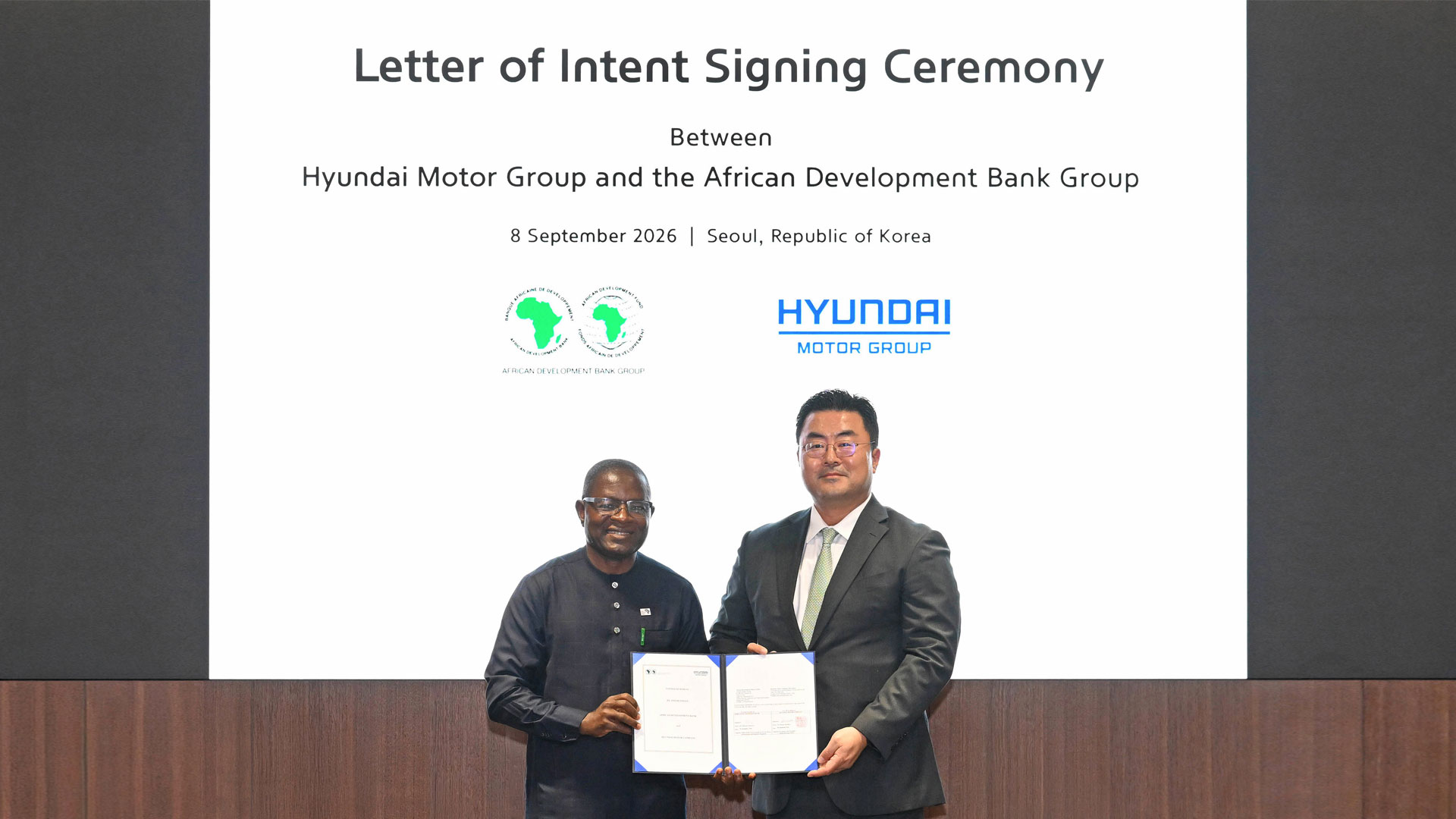
SEOUL, South Korea — Hyundai Motor Group has opened a potentially significant new route into African mobility and industrial investment after signing a Letter of Intent with the African Development Bank covering projects from electric-vehicle value chains and local manufacturing to roads, railways, ports and green hydrogen.
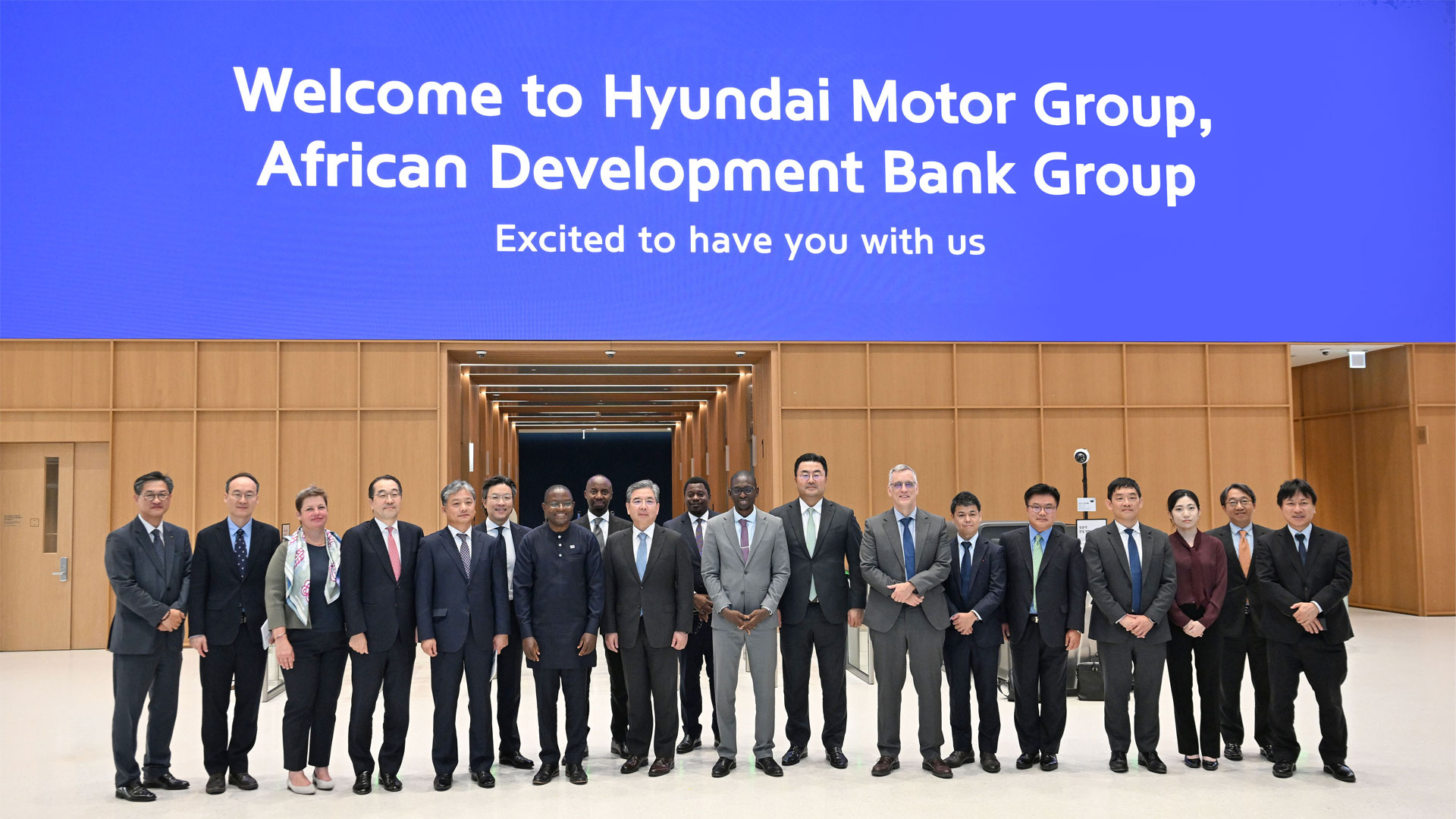
The agreement, signed at Hyundai Motor Group's headquarters in Seoul, brings together the Korean industrial group's capabilities in mobility, energy, infrastructure and manufacturing with the African Development Bank's development-finance, investment-mobilisation and business-development capabilities.
Importantly, the agreement is not itself an announcement of a specific investment amount or a committed portfolio of projects. Instead, it establishes a framework through which Hyundai Motor Group and the AfDB intend to identify investments and develop financing and implementation structures for them.
For Africa's automotive and transport industries, however, the breadth of that framework is notable. Electric vehicles are only one component. The two organisations have identified six areas for medium- to long-term cooperation: clean energy, sustainable mobility, transport and logistics infrastructure, EV value chains, industrial and manufacturing capacity, and talent development.
Blended finance at the centre of the strategy
A central element of Hyundai Motor Group's approach is the proposed creation of a Blended Finance Package, intended to connect policy financing with private capital and reduce some of the risks associated with executing major projects in African markets.
Jaehoon Chang, Vice Chair of Hyundai Motor Group, described the agreement as the beginning of a longer relationship focused on Africa's energy transition and industrial competitiveness.
Establishing a blended-finance structure connecting policy finance and private capital, while improving investment stability, will be important to implementing Hyundai Motor Group's core African business initiatives.
Jaehoon Chang, Vice Chair, Hyundai Motor Group
Chang said Hyundai Motor Group intends to continue expanding its cooperation with the African Development Bank.
The financing component could prove particularly important. Large-scale mobility and industrial projects frequently depend on more than the commercial viability of an individual vehicle or factory. Electricity generation and transmission, charging or refuelling infrastructure, logistics networks, industrial sites, skills development and access to long-term capital can all influence whether an investment proceeds.
The AfDB potentially gives Hyundai Motor Group a development-finance counterpart capable of working across several of those constraints rather than treating vehicle deployment, manufacturing and infrastructure as isolated projects.
From African minerals to EV value chains
One of the most consequential areas identified in the agreement is the development of electric-vehicle value chains using Africa's critical-mineral resources.
Rather than restricting cooperation to importing finished electric vehicles, Hyundai Motor Group and the AfDB say they intend to explore the construction of more comprehensive EV value chains on the continent.
That distinction matters for African industrial policy. The continent possesses important mineral resources used by battery and electric-mobility industries, but much of the economic value associated with processing, component manufacturing, battery production and vehicle manufacturing can be captured elsewhere.
The Hyundai–AfDB framework potentially creates a route for examining how mineral resources can be connected with downstream industrial activity.
The two organisations have separately identified industrial capacity and manufacturing enhancement as a cooperation area, with an emphasis on strengthening local manufacturing capabilities and competitiveness.
Sustainable mobility is another pillar, with the partners proposing the development of localised sustainable mobility solutions across Africa.
No individual African country, manufacturing location, vehicle programme or production target was identified in the announcement, meaning the eventual industrial footprint will depend on the projects subsequently selected and financed.
Roads, railways and ports enter the equation
The partnership extends well beyond automotive manufacturing.
Hyundai Motor Group and the African Development Bank have included transport and logistics infrastructure development among the six priority areas, specifically identifying road, railway and port infrastructure.
That gives the agreement a broader freight and industrial dimension.
Vehicle manufacturing and fleet deployment depend heavily on logistics infrastructure: ports handle imported components and exports; rail and road networks connect factories to suppliers and markets; and freight efficiency influences the economics of local production.
Hyundai Motor Group's involvement is also wider than the Hyundai passenger-vehicle brand. The Group has extensive industrial interests, while Hyundai Engineering Co., Ltd was directly represented at the Seoul signing.
Woo Jeong Joo, President of Hyundai Engineering Co., Ltd, attended the ceremony alongside senior Hyundai Motor Group executives.
Hyundai Capital joins the senior delegation
The presence of Hyundai Capital adds another dimension to the talks.
Hyung-Jin Chung, President of Hyundai Capital, was among the senior executives attending the signing.
Hyundai Motor Group's delegation was led by Jaehoon Chang and also included Heung Soo Kim, Head of Global Strategy Office at Hyundai Motor Group; Ilbum Kim, Head of Chief Networking Office; and Yongseok Shin, Head of HMG Business Intelligent Institute.
Their participation illustrates the cross-functional nature of the proposed relationship: strategy, engineering, finance, institutional networks and business intelligence were all represented alongside the Group's senior leadership.
The AfDB delegation was led by Kevin Chika Urama, Chief Economist and Vice President for Economic Governance & Knowledge Management.
Urama represented Dr. Sidi Ould Tah, President of the African Development Bank Group.
He was joined by Max Magor Ndiaye, Senior Director of Syndications, Co-financing and Client Solutions, a role particularly relevant to the partnership's ambition to mobilise financing beyond the Bank's own balance sheet.
Hyundai is a strategic partner whose technological capabilities, experience and long-term outlook align with the African Development Bank's ambition to unlock Africa's economic potential and broaden prosperity.
Kevin Chika Urama, Chief Economist and Vice President for Economic Governance & Knowledge Management, African Development Bank Group
Green hydrogen joins electric mobility
Clean energy is another major component of the agreement.
Hyundai Motor Group and the AfDB specifically identified green hydrogen development initiatives within their proposed clean-energy cooperation.
This places the relationship across more than one potential pathway for transport decarbonisation. Battery-electric mobility is explicitly covered through EV value-chain development, while hydrogen enters through the wider energy-transition programme.
For commercial transport, industrial equipment and energy-intensive manufacturing, the development of affordable low-carbon electricity and fuels can be as important as the vehicles themselves.
The partners have therefore constructed a framework in which mobility, energy and industrialisation can potentially be developed together.
Skills form the sixth pillar
The sixth cooperation area is talent development.
Hyundai Motor Group and the AfDB intend to develop foundations for the human capital required by Africa's future mobility and energy industries.
That could become a critical element if proposed investment progresses from vehicle deployment into manufacturing and component production. Localisation requires engineers, production specialists, technicians, software and electronics expertise, maintenance personnel and managers capable of operating increasingly sophisticated industrial systems.
The agreement therefore places skills alongside capital, infrastructure and technology rather than treating training as an afterthought.
From an LOI to investable projects
The next test will be implementation.
Hyundai Motor Group and the African Development Bank say they will identify concrete investment initiatives and establish implementation frameworks by sector. The intention is to construct investment structures capable of reducing risk and accelerating project execution.
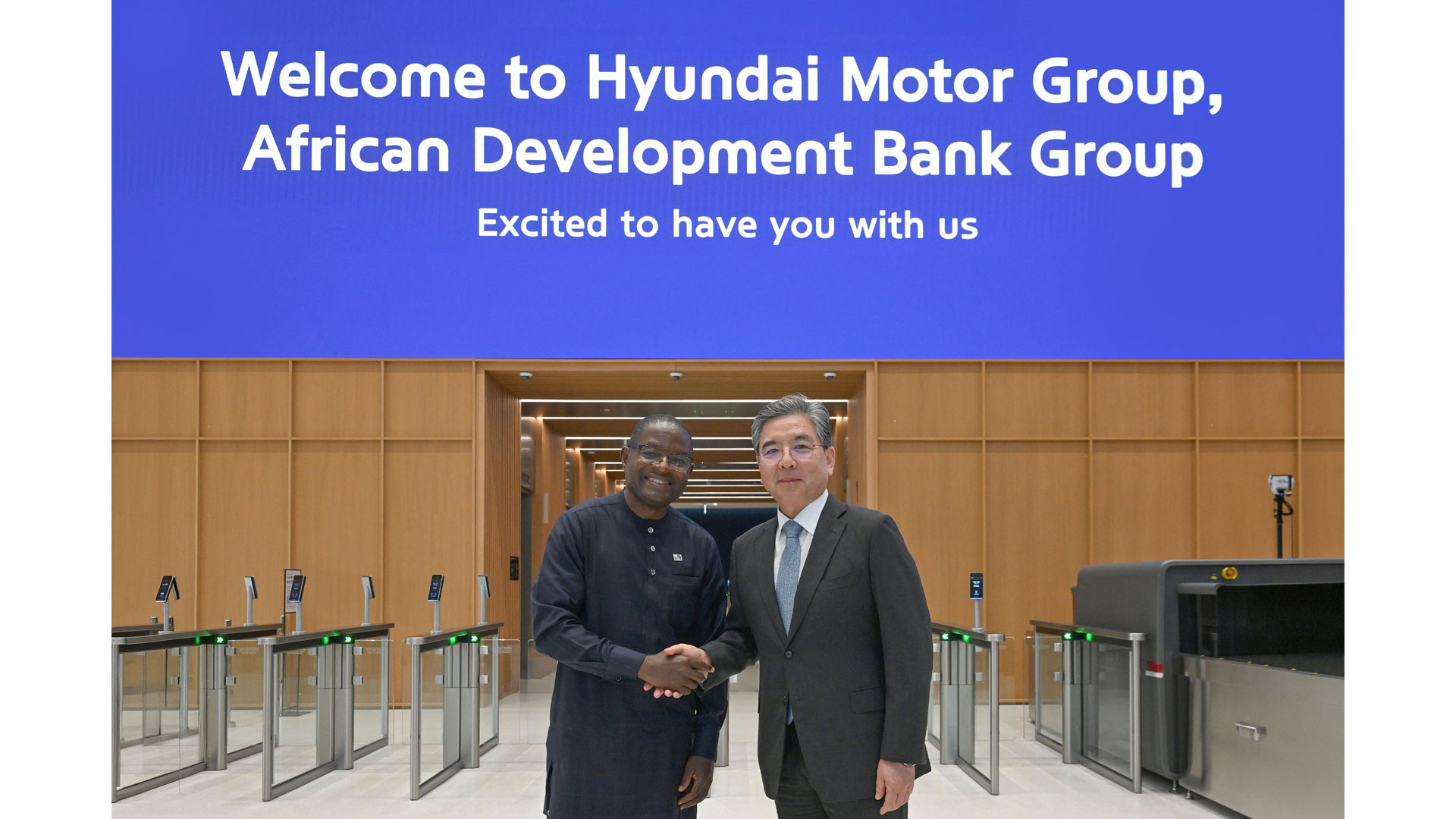
Following the signing, representatives of the two organisations held discussions on Africa's development-finance environment, industrial challenges and sector priorities, while considering medium- and long-term areas for cooperation.
The AfDB delegation also toured Hyundai Motor Group's Yangjae headquarters, where it was shown some of the Group's future-mobility and robotics technologies.
These included Robotics LAB Security X Spot and DAL-e robots, demonstrating capabilities extending into robotics and autonomous systems.
The technology presentation was relevant to the wider industrial proposition: Hyundai Motor Group is positioning its future mobility strategy around an increasingly interconnected ecosystem of vehicles, robotics, energy, infrastructure and advanced technology rather than around conventional vehicle manufacturing alone.
For Africa, the significance of the agreement will ultimately depend on how much of that ecosystem moves from discussion into funded projects on the continent.
There are, as yet, no announced investment values, factory locations, vehicle volumes or project timetables attached to the Letter of Intent. Nor has Hyundai Motor Group identified which African countries will host the first initiatives.
But the composition of the delegations and the areas selected for cooperation point towards something broader than a conventional vehicle-market expansion strategy.
If the partners succeed in turning the framework into bankable investments, the relationship could connect African development finance and critical resources with Hyundai Motor Group's mobility, engineering, finance, infrastructure and manufacturing capabilities — potentially moving the conversation from selling vehicles in Africa towards building more of the industrial system behind them.