South Africa’s automotive component industry is positioning itself around one of the country’s most consequential new vehicle manufacturing investments as Chery prepares to turn the former Nissan plant at Rosslyn into an African production base.
 The competition is not simply about supplying another vehicle factory.
Chery’s arrival as a manufacturer creates the prospect of a new supply chain forming around one of China’s largest automotive groups, potentially bringing established South African component manufacturers together with Chinese suppliers carrying technologies that have become increasingly important in electric, hybrid and intelligent vehicles.
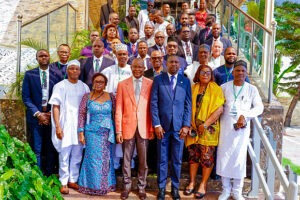
That process moved another step forward on 26 August when Chery Group and Wuhu Chery Technology Co., Ltd., known as Chery Tech, convened a Supplier and Investor Conference at the Automotive Industry Development Centre in Tshwane.
The gathering brought Chery together with government, development finance institutions, industry associations, organized labor and the component sector to discuss localization, investment and the supply network that will eventually sit around its South African manufacturing operation.
For suppliers, the timing matters.
The first locally manufactured Chery Group vehicles are expected to begin rolling off the Rosslyn line by the middle of 2027. Before that happens, Chery has to decide which components will be sourced in South Africa, which will initially arrive from China and which of its international suppliers may need to establish manufacturing capacity in the country.
Those decisions could shape a sizeable new automotive supply chain.
From Nissan to Chery
The story began well before this week’s supplier conference.
Nissan confirmed in January 2026 that it had reached an agreement to sell its Rosslyn manufacturing assets to Chery. The plant, which has been part of South Africa’s automotive industry since the 1960s, most recently produced the Nissan Navara.
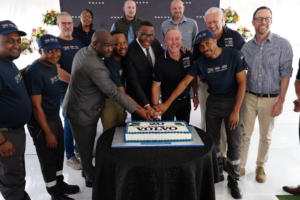
Chery formally inaugurated its operation at Rosslyn in July, marking an important transition for the company in South Africa: from importing vehicles into one of its most important African markets to becoming a local manufacturer.
The company is retaining 692 employees associated with the facility and has said the wider operation could eventually support nearly 3,000 direct and indirect jobs across manufacturing, component supply and associated services.
The initial production program is expected to include vehicles from several Chery Group brands.
The Jetour T Series, Jaecoo J5 and Chery Tiggo Cross have been identified among the first vehicles planned for local production. The Jaecoo J5 is expected to be manufactured in both internal combustion and new energy vehicle configurations.
The KP31 one tonne pickup could follow if sufficient volumes support local production.
During the initial ramp up in the third and fourth quarters of 2027, Chery expects production of around 15,000 vehicles. Longer term, the Rosslyn plant has capacity for considerably greater volumes, reaching around 50,000 vehicles annually on a single shift.
But Chery’s plans extend beyond the assembly line.
The company wants Rosslyn to develop into a wider African automotive hub encompassing manufacturing, exports, research and development, supply chain activities and skills development.
That ambition changes the conversation around localization.
The 40% question
Chery has set an initial goal of reaching approximately 40% localization by 2028.
Its localization program is already taking shape, with the manufacturer engaging Tier 1 suppliers as preparations for production gather pace. The first vehicles are still expected to depend substantially on imported components while the domestic supply network develops.
The more important question is where the additional value will eventually come from.
South Africa already has one of Africa’s most sophisticated automotive component industries. Decades of manufacturing by Toyota, Volkswagen, BMW, Mercedes Benz, Ford, Isuzu and Nissan have created supplier capability spanning seating, exhaust systems, catalytic converters, wiring harnesses, tyres, glass, plastics, metal components and numerous other vehicle systems.
Chery, however, is arriving during a technological transition.
Its future South African product program will not be confined to conventional internal combustion vehicles. Hybrid and electric vehicles introduce batteries, power electronics, electric drive systems, thermal management, control systems and other technologies that have not historically been produced at the same scale within South Africa’s automotive supply chain.
This is where the Chery investment could become more significant than simply replacing one manufacturer with another at Rosslyn.
Renai Moothilal, CEO of the National Association of Automotive Component and Allied Manufacturers, or NAACAM, used the Supplier and Investor Conference to argue that South Africa should use Chery’s arrival to bring some of those emerging technologies into domestic production.
“Partnerships and localisation of NEV components and other emerging component technology is naturally suited to South Africa,” Moothilal said, pointing to the country’s raw materials, critical minerals and existing supplier capabilities.
The quotation retains NAACAM’s original spelling, but the industrial proposition is clear.
South Africa wants to preserve the manufacturing base created around internal combustion vehicles while ensuring that its component industry is not left behind as manufacturers introduce increasingly electrified product portfolios.
Chery could provide an important route into that transition because electrification is already deeply embedded in its international product and supplier ecosystem.
South Africa has already gone to Wuhu
The positioning around Chery did not begin at Rosslyn.
Earlier this year, NAACAM Chief Operating Officer Nduduzo Chala and Head of Policy and Regulatory Affairs Beth Dealtry travelled with a South African delegation to Wuhu, the home of Chery Group in China.
There they met Chery International President Zhang Guibing, Vice President Charlie Zhang and Chery South Africa CEO Tony Liu.
The discussions focused specifically on Chery’s South African production plans, the volumes required to support localization and how South African suppliers could participate in the program.
The delegation also engaged companies within Chery’s existing supplier ecosystem, including businesses involved in battery and electronic components for new energy vehicles.
It was not only an automotive industry delegation.
Representatives came from the Industrial Development Corporation, Gauteng Growth and Development Agency, AIDC Eastern Cape, East London Industrial Development Zone, Coega Development Corporation, naamsa | The Automotive Business Council and WesBank.
That breadth illustrates what is at stake.
The competition around Chery’s emerging supply chain is simultaneously about component contracts, industrial investment, development finance, technology and regional economic development.
If a Chery supplier determines that it needs a South African manufacturing operation, provinces and industrial development zones have an interest in where that investment is located.
If an established South African component producer needs new machinery or technology to meet Chery specifications, development finance may become part of the localization process.
And if battery, electronic or other NEV technologies can be manufactured domestically, the opportunity extends beyond supplying a single automotive manufacturer.
Chinese suppliers enter the equation
South African component manufacturers are not positioning themselves in an uncontested market.
Chery has indicated that some of its established Chinese suppliers could also establish operations in South Africa, particularly businesses involved in electric and intelligent vehicle components.
That creates one of the most important industrial questions surrounding the Rosslyn investment.
Will Chery’s localization strategy predominantly shift component contracts to manufacturers already operating in South Africa, encourage Chinese suppliers to establish factories in the country, or produce partnerships and joint ventures between the two?
The eventual answer could involve all three.
For Chery, bringing established suppliers into a new manufacturing market reduces risk. Those companies already understand its engineering standards, product development cycles, quality requirements and procurement processes.
For South Africa, however, localization has greater economic value when manufacturing capability, employment, skills and technology become embedded in the domestic economy rather than when imported component supply simply follows imported vehicle supply.
That distinction will become increasingly important as Chery moves closer to production.
Chinese supplier investment should not necessarily be viewed as competing with localization. A Chinese component manufacturer building a factory in South Africa, employing local workers and sourcing progressively from domestic companies would itself become part of the South African automotive manufacturing base.
The more important question is how much value ultimately remains in the country.
Government wants more than assembly
Pretoria has already made its expectations clear.
Deputy President Paul Mashatile used Chery’s Rosslyn factory acquisition celebration in July to call directly on the manufacturer to work with South African suppliers and create opportunities for youth owned enterprises.
“With the understanding that a strong automotive sector depends on a strong supplier base, Government calls upon Chery to work hand in hand with us in identifying and promoting local suppliers,” Mashatile said.
He identified logistics, components, services and technology among the areas where domestic businesses could participate.
The message reflects a broader concern within South African industrial policy.
Vehicle assembly creates employment, but much of the economic value associated with automotive manufacturing exists beyond the final assembly plant.
Seats, dashboards, tyres, wiring, electronics, glass, metal stampings, plastics and hundreds of other components pass through a vehicle before it reaches a customer.
The deeper those supply chains extend into the domestic economy, the greater the potential impact on manufacturing employment, investment and skills.
That makes Chery’s eventual local content more important than simply being able to describe its vehicles as South African manufactured.
Chery brings something suppliers need: volume
There is another reason the component industry is paying attention.
Chery is no longer a peripheral participant in the South African vehicle market.
The company sold 14,593 vehicles during the first six months of 2026, compared with 11,687 during the same period in 2025. In July it sold another 2,709 vehicles and overtook GWM to become South Africa’s largest Chinese vehicle brand by sales for the month.
Those numbers matter to suppliers because localization economics depend heavily on volume.
A component that makes little economic sense to manufacture locally for a few thousand vehicles can become viable as production grows.
Chery’s ability to combine South African demand with exports elsewhere in Africa could therefore determine how deeply the Rosslyn operation eventually localizes.
The company’s ambition to develop South Africa as a regional manufacturing and export base is consequently significant.
If Rosslyn serves primarily the domestic market, the supplier opportunity has one scale. If it eventually supplies Chery vehicles into multiple African markets, the economics of component localization become considerably more attractive.
That could also make South Africa a more compelling destination for Chery’s global suppliers.
Rosslyn becomes a new center of gravity
The location itself matters.
Chery has not selected an empty industrial site and started from scratch. It has taken over an established automotive manufacturing operation at Rosslyn, an area with decades of vehicle production history and an existing network of suppliers, logistics companies and automotive skills.
The factory gives Chery infrastructure, experienced workers and an industrial location already understood by the South African automotive industry.
But the transition from Nissan to Chery changes the commercial landscape around that plant.
Some suppliers that historically served Nissan could find opportunities with the new manufacturer. Others may have to adapt their products, technologies or production processes to Chery platforms. Completely new suppliers could enter the ecosystem.
Chery Tech’s involvement in the August conference is particularly noteworthy in this respect.
The discussion is not solely about procuring conventional components for the first vehicles assembled at Rosslyn. It is also about what technology and manufacturing capability could potentially follow Chery’s wider industrial ecosystem into South Africa.
That is why batteries, electronics and other NEV components are increasingly part of the conversation.
The contracts will provide the real measure
There is still reason for caution.
A supplier conference is not a purchase order.
Chery has disclosed its localization ambitions and begun engaging suppliers, but a comprehensive list of South African component contracts has not yet been made public.
Nor is the eventual division between South African suppliers, multinational component manufacturers already operating in the country and incoming Chinese companies yet clear.
Those details will ultimately determine how much industrial value Chery’s investment creates outside the walls of the Rosslyn factory.
The next phase will therefore be worth watching closely.
Supplier nominations, joint ventures, new factories, tooling investments and component contracts will provide a better measure of localization than headline percentages alone.
So will the type of components being localized.
Producing conventional high volume components locally is valuable. Establishing manufacturing capability in battery systems, power electronics and other technologies associated with electrified vehicles would represent a more strategic shift for South Africa’s automotive industry.
The activity around Chery is nevertheless moving beyond intention.
NAACAM has taken South African industry representatives into Chery’s home supplier ecosystem in Wuhu. Chery is engaging Tier 1 suppliers. Government is publicly calling for local participation. Development institutions are involved. Chery Tech is bringing prospective suppliers and investors together in Tshwane. Chinese component manufacturers are also emerging as potential participants.
And the clock is running.
With production expected to begin in 2027, Chery now has to transform localization discussions into sourcing decisions, investment commitments and production ready supply relationships.
The Nissan name has left Rosslyn. Chery has secured the factory and established its manufacturing ambitions.
The more consequential industrial contest is only beginning.
It is over who gets to supply it.