Kenya’s transition to electric mobility is beginning to reshape automotive skills development, with a new initiative giving selected Technical and Vocational Education and Training institutions access to specialised training in lithium-ion battery technology, maintenance and circularity.
 The programme is being developed through collaboration between the Kenya Motor Repairers Association (KEMRA) and GIZ Kenya, with an initial group of TVET institutions expected to strengthen the capabilities of trainers and technical personnel working in automotive-related disciplines.
Its significance extends beyond introducing another technical course. Lithium-ion batteries are becoming a critical component of the automotive skills base as electric motorcycles, buses, passenger vehicles and commercial vehicles enter the Kenyan market.
The challenge is ensuring that the technicians who will maintain those vehicles develop alongside the technology.
A 2026 assessment of Kenya’s e-mobility training needs and skills gaps identified competencies including EV maintenance, charging systems and safety among the areas requiring attention as the industry expands. The 91-page study was specifically intended to help TVET institutions, trainers, policymakers, regulators and industry develop a workforce capable of supporting the country’s transition to electric mobility.
GIZ research has identified an even more specific gap. Sector representatives reported shortages of trained specialists in battery technologies and applications, circularity principles, charging infrastructure, hybrid-electric vehicle technology and local EV assembly and manufacturing. The research also found that comprehensive e-mobility curricula remain limited and that some training institutions lack access to EVs and appropriate diagnostic equipment.
From mechanical skills to battery expertise
These gaps matter because the transition from internal-combustion vehicles to electric drivetrains changes the skills required in an automotive workshop.
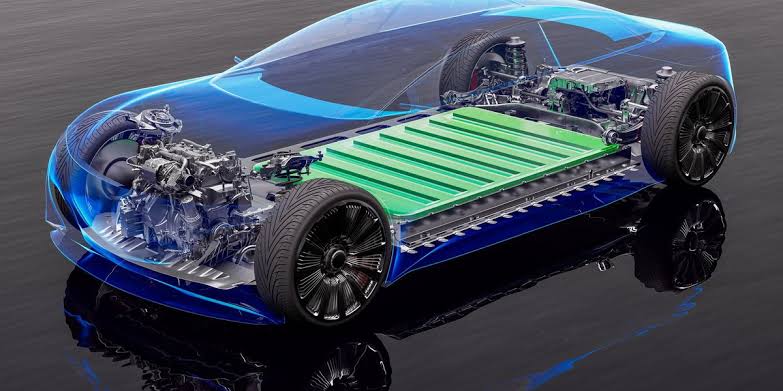
Conventional capabilities in engines, transmissions and fuel systems increasingly have to sit alongside competence in high-voltage electrical systems, battery management, diagnostics, charging technology and safe handling of lithium-ion batteries.
Battery circularity adds another dimension. As Kenya’s EV population grows, technicians and institutions will increasingly encounter questions around battery condition assessment, repair, second-life applications, recovery and eventual recycling.
The KEMRA-GIZ initiative therefore places training institutions closer to an emerging part of the automotive value chain rather than waiting for the vehicle population to mature before developing the necessary skills.
Skills are already part of Kenya’s e-mobility strategy
The programme also fits within the direction of Kenya’s national e-mobility policy development.
One of the stated objectives of Kenya’s e-mobility policy is to enhance local technical capacity and skills across the e-mobility value chain, alongside promoting local manufacturing and assembly, developing charging infrastructure and accelerating EV adoption.
The government’s policy work has documented the rapid early growth of electric vehicles. EVs represented just 0.022% of new vehicle registrations in 2018 but 1.62% by 2023, with much of that increase driven by two-wheelers.
That creates a practical workforce question: who will service, diagnose and ultimately manage the batteries and electrical systems in this growing vehicle population?
Connecting industry and the classroom
The involvement of KEMRA is particularly relevant because independent repairers and workshops will ultimately form an important part of the EV aftersales ecosystem.
Building links between the repair industry and TVET institutions can help ensure that training reflects technologies technicians are increasingly likely to encounter in the workplace.
It also aligns with GIZ’s broader approach to vocational education in Kenya. GIZ has supported dual vocational training that combines institutional education with structured workplace experience, specifically seeking to narrow the gap between theoretical training and the skills required by employers.
GIZ’s e-mobility programme in Kenya similarly identifies institutional capacity building, training and knowledge exchange among its core areas of intervention.
For the pioneer TVET institutions participating in the lithium-ion battery programme, the immediate benefit will be greater technical capability among trainers. The longer-term impact could be more important: trainers equipped with current battery knowledge can transfer those competencies to successive cohorts of automotive technicians.
Kenya’s electric mobility transition will ultimately depend on more than vehicles, charging stations and investment. It will also require technicians capable of safely maintaining increasingly sophisticated electric drivetrains and a repair industry prepared for technologies very different from those that have dominated its workshops for decades.
The KEMRA-GIZ initiative represents one step towards building that capability before the skills gap becomes a constraint on the market’s growth.