The Armored Group: Building Protection Around the Vehicle
From cash-in-transit trucks to diplomatic SUVs, tactical vehicles and military platforms, TAG has spent more than three decades turning production vehicles into protected mobility systems. Its VR7-certified Toyota Land Cruiser 300 shows how far that engineering has evolved.
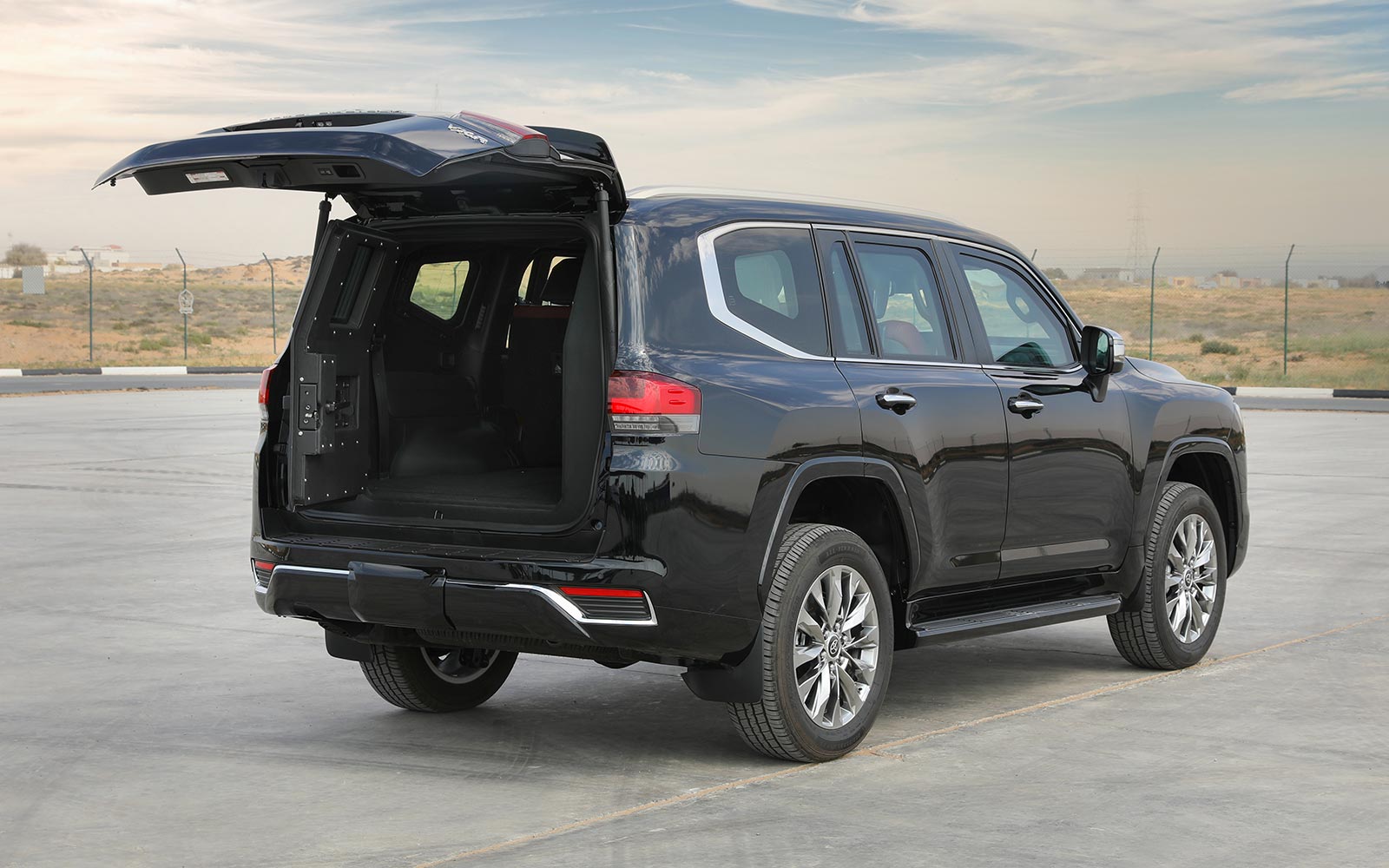 Image: The Armored Group
An armored vehicle is easy to misunderstand. The visible story is the ballistic glass, reinforced bodywork and protection rating. The more consequential engineering lies in what happens after hundreds of kilograms of armor are incorporated into a vehicle that must still stop, turn, accelerate, carry passengers and remain serviceable in the markets where it will work. The Armored Group has built its business around that problem since 1992.
Protection without losing the Land Cruiser
The Toyota Land Cruiser has long occupied a particular place in protected mobility. It is sufficiently refined for executive and diplomatic transport, yet durable enough for government, mining, humanitarian and security operations that may extend far beyond major cities. Its global parts and service network also matters in a segment where a vehicle can be heavily modified but still has to live a working life.
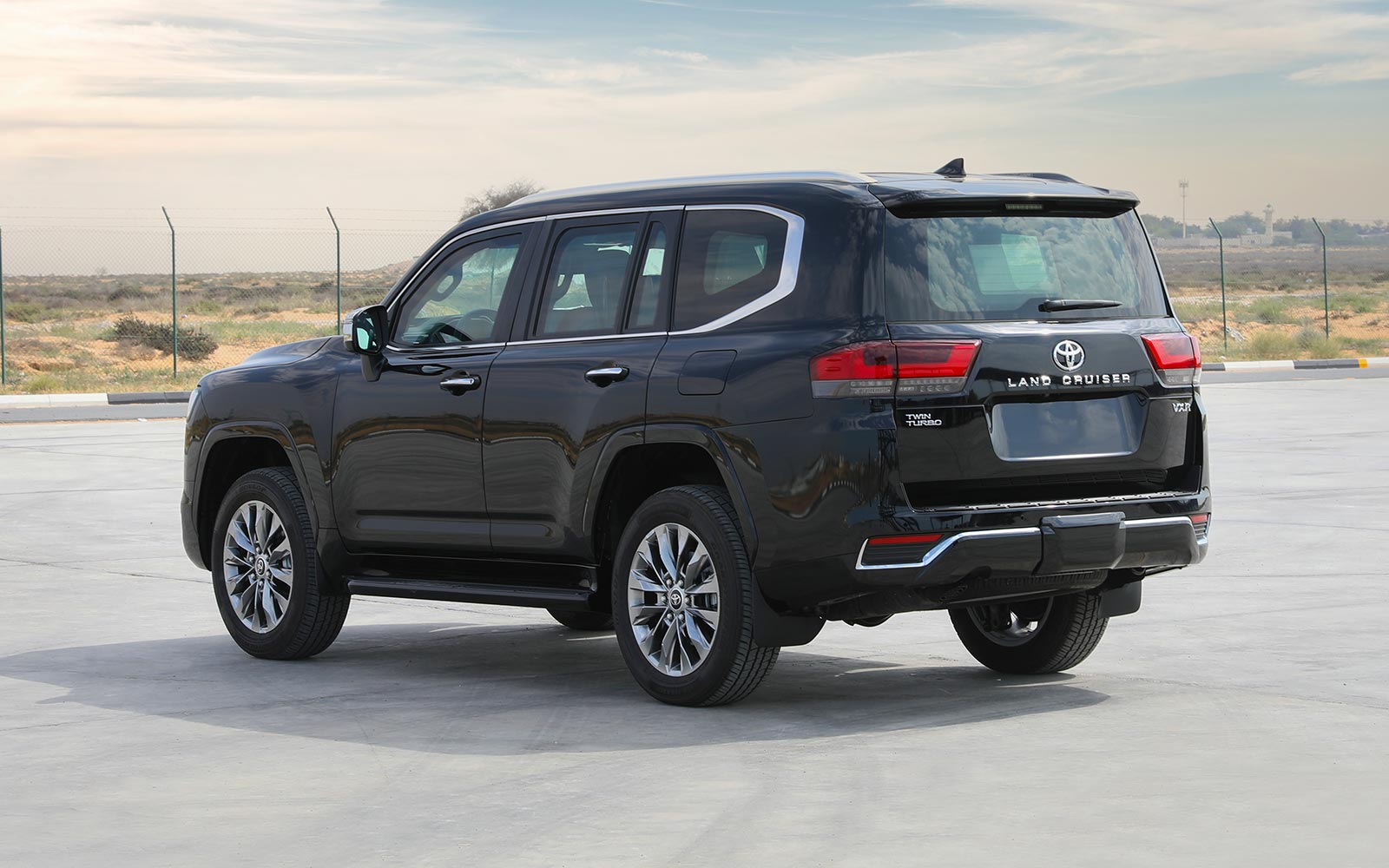
The Armored Group, better known as TAG, has made Toyota platforms an important part of its protected-vehicle portfolio. Its current Land Cruiser 300 program is the clearest expression of that strategy: take a production SUV already trusted in difficult operating environments, create a certified protective cell around the occupants, and then manage the mechanical consequences of the added mass and structural modification.
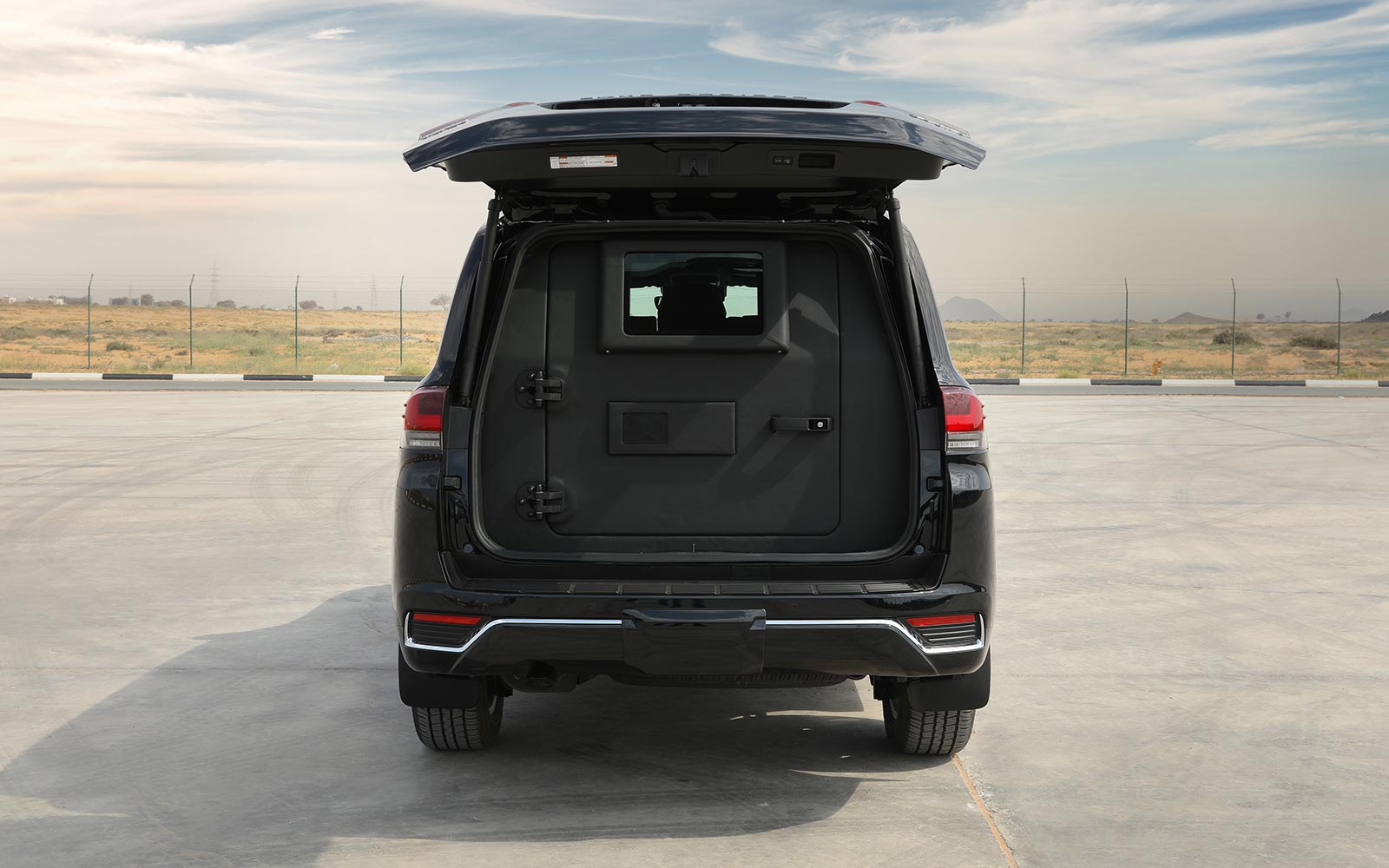
TAG's 2026 Land Cruiser 300 GXR specification uses a 3.5-litre twin-turbo V6 petrol engine, automatic transmission and four-wheel drive. The company replaces the original windscreen and door glass with curved transparent armor, installs overlapping protection around the glazing, reinforces the A, B, C and D pillars, strengthens the door hinges and adds protection to areas including the firewall, roof, fuel tank and floor. Run-flat inserts, communication equipment and other mission-specific hardware can also be incorporated depending on the customer's requirements.
Why the VR7 certification matters
TAG's strongest argument for the LC300 is certification of the complete vehicle. The company says its Toyota Land Cruiser 300 underwent VPAM Edition 3 VR7 testing at Beschussamt Ulm in Germany, where the vehicle was subjected to more than 580 ballistic rounds aimed at critical areas and then nine successive blast tests. TAG says the vehicle completed the program with no penetrations.
Certification becomes most demanding at the points where protective materials meet. Ballistic steel and transparent armor may perform to specification in laboratory tests, yet a completed conversion introduces window overlaps, door apertures, pillars, roof joints and numerous transitions between materials. Whole-vehicle testing exposes those junctions to attack and provides a clearer measure of the integrity of the finished protective cell.
TAG currently lists VR7-certified Toyota platforms including the Land Cruiser 300, Land Cruiser 200, Land Cruiser 76 and Hilux. The company also offers protection across other standards, including CEN, NIJ and UL, allowing specifications to be matched to different operational and procurement requirements.
The difficult engineering begins after the armor goes in
Adding protection creates an immediate vehicle-dynamics problem. Additional mass affects braking distances, suspension loading, tire wear, acceleration, handling and component life. Heavier doors impose greater loads on hinges and frames. Transparent armor changes the behavior of window assemblies. Underbody and blast protection alter both weight and packaging. For fleet operators, these consequences can matter as much as the nominal armor rating because a protected vehicle still has to deliver predictable uptime.
TAG says it supplements ballistic testing with performance data covering braking, turning and acceleration on some of its certified Land Cruiser programs. Procurement is increasingly focused on the behavior of the completed vehicle at its converted weight, including its ability to stop, maneuver and remain mechanically dependable in service.
For African fleets, the duty cycle makes this particularly relevant. A protected SUV used by an executive in Nairobi, Lagos or Johannesburg may spend much of its life in dense traffic; another vehicle supporting a mine, energy project, embassy or government operation may regularly cover long distances on much harsher roads. In both cases the buyer needs survivability, serviceability, parts support and acceptable whole-life operating costs.
A portfolio wider than executive SUVs
TAG's portfolio now reaches well beyond the Land Cruiser. The company began with cash-in-transit vehicles, expanded into law-enforcement and SWAT products, and subsequently added high-end passenger protection and military applications. Today it supplies protected SUVs and sedans, cash-in-transit vehicles, tactical law-enforcement platforms, armored personnel carriers and military-grade security vehicles.
Africa has formed part of that international expansion for many years. In 2013 the company announced deliveries of Ballistic Armored Tactical Transport vehicles to Senegal and Nigeria. In 2016 it formed a strategic alliance with South Africa's Paramount Group to market a wider range of civilian, law-enforcement and military protected vehicles in selected international markets, including Africa.
TAG's own location network lists coverage across a broad range of African countries, including Algeria, Angola, Côte d'Ivoire, Ghana, Kenya, Libya, Nigeria, Tanzania, Uganda, South Africa, Sudan and South Sudan, among others. These locations indicate international sales and support coverage rather than manufacturing operations in every market.
Three decades of moving up the protection spectrum
Pazderka's first market was cash-in-transit. TAG's historical material records its first order in 1992 and describes the company's initial focus as exclusively CIT. From there it moved into police and tactical applications and then protected passenger vehicles for private and corporate users. By the 2010s, government and institutional contracts had become a more visible part of the business.
The company's published history records long-term arrangements with United Nations offices and, in 2016, selection for a ten-year blanket purchase agreement with the U.S. Department of State covering specialist armoring and integration work on a range of vehicle platforms. Government programs of this kind place a premium on repeatability, documentation, testing and certification alongside the fabrication itself.
Pazderka has also been associated with TAG's international partnerships. When the company entered its 2016 alliance with Paramount Group, he framed the relationship around combining TAG's commercial-vehicle armoring capability with a broader defense and security portfolio. The alliance was announced at the Africa Aerospace and Defense exhibition in South Africa.
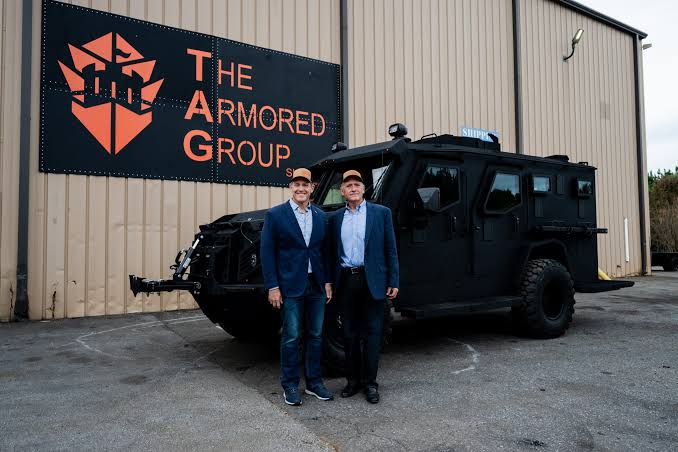
By 2025, Pazderka remained founder, President and CEO. During a visit by U.S. Senator Ted Budd to the company's Shelby, North Carolina production campus, TAG presented the facility as part of its continuing investment in American manufacturing and skilled armored-vehicle production.
From specialist converter to manufacturing platform
TAG describes itself today as an engineering, manufacturing and customization business. The breadth of its product lines and investment in testing and production infrastructure reflect its development from a specialist converter into a broader protected-mobility manufacturer.
A major step came in January 2023 when TAG acquired IF Armor International and its secured 110-acre campus in Shelby, North Carolina. The site includes two secured production buildings, a live-fire testing range and a vehicle mobility test field. The company said the acquisition was designed to increase manufacturing capacity in response to global demand and was expected to support more than 100 jobs in the area.
Earlier company history documents manufacturing operations in the United States, Canada, Dubai, India and Germany, the latter following TAG's acquisition of JPA Armoring & Fahrzeugbau Stadthagen in 2017. As with any private industrial company whose footprint evolves through acquisitions and operating changes, current plant status should be confirmed directly for procurement purposes rather than inferred from older announcements.
The competitive proposition: certification, customization and range
TAG operates in a fragmented international armoring market populated by specialist converters, defense groups and regional manufacturers. Its competitive proposition rests on broad platform coverage, the ability to customize vehicles for different missions and the use of independently tested protection standards.
The Toyota Land Cruiser family is strategically useful within that proposition because it bridges civilian and operational markets. An LC300 can be configured as a discreet protected executive SUV; a Land Cruiser 76 can serve a more austere security or field role; a Hilux provides a protected pickup platform. For customers running fleets across Africa and the Middle East, using familiar Toyota mechanical architectures can simplify parts sourcing and routine servicing even though the armored elements still require specialist support.
What African fleet buyers should examine
The growth of the protected-vehicle market in Africa creates a demanding procurement environment. Buyers need to establish whether certification applies to the complete vehicle or only to sample materials; what weight the conversion adds; whether suspension and braking have been recalibrated; how doors and hinges are reinforced; whether tires and wheels are appropriate to the final mass; and what service arrangements exist once the vehicle is deployed far from the manufacturing plant.
For a fleet manager, the practical questions continue after delivery. Who can replace transparent armor locally? Which modified components remain covered by the original vehicle warranty? How quickly can specialist parts reach the operating country? What happens to the vehicle's payload after conversion? What maintenance interval is appropriate at the new operating weight? Can the supplier provide performance data alongside the ballistic certification?
TAG's Land Cruiser 300 brings several strands of the company together in one vehicle: independent protection certification, conversion engineering and a base platform with an extensive international service ecosystem. Its VR7 designation sits within a broader operational proposition involving durability, supportability and vehicle behavior at the converted weight.
Protected-vehicle procurement is becoming more exacting. Buyers increasingly examine how the completed vehicle behaves, the scope and independence of its certification, the effect of additional mass, and the cost and complexity of keeping it operational over several years.
The progression is visible across TAG's 34-year history. Cash-in-transit trucks led to police and tactical vehicles, protected passenger cars, government programs and military applications. The Toyota Land Cruiser 300 brings that accumulated experience into a discreet executive SUV: visually familiar and mechanically recognizable, yet extensively re-engineered beneath the production body for a substantially higher level of protection.