Africa’s EV Battery Race
The projects, companies, executives and capital building the battery systems behind Africa’s electrifying fleets.

Africa is entering the electric-vehicle era from an unusual position. The continent possesses substantial reserves and production of several minerals that have become strategically important to battery manufacturing, yet continues to capture a relatively small proportion of the industrial value created after those minerals leave the mine.
The Democratic Republic of Congo remains central to global cobalt supply, South Africa possesses exceptionally large manganese resources, Zimbabwe has developed into one of Africa’s most important lithium producers, while graphite resources extend through Mozambique, Madagascar and Tanzania. Morocco brings another advantage: an established automotive manufacturing base, export infrastructure and proximity to European markets.
That geography is beginning to intersect with a second transformation. Fleet electrification is creating demand for batteries not only as components inside vehicles, but as financed, monitored and managed energy assets. Electric motorcycles in Rwanda and Kenya are already demonstrating how battery swapping can become an infrastructure business. Morocco is attempting large-scale cell manufacturing. Southern Africa is moving towards battery-grade manganese chemicals. Ethiopia is using transport policy to create EV demand at national scale.
The Missing Middle in Africa’s Battery Value Chain
Africa’s abundance of battery minerals provides a strategic starting position, although the distance between a mineral deposit and a finished traction battery is considerably greater than the language of mineral beneficiation sometimes suggests.
Lithium-bearing ore must first be mined and concentrated before chemical conversion into products such as lithium carbonate or lithium hydroxide. Manganese intended for battery applications requires processing to extremely high levels of purity. Natural graphite must be purified, shaped and coated before it is suitable for anodes. Nickel and cobalt move through refining and chemical-processing stages before becoming precursor materials used in cathode production.
The industrial chain then moves into increasingly specialized manufacturing. Precursor cathode active material is converted into cathode active material. Anode materials, separators, electrolyte and other components are brought together in cell factories. Individual cells are grouped into modules or packs and integrated with battery-management electronics, electrical protection, temperature-control systems, structural enclosures and software.
Each additional processing stage introduces more engineering, capital, intellectual property and skilled labor. Africa has historically captured comparatively little of this intermediate territory, creating a missing middle between mineral extraction and high-value battery manufacturing.
Morocco is moving across several stages simultaneously. South Africa and Botswana are concentrating on specialist manganese chemicals. Zimbabwe is developing lithium conversion. The DRC and Zambia are pursuing a broader regional value-chain strategy around copper and cobalt. East Africa approaches the issue from the opposite end, using commercial motorcycle demand to create expertise in battery packs, charging and swapping systems.
Morocco Builds Africa’s Most Advanced Battery Manufacturing Cluster
Morocco has moved further than any other African country towards establishing a large, internationally connected battery-manufacturing ecosystem. The strategy builds on an automotive industry that already possesses considerable industrial depth, including major Renault and Stellantis manufacturing operations, extensive supplier networks and export infrastructure serving international markets.

The most ambitious project is Gotion Power Morocco’s battery complex in the Atlantic Free Zone near Kenitra. The first phase is designed around 10 GWh of annual lithium-iron-phosphate cell and pack capacity, backed by approximately US$1.3 billion of investment. Subsequent phases could expand the complex towards 100 GWh.
Gotion’s significance lies in the move beyond battery-pack assembly. The intended configuration brings cell manufacturing into an African automotive environment, potentially connecting local battery materials with vehicle production at scale.


Morocco already possesses operating capacity elsewhere in the battery-material chain. At Jorf Lasfar, COBCO has commissioned nickel-manganese-cobalt precursor cathode active material production. BTR New Material Group is developing cathode and anode capacity, while the wider Moroccan ecosystem is also beginning to incorporate battery recycling.

The test will be localization. If domestic precursor material feeds local cathode production, cathode and anode output supplies cell manufacturers, and cells move into vehicles assembled in Morocco, the country will have developed an increasingly integrated battery-to-vehicle supply chain rather than a series of export-oriented factories operating independently.
Gotion High-Tech
Gotion enters Morocco as an established international lithium-ion battery manufacturer. Its long-term industrial impact will depend on workforce development, supplier relationships and the extent to which Moroccan-produced materials become integrated into local cell production.
COBCO
The partnership between Al Mada and CNGR Advanced Material gives Morocco operating capability in a technically demanding stage between mineral refining and cathode production.
BTR New Material Group
BTR extends Morocco’s battery strategy into both sides of the lithium-ion cell. Vice President Yang Shuzhan has been among the senior executives involved in the company’s engagement with Moroccan authorities.
Morocco’s industrial institutions
The next phase of policy shifts from investment attraction towards industrial depth: domestic suppliers, engineering companies, chemical producers and technical training will determine how much value remains in Morocco.

Southern Africa Converts Manganese into a Battery Opportunity
Southern Africa’s strongest near-term battery opportunity may lie in advanced materials rather than cells. South Africa possesses globally significant manganese resources and a long-established mining and metallurgical industry, while evolving cathode chemistries are creating demand for much more highly processed manganese products.
High-purity manganese sulphate monohydrate is used in several cathode formulations, including NMC batteries, and could become increasingly important if manganese-rich chemistries such as LMFP gain further commercial traction.
South Africa’s beneficiation challenge
Resource strength alone will not secure the market. Reliable electricity, freight logistics, investment certainty and specialized technical skills will shape the competitiveness of South African battery-grade manganese.
Manganese Metal Company is developing this opportunity from its industrial base in Mbombela. Its MTX-1 plant has been designed to produce approximately 6,000 tonnes of HPMSM annually, with qualification-volume production marking the important transition from commissioning towards customer validation.
The qualification stage matters because automotive battery supply chains impose exacting requirements. A factory can be mechanically complete while remaining some distance from full commercialization. Long-term offtake arrangements, repeatable product quality and customer acceptance ultimately provide stronger indicators of industrial maturity than installed equipment alone.
Botswana Builds a Regional Manganese Proposition
Botswana is developing a complementary battery-grade manganese opportunity through Giyani Metals’ K-Hill project. A demonstration plant in Johannesburg has produced high-purity manganese oxide and high-purity manganese sulphate and supplied material for prospective customer testing.

The geography is significant. Botswana provides the resource and proposed commercial processing location, while Johannesburg contributes engineering capability and demonstration-scale infrastructure. Prospective international customers, in turn, provide the qualification standards the final material must satisfy.
Industrial Development Corporation
The IDC’s support for Giyani demonstrates how regional development finance can help bridge the gap between successful technical demonstration and a final investment decision.
This combination illustrates the potential importance of regional specialization. African battery projects do not necessarily need to reproduce every supporting capability within national boundaries. Laboratories, engineering firms, mines, chemical plants and downstream manufacturers can operate as regional networks if infrastructure and trade arrangements allow them to do so efficiently.
Zimbabwe Pushes Lithium Processing Downstream
Zimbabwe has become one of the most important African laboratories for government-led mineral beneficiation. Rapid lithium development has been supported principally by Chinese investment, while policy has progressively tightened around the export of raw and semi-processed material.
Zhejiang Huayou Cobalt has moved further downstream through Prospect Lithium Zimbabwe, adding lithium-sulphate production to a mining and concentration operation. Lithium sulphate remains an intermediate rather than a finished battery material, but its production requires a more sophisticated chemical-processing base than concentrate exports alone.


Zimbabwe Ministry of Mines and Mining Development
The country’s concentrate-export restrictions are designed to force processing further downstream. Their success will depend on whether conversion capacity can expand quickly enough to absorb mine output without undermining investment.
Zimbabwe’s strategy carries execution risk. Processing plants require reliable electricity, water, chemicals, engineering expertise and transport infrastructure, while global lithium prices influence whether conversion projects remain economically attractive.
The country nevertheless provides one of the clearest tests of whether a mineral-rich African economy can use policy and strategic investment to capture more of the value chain before material leaves its borders.
East Africa Builds a Battery Industry Around Commercial Motorcycles
The battery businesses emerging in Kenya and Rwanda have developed from a different commercial problem. Motorcycle taxis and delivery motorcycles are income-generating assets used intensively throughout the working day, making charging downtime and battery cost central to the economics of electrification.
Battery swapping has become one of the most prominent responses. Instead of permanently associating a pack with one vehicle, the operator maintains a pool of batteries distributed across charging and swapping stations. Riders exchange depleted packs for charged ones and return to work quickly.
The resulting business resembles an energy-infrastructure operator as much as a motorcycle manufacturer.


Roam
Roam’s work around pack architecture, battery management, enclosures and fast charging illustrates the industrial capability that can develop even when electrochemical cells continue to be imported.
Ampersand has developed one of the region’s longest operating histories in this model. Spiro is pursuing the same broad opportunity at substantially greater scale, while Roam has emphasized fast charging, removable batteries and local vehicle engineering. The competition between these models is turning East Africa into an important testing environment for high-utilization fleet batteries.

Josh Whale
Whale built Ampersand around the economics of commercial motorcycle utilization. After leading the company through its formative growth, he announced in August 2026 that he was handing the CEO title to Executive Board Chair Michael Barton as Ampersand entered its next scaling phase. Whale remains central to the company’s founding technology and operating model.

Anant Badjatya
Badjatya leads Spiro as the company moves from rapid vehicle deployment into the more complicated task of managing a large distributed battery and swapping network across multiple African markets. He joined in 2026 after leading Indofast Energy, the IndianOil–SUN Mobility battery-swapping joint venture in India.

Huy Chieu
Chieu’s appointment places conventional automotive product-development experience inside a business increasingly focused on localization, engineering and industrial scale-up.
Ethiopia Creates Demand Before Building a Battery Industry
Ethiopia has approached electric mobility from the demand side. The government moved in 2024 to prohibit imports of new petrol and diesel vehicles, an unusually aggressive response to the economic cost of petroleum imports and the country’s growing supply of renewable electricity.
Its National E-Mobility Strategy and Implementation Plan 2025–2030 places policy reform, fleet transition, charging infrastructure, public-transport electrification and local capacity building within a single national framework.
Ministry of Transport and Logistics
Ethiopia’s policy places local capability alongside charging infrastructure and fleet electrification. The longer-term question is whether transport demand can support domestic battery integration, service and manufacturing.
Large domestic EV demand can create a market for battery diagnostics, replacement packs, charging equipment, battery-management expertise and eventually second-life and recycling services. Pack assembly using imported cells represents a plausible intermediate stage because its capital requirements are dramatically lower than those associated with cell manufacturing.
Ethiopia should therefore be regarded as an emerging battery-market story rather than an advanced battery-manufacturing center. Its importance lies in testing whether sufficiently rapid EV adoption can eventually encourage industrial capability to grow around demand.
The DRC and Zambia Seek an Industrial Future for the Copperbelt
The Democratic Republic of Congo and Zambia sit at the center of one of the most consequential industrial questions surrounding Africa’s energy-transition minerals. The DRC is the world’s dominant producer of mined cobalt and a major source of copper, while Zambia possesses a long-established copper industry and significant additional resources.
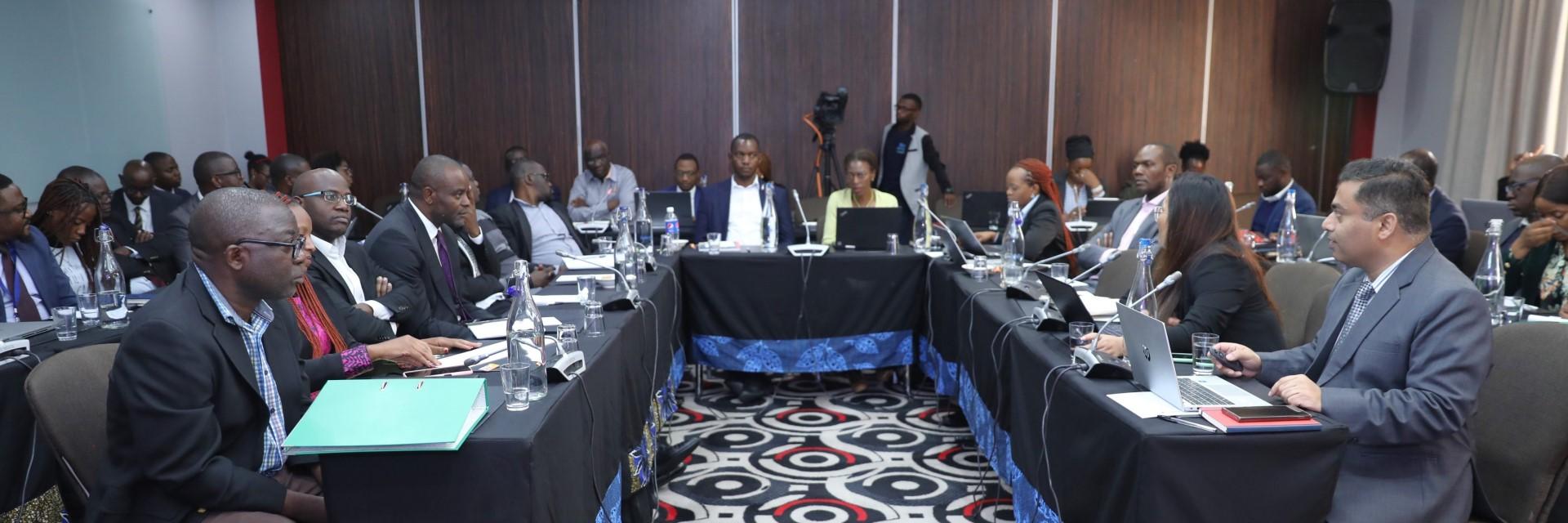
The proposed transboundary Battery and Electric Vehicle Special Economic Zone is intended to change a long-standing pattern in which higher-value battery manufacturing takes place far from the Copperbelt.
The concept remains at a significantly earlier stage than operating facilities in Morocco. Feasibility work, infrastructure planning, investor mobilization and institutional development still have to translate into physical industrial capacity.
Transforming mineral advantage into competitive battery production will require reliable electricity, industrial water, road and rail logistics, specialist skills, chemical inputs and large customers prepared to qualify locally produced materials.

Gagan Gupta
Gagan Gupta has built ARISE IIP around an industrial-platform model combining infrastructure development, capital structuring and long-term zone operations. Before founding ARISE, he spent more than a decade at Olam, including as Managing Director and a member of its Executive Committee. ARISE says its platform has invested more than US$2 billion and committed more than US$4 billion across large-scale African infrastructure projects. In the DRC–Zambia battery initiative, ARISE was first selected to undertake the pre-feasibility work and was later chosen as strategic partner and developer for subsequent phases, placing Gupta’s group at the interface between mineral policy and the industrial infrastructure needed for local battery-value-chain manufacturing.
Congolese Battery Council
The council forms part of the DRC’s attempt to coordinate movement from cobalt and copper production towards battery materials and manufacturing.
UNECA
UNECA has been among the principal institutional architects of the transboundary initiative, combining economic analysis, policy coordination and regional value-chain development.
Afreximbank
Afreximbank’s exposure spans industrialization initiatives and downstream electric mobility, reflecting the breadth of financing that batteries will require.
ARISE IIP
The development of battery manufacturing requires industrial zones where electricity, water, logistics and environmental services function collectively rather than as isolated project inputs.
Capital Moves Deeper into the Battery Chain
Africa’s battery industry will ultimately be constrained as much by capital as by minerals. Large cell factories can require investment running into billions of dollars, while cathode and anode plants combine heavy capital expenditure with sophisticated process technology. Battery-swapping networks face a different challenge: battery assets must be financed before revenue is recovered through repeated use.
Development institutions can reduce perceived project risk and draw commercial lenders into first-of-their-kind manufacturing facilities. Chinese strategic investors bring another critical component: established processing technology, manufacturing know-how and global customer relationships.
African Development Bank
The AfDB’s involvement in Gotion Morocco positions advanced battery manufacturing simultaneously as industrialization, climate investment and employment creation.
Afreximbank
Its activities across industrial corridors and mobility infrastructure illustrate the range of capital structures required as battery value chains deepen.
The longer-term economic value for host countries will depend on localization and knowledge transfer. A factory operating indefinitely as an enclave dependent on imported equipment and expertise creates less domestic capability than one that progressively develops local suppliers and engineers.
The same principle applies downstream. Banks and leasing companies will increasingly need to understand battery residual value, degradation and lifecycle economics as vehicle finance and battery finance begin to overlap.
Changing Battery Chemistry Reshapes Africa’s Mineral Advantage
Africa’s industrial strategy is developing while battery technology itself continues to change. NMC batteries became central to the first generation of long-range electric vehicles, while LFP has gained substantial market share in lower-cost vehicles and stationary storage.
The change has major implications for mineral producers because LFP requires neither cobalt nor nickel. Morocco’s Gotion investment illustrates how Africa’s largest advanced cell project can be built around a chemistry that does not depend on cobalt from the DRC.
Manganese could benefit from movement in another direction. LMFP and other manganese-rich formulations could increase manganese intensity while retaining many of the cost and safety characteristics that have supported LFP adoption.
The next constraint
Electrochemists, chemical engineers, materials scientists, battery-management specialists and manufacturing engineers will become as important to competitiveness as the mineral resources beneath the ground.
Sodium-ion introduces another variable. The chemistry is moving into commercial production internationally, but African deployment should be treated cautiously until individual projects and fleet applications are independently confirmed.
The more durable advantage lies in capability: producing high-purity chemicals, operating laboratories, qualifying materials, engineering packs and adapting manufacturing as battery specifications evolve.
Recycling and the Emerging Battery Lifecycle Industry
Every battery entering an African vehicle today is also the beginning of a future materials-recovery and waste-management challenge. Traction batteries gradually lose usable capacity as they age and accumulate charge cycles, but packs retired from demanding vehicle use can retain enough capacity for stationary storage before recycling becomes necessary.
Africa’s current end-of-life volumes remain modest, although the installed battery population is expanding quickly. Large electric-motorcycle fleets already represent tens of thousands of batteries circulating through commercial transport networks, while electric buses, passenger cars and commercial vehicles are entering service elsewhere.
Black mass
Recovered battery material can re-enter refining and cathode-material supply chains. Morocco’s battery cluster is already beginning to incorporate recycling capacity alongside primary manufacturing.
Battery-swapping companies possess an unusual advantage because operators retain detailed visibility over individual assets. Cycle counts, degradation, location and performance can be monitored centrally, potentially allowing more controlled decisions around repair, second life and recycling.
Regulators will need systems governing collection, transport, damaged-battery handling and producer responsibility. Developing these frameworks early could turn battery waste into a secondary source of industrial feedstock rather than another imported technology reaching end of life without a domestic recovery pathway.
Measuring Africa’s Progress from Minerals to Manufacturing
Africa’s battery economy is developing through several distinct industrial corridors, reflecting differences in resources, manufacturing capability, vehicle demand, infrastructure and access to international markets.
Morocco currently possesses the most advanced combination. Southern Africa is progressing through specialist manganese materials. Zimbabwe is attempting a comparable transition in lithium, while the DRC and Zambia are pursuing a broader industrial corridor around cobalt and copper. East Africa has established a different source of competitive advantage through battery packs, swapping, charging and fleet-energy systems. Ethiopia adds a demand-led route built around accelerated EV adoption.
Industrial progress beyond GWh
Commissioned capacity · customer qualification · commercial output · local content · supplier development · skills transfer · offtake agreements · recycling capability
Progress should therefore be measured by more than announced gigawatt-hours. Installed cell capacity matters, but so do tonnes of qualified battery chemicals, local cathode and anode output, battery packs engineered on the continent, domestic component suppliers, laboratories capable of qualification, trained engineers and recycling facilities returning materials to productive use.
Project status will remain critical. An announcement does not create industrial capacity. A memorandum does not establish a supply chain, and completion of factory construction does not guarantee qualification or competitive production.
The strongest projects will be those that move through financing, construction, commissioning and qualification into sustained commercial output with identifiable customers. Localization provides another important measure, particularly where domestic companies begin supplying factories and locally produced materials start moving between African plants.
Louis Nel’s work at Manganese Metal Company and Nigel Robinson’s task of taking Giyani’s K-Hill project towards commercial development illustrate two different stages of that progression: one built on an established metallurgical company entering a new market, the other on converting a technically validated project into a financed industrial operation.
From battery minerals to electrified fleets
Africa already supplies part of the geological foundation on which the global battery economy is being built. The industrial opportunity now lies in capturing progressively more of what follows: refining, battery materials, cells, packs, software, vehicles, energy infrastructure, finance, second life and recycling.
Morocco is beginning to demonstrate what an integrated manufacturing cluster could look like at scale. Southern Africa is testing whether established mineral and metallurgical industries can adapt to battery-grade chemical requirements. East Africa is demonstrating that operating conditions can themselves become a source of technological capability, while Ethiopia, Zimbabwe and the Copperbelt are testing different routes from policy and mineral advantage towards deeper industrialization.
The scale of that progression will determine whether the continent remains principally a source of raw materials for the electric-vehicle transition or develops into one of the regions where the technologies and energy systems powering future fleets are increasingly engineered, financed and manufactured.