Special Report: Automated Haulage Systems and the Future of Mining
Haulage in Mining: What Autonomy Actually Costs, and What It Actually Returns
Every executive reading this briefing eventually asks the same question underneath all the others: does this pay for itself, and on what timeline. The honest answer, drawn from the six operations profiled here, is that it depends enormously on scale, ownership structure, and how much of the cost a mine is willing to absorb upfront versus spread across the life of the asset.
The capital side of the ledger
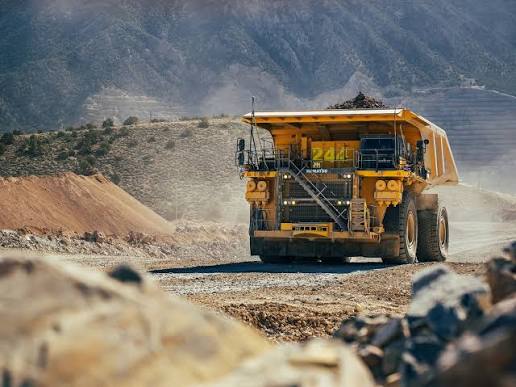
At the high end, Nevada Gold Mines committed to 62 Komatsu 930E-5 autonomous trucks across its Cortez and Carlin districts, on top of the private 5G network Sedna and Nokia built specifically to support them, infrastructure most conventional mine sites simply do not already have. That network, not the trucks themselves, is often the larger and slower part of the investment, since a mine's existing wireless setup, built for basic radio traffic, generally cannot support the low latency data exchange autonomous fleets require without a dedicated rebuild.
At the other end of the spectrum, Rio Tinto's experience at Gudai Darri shows what the same investment looks like when it is designed into a mine from the first construction drawing rather than retrofitted. The company's 2026 decision to expand the mine's capacity from 43 to 50 million tonnes a year came at a capital intensity of around 10 dollars a tonne, a fraction of what a comparable greenfield expansion would cost, specifically because the underlying autonomous systems, drills, and remote operations link back to Perth already had headroom built in. Kamoa-Kakula took a third approach entirely, splitting its equipment risk across two vendors, Sandvik and Epiroc, at the cost of running two parallel maintenance and training programs rather than one, a premium paid specifically for supply chain resilience in a jurisdiction where losing one supplier could halt an entire fleet.
Where the returns actually show up
The clearest, most consistently cited return across every OEM in this briefing is tyre and maintenance life. Komatsu has reported an estimated 40 percent improvement in tyre life on autonomous trucks compared with conventionally driven equipment of the same class, alongside a roughly 13 percent reduction in overall maintenance requirements, figures the company backs with testing at its Arizona Proving Grounds. Caterpillar reports similar patterns across the Pilbara, with mines running its Command for hauling system recording productivity increases of more than 30 percent and reductions in safety incident frequency of as much as 50 percent.
Workforce economics tell a more nuanced story than either automation's critics or its advocates usually present. A conventional 24 hour haul truck typically needs around five operators to cover shift rotations. Under FrontRunner at Nevada Gold Mines, a single controller per shift can supervise an entire autonomous fleet, a change Barrick's leadership has consistently framed as a shift in the shape of the workforce rather than a straightforward reduction, moving people from driving roles into systems monitoring, maintenance, and technical support. Caterpillar's 25 million dollar, five year workforce training commitment, announced alongside its CES 2026 construction autonomy push, is itself a return on investment calculation, aimed at growing the labour pool its own machines depend on in an industry facing a shortage of 349,000 workers in 2026 alone according to the Associated Builders and Contractors.
The case where the numbers did not work
Syama is the necessary counterweight to every success story in this briefing, and any honest accounting of automation economics has to include it. Resolute Mining's original underground automation program with Sandvik was scrapped after the underlying mine design proved incompatible with the automated system built to run inside it, a failure that cost real money without ever producing the returns the original 2018 announcement promised. What ultimately restored the mine's economics was not more automation but disciplined conventional operation: reserves grown from 7 million to 10 million ounces through sustained exploration spending, and a difficult equity raise the company's own chief executive described candidly as painful for existing shareholders. The lesson for any mine modelling a return on automation investment is blunt: the return only materialises if the technology actually fits the specific geology and mine plan in front of you, not the generalised case study a vendor presents from elsewhere.
What this means for African mine managers specifically
None of the operations in this briefing are African mines evaluating this technology from a standing start with African capital constraints, and that gap matters. Hitachi's approach in Zambia and Botswana is the closest analogue available: rather than a single large capital commitment, the company is testing narrower, cheaper interventions, remote operated excavators addressing a specific skills shortage in Botswana, a battery electric truck trial leveraging trolley assist infrastructure First Quantum had already built in Zambia since 2012. That layered, problem specific approach, solving the most expensive constraint first rather than importing a Pilbara scale automation program wholesale, is a more realistic starting point for the capital and infrastructure conditions most African mines actually operate under.