The development of autonomous vehicles has been going on for many years in the mining sector and autonomous equipment has been deployed commercially for more than a decade. Recent years have seen the emergence of fully automated mining operations, including the world’s first purpose-built automated mine where all activities are designed to be performed by automated machinery. It is expected that fully automated mines will become increasingly common in the next decades, enabling operations that are considerably safer and at the same time more efficient and sustainable.

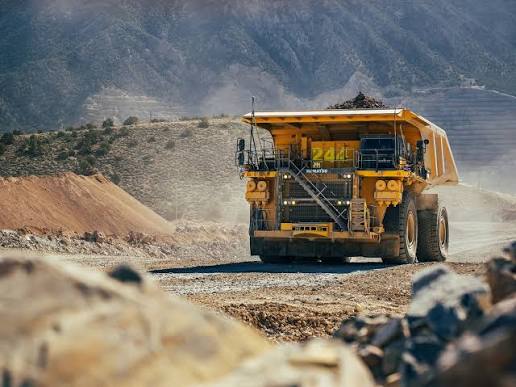
Given the operational efficiencies that can be realized, it comes as no surprise that the mining sector has been leading the way for the development of fully autonomous machinery. Today, haul trucks are arguably the most automated mining equipment. Autonomous haulage systems (AHS) for mining trucks can both improve safety and reduce operating costs. AHS allows the autonomous movement of materials such as ore or material waste accumulated during excavation operations. AHS typically leverage vehicle controllers, high-precision navigation systems, wireless networks, obstacle detection systems and prescribed route mapping to allow trucks to operate predictably and safely as well as interface with other equipment. The latter can include auxiliary machinery driven by humans which are also present at the mine site and need to coordinate operations with the driverless trucks, ensuring safe and effective coexistence in the AHS controlled area.
OEMs are increasingly developing solutions for autonomous operations. Komatsu and Caterpillar are the frontrunners in terms of AHS in the mining sector, having more than 600 autonomous mining trucks in operation each. Other notable OEMs with significant efforts in autonomous haulage solutions are Epiroc, Hitachi Construction Machinery, Liebherr and XCMG. In addition to OEMs, a range of independent players are highly involved in enabling autonomy in the mining sector, retrofitting existing equipment and collaborating with manufacturers. Still, each year brings additional developments. Dump trucks without driver cabs are for example being developed by OEMs to provide more flexibility in loading positions. The truck’s software and logistics system direct the vehicle on how it should perform. When an obstacle is encountered, onboard artificial intelligence (AI) technologies can conduct safety assessments and avoid it or switch routes automatically.
The application of various degrees of autonomous technology presents a number of benefits in terms of operational efficiencies as well as employee safety. The latter is a major focus in the mining sector given that mines are inherently dangerous workplaces. Increased safety is achieved by enabling operators to be located in for example an office setting. The same operator can also control multiple machines at a time, thus having a positive impact on productivity. Autonomous technology enables machines to operate continuously without the burden of breaks and shift changeovers. Driverless equipment therefore not only reduces labour costs but can also reduce fuel consumption and enhance machine life by using advanced machine control to ensure optimal driving. Berg Insight follows the development of autonomy in the mining sector closely and our latest report covering the market and associated technologies can be found here: The Connected Mining Solutions Market.