
Transport is the backbone of modern society. Every day, millions of goods travel across roads to reach businesses, hospitals, construction sites, and homes. With that comes an enormous responsibility; not only to deliver efficiently, but to do so safely, sustainably, and reliably.

That responsibility is one of the main reasons autonomous driving has become such an important part of TRATON's long-term strategy. We see autonomous technology not as a replacement for people, but as a powerful complement that helps solve some of the transport industry's biggest challenges while creating new opportunities for our customers.
Solving a Growing Driver Shortage
The logistics industry is facing a global shortage of around three million professional drivers. This challenge continues to grow as freight demand increases while the driver workforce ages.
Autonomous trucks can help fill this gap by taking on routes that are difficult to staff—long-distance journeys that keep drivers away from home for extended periods or repetitive operations in controlled environments. Human drivers will continue to play a critical role, while autonomous vehicles can perform tasks where automation delivers the greatest value.
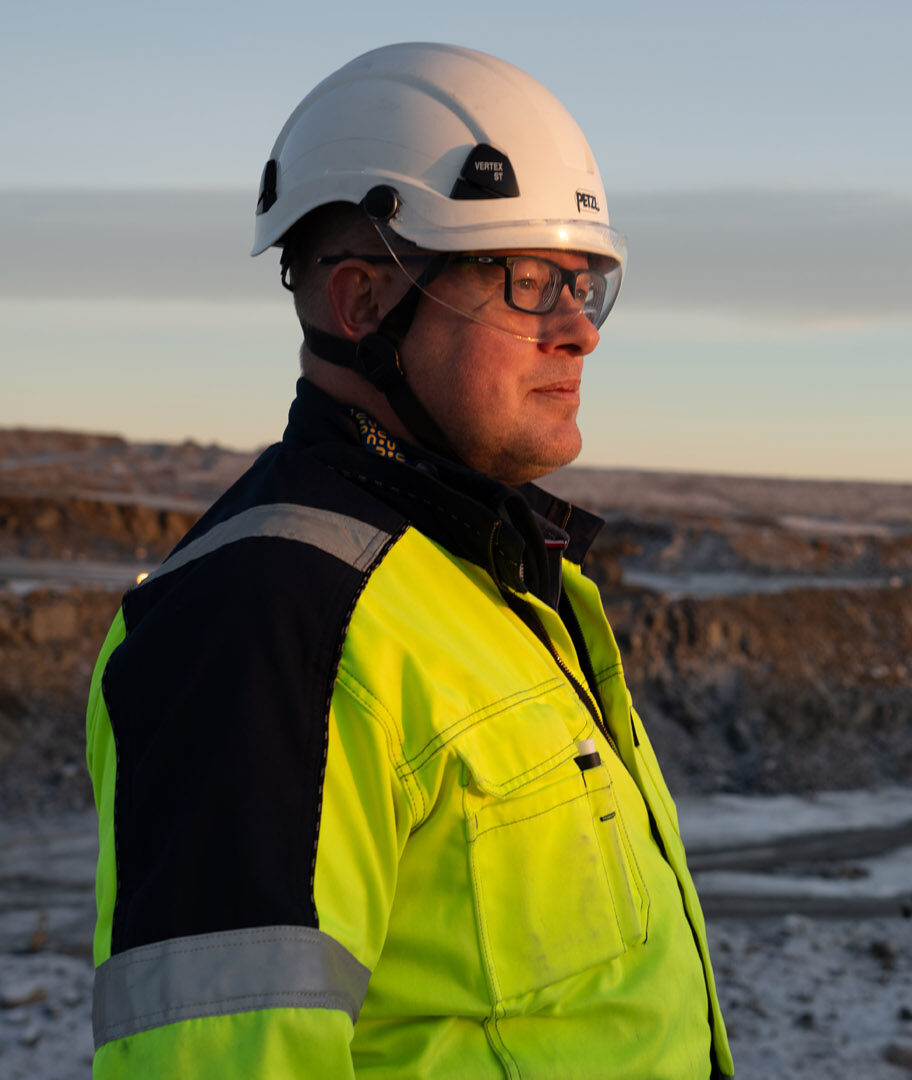
In mining, for example, many customers are transitioning to smaller electric vehicles to support their sustainability goals. While this reduces emissions, it often requires more vehicles—and therefore more drivers—to move the same amount of material. Autonomous solutions help bridge that gap.
Advancing Sustainability Through Smarter Operations
Autonomous driving is also an important enabler of sustainable transport. Autonomy alone will not deliver net-zero emissions, but it helps us operate vehicles more intelligently. Optimized driving behavior, smoother acceleration and braking, efficient routing, and better fleet utilization all contribute to lower energy consumption. These advantages become even more significant as fleets transition toward electrification. For us, autonomy and electrification are complementary technologies working together to create a more sustainable transport system.
Improving Safety
Safety remains our highest priority. The majority of road accidents today are caused by human factors such as fatigue, distraction, or misjudgment. Autonomous systems do not become tired or distracted. Their sensors continuously monitor the surrounding environment, allowing them to maintain awareness throughout every journey.
This level of consistency is particularly valuable in demanding environments such as mining operations, where safety standards are exceptionally high. It also has tremendous potential on public roads, where reducing human error can save lives.
Delivering Greater Value for Customers
For our customers, autonomous driving is fundamentally about improving business performance. Higher vehicle utilization means fleets can operate more efficiently, increasing productivity while lowering the total cost of ownership. Vehicles spend more time transporting goods and less time standing idle, helping customers maximize the return on their investments.
Recognizing these benefits early, TRATON made autonomous driving one of the first technology areas to be developed across the Group. Today, development, software architecture, and business planning are coordinated centrally, ensuring that every TRATON brand can benefit from shared innovation while maintaining the flexibility to serve different customer needs.
From Research to Commercial Deployment
Autonomous driving is no longer a distant vision—it is becoming commercial reality. One important milestone is Scania's deployment of an autonomous fleet of eleven tippers for Regroup at a manganese mine in Western Australia. Operations are scheduled to begin in late 2025, marking the first commercial autonomous deployment within the TRATON GROUP.
Our experience extends well beyond this project. Since 2022, Scania has been testing autonomous mining operations with Rio Tinto in Western Australia. We are also developing an autonomous road train solution together with Fortescue.
Across the Group, MAN has successfully demonstrated autonomous operations within container terminals through the ANITA project, proving that autonomous transport can deliver value in controlled industrial environments.
These deployments provide invaluable operational experience while helping us refine both the technology and the business models that will support future expansion.
The Journey Toward Level 4 Autonomy
Autonomous driving progresses through several levels of automation, from basic driver assistance to fully autonomous operation. Today, many commercial vehicles already operate with advanced driver assistance features. Our focus is on Level 4 autonomy—vehicles capable of operating independently within clearly defined operational domains without requiring continuous human intervention. This represents the next major step toward commercially viable autonomous transport.
Expanding to Public Roads
While autonomous operations in confined environments are already demonstrating clear value, the next frontier is hub-to-hub transportation on public roads. This involves moving freight between logistics centers along dedicated routes where operating conditions can be carefully managed.
TRATON has made significant progress in this area. MAN recently concluded Germany's ATLAS-L4 project, successfully advancing autonomous truck operations on highways. Scania has been testing autonomous transport solutions on Swedish roads since 2021, while International has begun testing autonomous software on busy freight corridors in Texas.
To accelerate development, Scania, MAN, and International have partnered with Plus, whose autonomous driving software strengthens our collective capabilities.
Today, every truck operating in these public-road trials still includes a trained safety driver. Our ambition is to remove that requirement in selected commercial operations within the next few years in the United States, with Europe expected to follow as regulations and infrastructure continue to evolve.
Building the Future of Transportation
Developing autonomous driving software is one of the most technically demanding challenges in the automotive industry. It requires advanced artificial intelligence, powerful sensor technologies, robust software engineering, and rigorous safety validation.
At TRATON, this work is transforming us into an increasingly software-driven company. More importantly, it is helping us redefine how goods move around the world.
Autonomous driving is about far more than technology. It is about creating safer roads, supporting sustainability, improving operational efficiency, and ensuring the transport industry can continue meeting society's growing needs.
The journey is well underway, and we are proud to help shape the future of smarter, safer, and more sustainable transportation.