




Zanzibar officially introduced its first electric buses into passenger service on July 23, 2026, marking the beginning of an ambitious plan to modernize the island’s public transport system. President Dr. Hussein Ali Mwinyi commissioned the initial fleet of 15 buses at the newly opened Malindi Bus Terminal in the Urban West Region. The buses are part of a long term government target to deploy 500 electric buses across the archipelago.
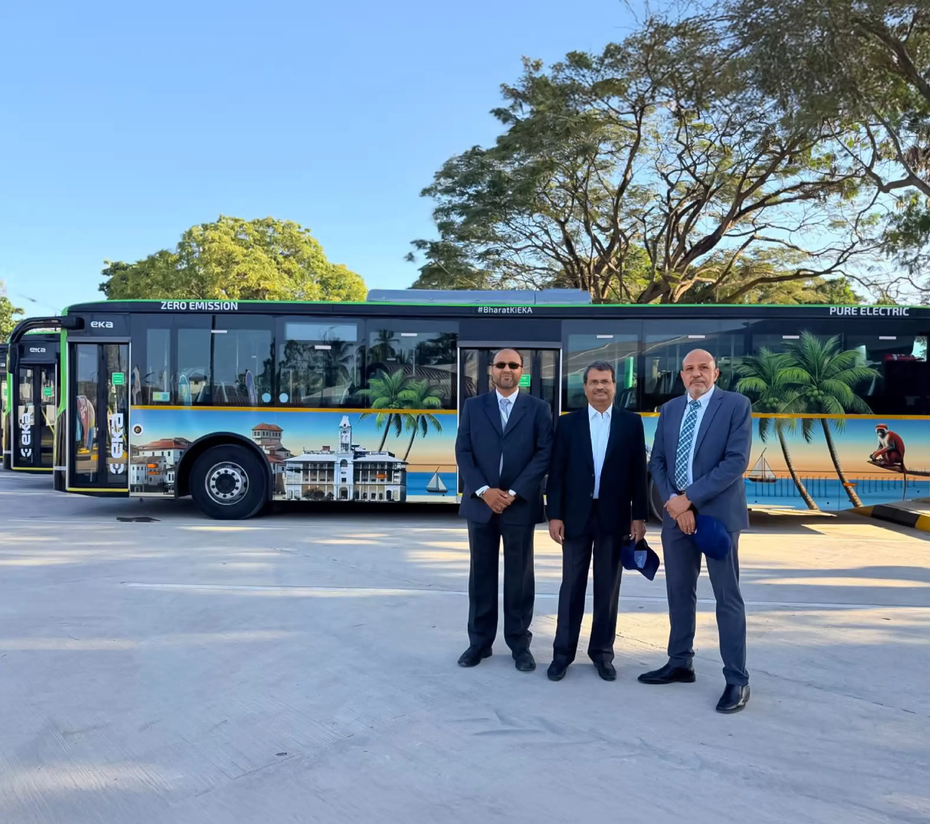
The project is being implemented through a partnership between the Zanzibar Social Security Fund (ZSSF), which is overseeing operations, India’s GRT Limited, and Indian electric vehicle manufacturer EKA Mobility, which supplied the buses.
The launch came nearly five months later than originally scheduled and coincided with a public transport fare increase of about 16 percent across Zanzibar. For many commuters, both developments took effect at the same time, reshaping the daily cost of travel regardless of whether they use the new electric buses.
Speaking during the launch, President Mwinyi emphasized that the first 15 buses represent only the beginning of a much larger transition.
“We have started with these 15 buses, but the goal is 500. Once we complete public transport, we will move to government vehicles, and ultimately to private cars. We want all of Zanzibar to use electric vehicles,” he said.
The President also instructed ZSSF to speed up the construction of additional bus terminals, noting that transport infrastructure, rather than vehicle availability, remains the biggest challenge to expanding the electric bus network.
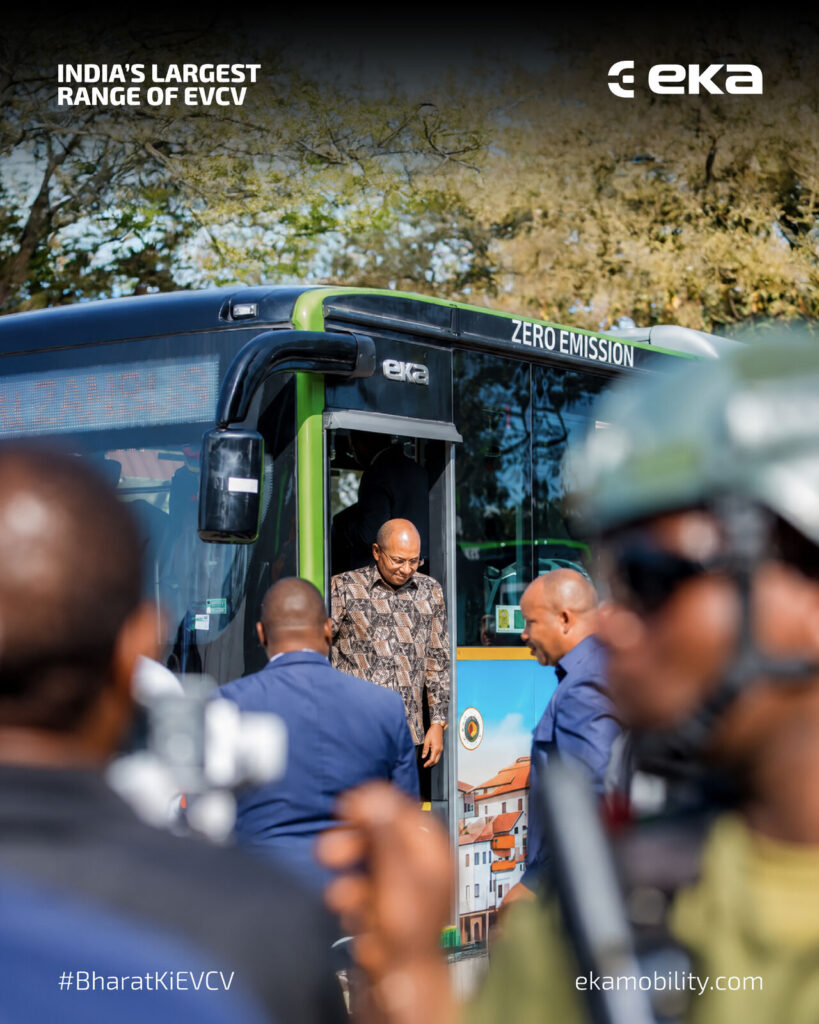
The inauguration ceremony was attended by Indian High Commissioner to Tanzania Bishwajit Dey, highlighting the growing collaboration between India and Zanzibar in sustainable transport. According to EKA Mobility, these are the first electric buses to be deployed for public passenger transport on the island.
The buses are EKA Mobility’s 12 meter model, available in 43 seat and 54 seat configurations. Each vehicle is powered by a 240 kilowatt electric motor and a 300 kilowatt hour lithium iron phosphate battery. The buses can be charged at speeds of up to 240 kilowatts, have a top speed of 80 kilometers per hour, and offer a driving range of up to 250 kilometers on a single charge.
Following delivery of the first 15 buses, EKA Mobility expects Zanzibar to procure another 115 units, increasing the fleet to 150 buses in the next phase. While this represents significant progress, it remains well below the government’s long term target of 500 electric buses.
Vijay Yelne, President for Export Marketing and Supply Chain Management at EKA Mobility, described the Zanzibar project as an important milestone in the company’s international expansion.
“This is another step in taking Indian engineering to the world, and we see Africa as a key growth market in EKA’s global expansion journey,” he said.
The initiative positions Zanzibar among a growing number of African jurisdictions investing in electric public transport as governments seek cleaner mobility solutions while reducing dependence on conventional fuel powered buses.