Special Report: Automated Haulage Systems and the Future of Mining
The Automation That Had to Be Scrapped: Resolute Mining, Syama, Mali
In 2018, engineers from Sandvik and Resolute Mining stood over blueprints for a new underground gold mine in southern Mali and made a decision few mining companies had attempted before them: rather than dig the mine first and bolt automation on afterward, they would design the entire underground operation around autonomous trucks and loaders from the very first line drawn. It was an ambitious bet, publicly celebrated at the time as a glimpse of what African mining could look like a decade ahead of schedule.
Today, that automated system does not exist at Syama. It was scrapped, quietly and without fanfare, after years of trying to make it work. What replaced it, an unglamorous mix of disciplined mine planning, a rebuilt processing plant, and a difficult equity raise, is the real reason the mine survives and grows today, and it is a far more useful story for this briefing than the one originally told.
The original plan
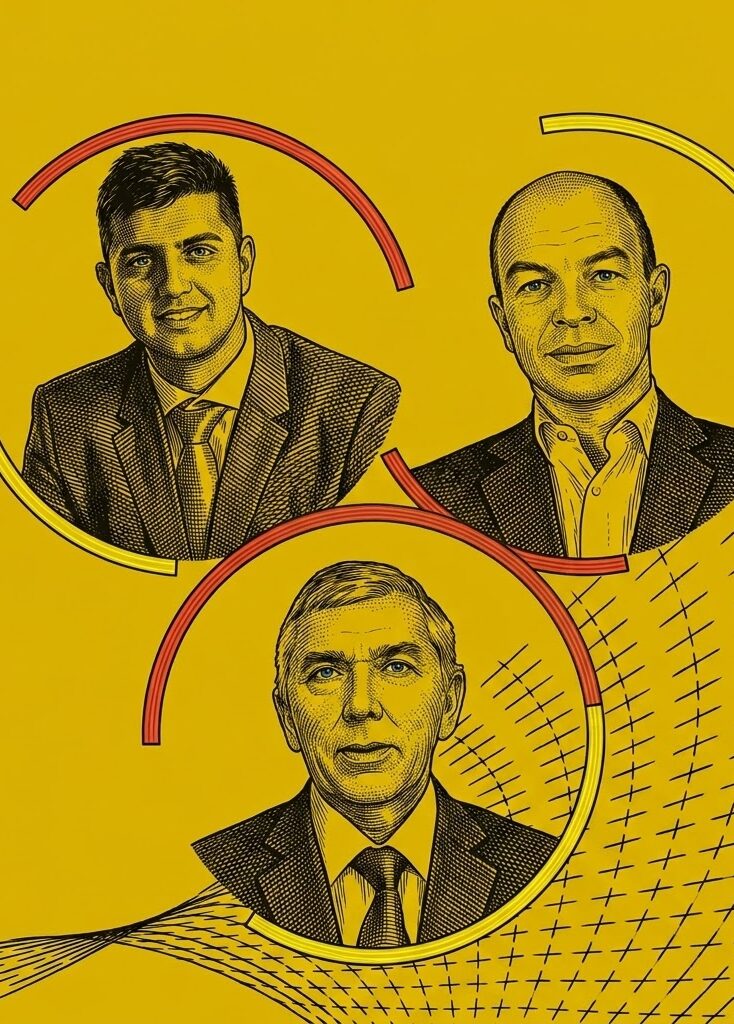
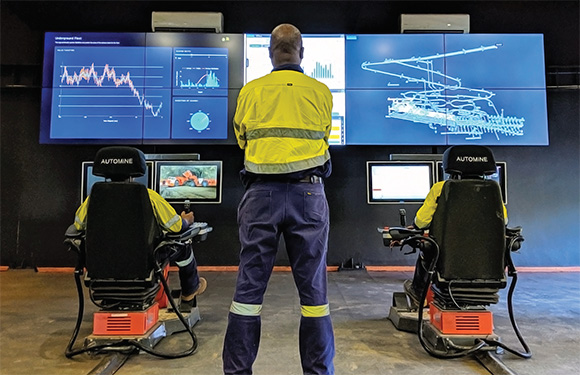
When Resolute developed the underground extension of Syama, roughly 30 kilometres from the Côte d'Ivoire border, the company set out to build the operation around automation from the start, working exclusively with Sandvik across trucks, loaders, and the software meant to coordinate them. "Most automation journeys start with existing underground operations and then retrofit automation into them, whereas we've designed the mine, we're the first mine to put all the different pieces together," said John Welborn, Resolute's managing director and chief executive at the time. Sandvik's president of Mining and Rock Technology, Lars Engström, called it a chance to build "the mine of the future in Africa."
What actually happened
It did not work the way either company described. According to Resolute's own current leadership, the underground mine's transition from open pit to a sub level caving method proved technically difficult, and automation efforts specifically faltered because of incompatible mine design, a mismatch between how the automated system needed the mine to be built and how it was actually being built underground. The company ultimately scrapped the automation program rather than continue trying to force it to work.
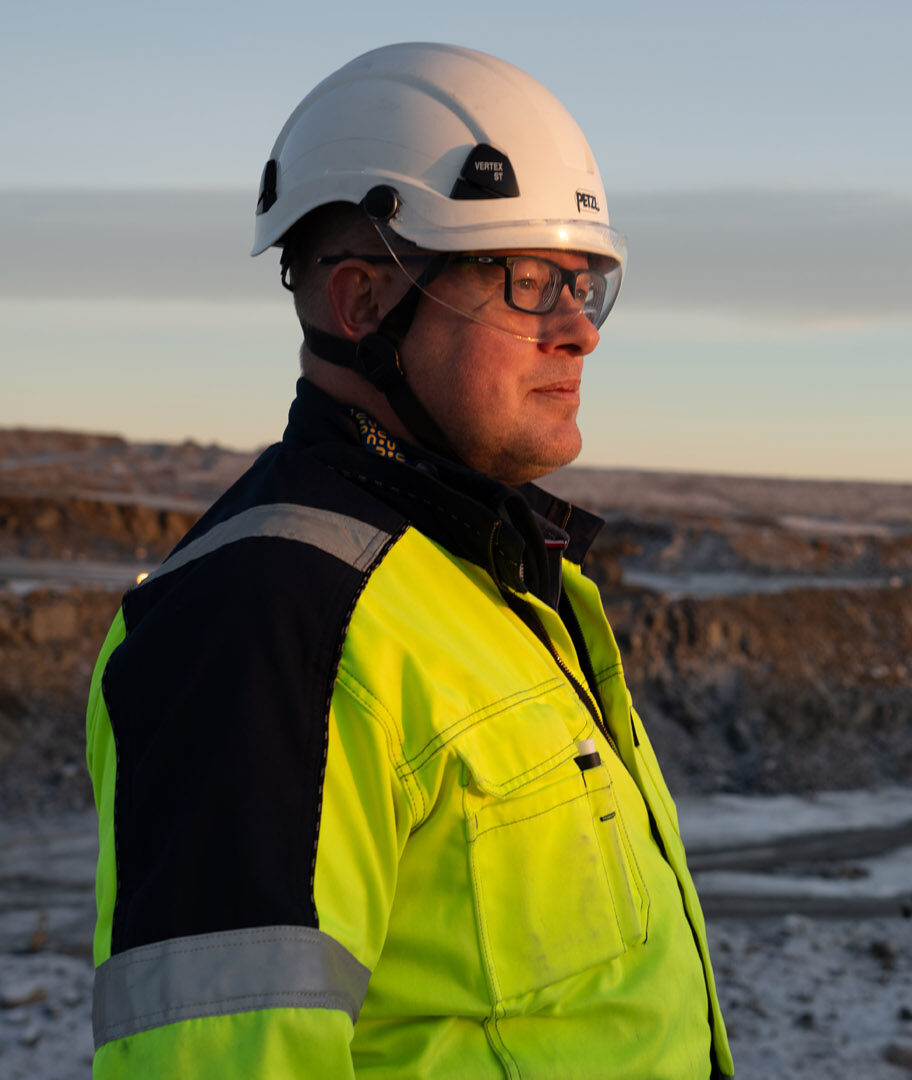
Terry Holohan, who has led Resolute through a three year operational turnaround since taking over, inherited a mine in genuine difficulty rather than the automated showcase originally promised. Underground mining was struggling to hit its targeted grades and tonnages. The sulphide processing plant, separately, was running at only 80 percent availability, with wide swings in the sulphur content of incoming ore causing repeated temperature swings in the roaster that physically damaged equipment through expansion and contraction. Holohan's response was not more automation. It was a return to fundamentals: re-establishing basic operating discipline underground, reworking the mine plan, and rebuilding the roaster to run at a steady, predictable state.
The turnaround, in numbers
The results of that more conventional approach have been substantial. Resolute has grown its gold reserves from 7 million ounces to 10 million ounces over three years of exploration drilling around Syama, spending close to 20 million dollars a year on exploration to do it, and production has expanded from around 200,000 ounces a year toward a target above 230,000 ounces, with unit costs falling as a result. Holohan credits the underlying rock itself as much as anything the company has done operationally: only about 20 percent of Syama's 85 kilometre strike length has seen extensive exploration so far, which is why he talks about the mine's future in terms most junior producers would not risk saying out loud. "Over the next five years, everybody internally and with the fund managers and the shareholders, we all know that there's a tier one mine in the making," he said, using the industry term for an operation producing more than 500,000 ounces a year, more than double what Syama produces today.
Getting there required a genuinely painful step. "We've ticked the box on sulfide processing and mining," Holohan said of the operational fixes. "What we also did in terms of the balance sheet, we had to do an equity raise, which is not good for the existing shareholders. We understood all that, but we were in a lot of pain at the time. We did that raise. We brought in a lot of fund managers in from North America. And they really bought into the idea that we've got a growing asset here." Diluting existing shareholders to raise capital is rarely a popular decision, and Holohan's willingness to describe it plainly, rather than dress it up, is itself a useful data point about what an honest operational turnaround actually costs.
2026 brings a different kind of disruption
If the automation failure was a technical and design problem, what hit Syama in the second quarter of 2026 was neither. Serious security challenges across parts of Mali in late April and May made roads unsafe, delaying delivery of equipment the mine needed to access higher grade sulphide ore in its A21 open pit. Underground, a temporary shortage of explosives and inconsistent blasting performance forced the sulphide mill to lean on lower grade stockpiled ore instead of fresh higher grade material. Resolute now expects second quarter production of around 30,000 ounces, well below its original expectation of 40,000 to 45,000 ounces, and has pushed a planned three week maintenance shutdown of the sulphide plant and roaster from May back to mid June, extending it by a further week to fit in additional preventative work while the equipment is already offline.
The company's full year guidance for Syama, originally 195,000 to 210,000 ounces, is now expected to land at the lower end of that range rather than moving off it entirely, and Resolute has said it continues to generate strong operating cash flow, helped by a gold price environment that has made even a reduced quarter financially manageable. Management's response reads as the same operational discipline Holohan brought to the plant turnaround: working with open pit contractors to get delayed equipment onto site by the end of the maintenance shutdown, adding underground development capacity and operators to improve ore availability, and accelerating open pit mining toward higher grade fresh ore rather than waiting out the disruption passively.
Why the geography matters more than the headlines suggest
Holohan has pushed back directly on the assumption that instability anywhere in Mali means instability at Syama specifically. "Forget the headlines," he said. "Where we are, if you look at Mali, Mali is like two Texas' stuck together. We're right in the bottom right hand corner." Syama sits in the far southwest of the country, against the Côte d'Ivoire border, geographically distant from the security challenges that have affected other parts of Mali and the wider Sahel in recent years. The 2026 disruption, notably, was described by the company as a logistics and supply chain problem caused by road insecurity in parts of the country, not a direct security incident at the mine site itself, a distinction that matters for anyone assessing country risk from outside rather than assuming a single national headline applies uniformly across an entire territory.
Resolute's broader strategy has, in any case, been diversifying beyond Mali rather than doubling down on it alone. The company's Doropo project in neighbouring Côte d'Ivoire remains on schedule despite the Syama disruption, with a feasibility study, run conservatively at a 3,000 dollar gold price assumption well below where spot gold has traded through 2026, showing a post tax net present value of 1.46 billion dollars and a 49 percent internal rate of return. First gold at Doropo is targeted for the second half of 2028. With more than 425 million dollars of total liquidity and close to 120 million dollars of operating cash flow in a single quarter even during Syama's disrupted period, the company's funding position for that second growth pillar appears intact regardless of how quickly Syama itself recovers.
What Syama actually teaches
The lesson here is less flattering than the one this briefing might have told a year or two ago, and more useful for it. Designing a mine around automation from the very first construction drawings, the approach Gudai Darri used successfully in Australia, is not automatically transferable to every geology and every mine plan. At Syama, the underground mine design and the automated system built to run inside it turned out to be incompatible in ways serious enough that the company chose to abandon the automation program entirely rather than continue forcing the two to fit together. That is not a small failure to note quietly in a footnote. It is a direct, useful warning for any mine, in Africa or elsewhere, currently being sold on automation as a foundational design choice: the technology has to fit the specific geology and mine plan in front of you, not the generalized case study a vendor presents from a different mine on a different continent.
What ultimately did work at Syama was unglamorous by comparison: disciplined mine planning, a rebuilt processing plant, sustained exploration spending, and a leadership team willing to take a financially painful equity raise rather than keep underfunding the fix. None of that will headline a technology conference the way an automated underground mine would have. It is, nonetheless, the actual reason Syama's production and reserves have grown as much as they have over the past three years, and it is a more replicable model for most mid sized African gold operations than a bespoke automation build most of them could not afford or safely execute in the first place.