
On January 7, 2026, inside the Fontainebleau hotel in Las Vegas, a Caterpillar mini excavator sat on stage under television lights normally reserved for phones and chips, not yellow steel. A live video feed showed the view from inside its cab. Someone spoke a question to the machine. A voice answered back, generated on the spot by a system running directly on the equipment, not in some distant data center. The arm lifted. The room, packed with technology journalists and engineers who had never given a second look to a mining truck, leaned forward.
That single demonstration captured what Caterpillar chief executive Joe Creed had come to CES to say. For most of its history, the company built machines that moved earth. Now it wanted to convince the audience that those same machines could listen, explain themselves, and think a little, without losing anything of what made them Caterpillar equipment in the first place. Creed put it plainly near the end of his keynote: "Caterpillar is still the company that builds and powers the physical world you rely on every day, and now we're making the invisible layer of the modern tech stack more intelligent."
A company built on dirt, standing on a stage built for silicon
Caterpillar had never had a real presence at CES before. Sending a construction equipment maker to the world's largest consumer technology show, sharing floor space with televisions, drones, and gaming laptops, was itself a statement. Creed used the setting to draw a line most people never think about: every device in that convention hall, and every server rack behind the AI systems everyone was there to see, ultimately depends on something dug out of the ground and moved by heavy equipment. "That's the work Caterpillar does, at scale, all around the world," he told the audience.

Caterpillar's own framing of the moment leaned on continuity rather than reinvention. The company's official recap of the event described its authority to speak on artificial intelligence and autonomy as something earned over decades, not claimed overnight. "Four decades ago, autonomy was an abstract concept," the company said of its own history. "We spent years developing it and perfecting it because we knew the benefits it would bring to our customers." After what it described as nearly twelve years proving the technology in mining specifically, dating to its first commercial autonomous haulage deployment in 2013, Caterpillar told the CES audience it was ready to bring the same underlying capability into construction, quarry and aggregates, and power and energy applications, sectors that had watched mining automate from a distance for over a decade without much of it reaching their own job sites.
Why a mini excavator, and why now
The choice of machine on stage was deliberate. A giant autonomous haul truck reads as remote and industrial to most people, something that belongs at a mine most of them will never see. A mini excavator is small enough to work on a suburban construction site, a utility trench, a landscaping job. Putting one under the CES lights, and having it respond in a human voice, was Caterpillar's way of making an abstract idea, machine intelligence, feel physically close and ordinary rather than distant and theoretical.
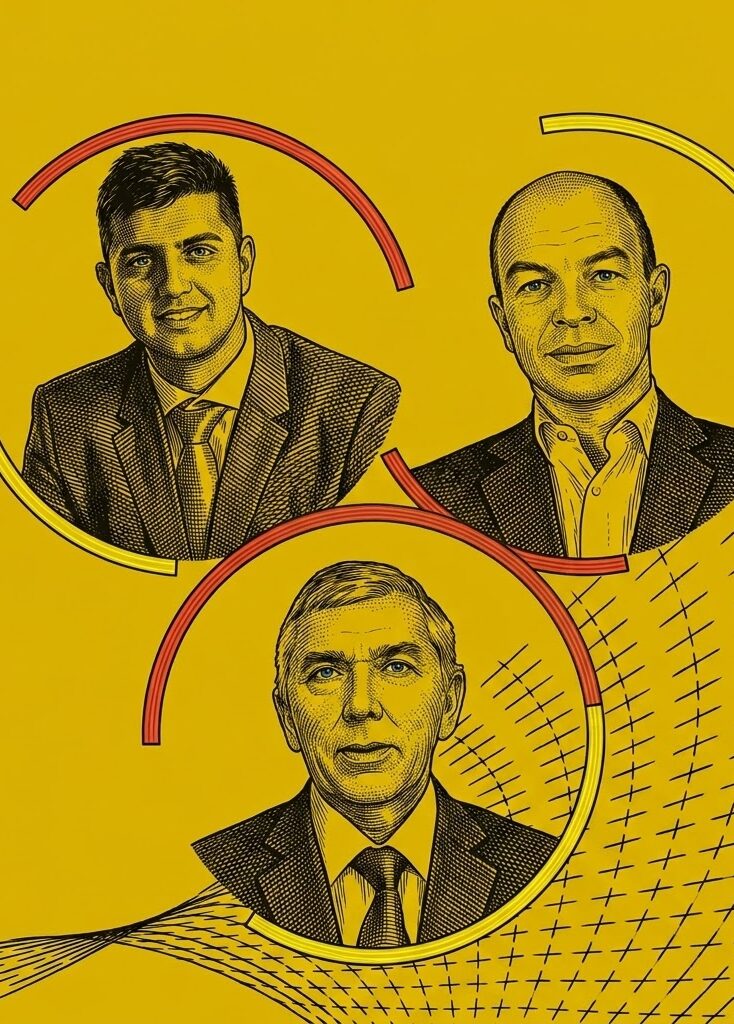
Chief Technology Officer Jaime Mineart, who joined Creed and Chief Digital Officer Ogi Redzic on stage, has been the person most directly responsible for testing how far that idea could travel outside mining before CES ever happened. In 2024, nearly two years before the keynote, her team ran what amounted to a rehearsal at Luck Stone's Bull Run quarry in Chantilly, Virginia, introducing fully autonomous haulage to a quarry for the first time anywhere in the Caterpillar customer base. Four autonomous Cat 777 trucks, a comparatively modest 100 ton class rather than the ultra class giants used in the largest mines, ran a single shift at the site. Mineart described the approach behind that small, deliberate first step in terms that suggested a team more interested in getting the human side right than in a flashy debut: "We embedded our team on the site to focus on people, process and technology prior to deploying the machines. This allowed us to tailor our autonomous system to the exact needs of the quarry operations."
That patience mattered later. Caterpillar's autonomous mining fleet, the base the company draws its confidence from, has by 2026 moved more than 11 billion tonnes of material and travelled over 380 million kilometers, figures the company presents as evidence that the underlying technology is proven rather than experimental. Bull Run was the bridge between that mining record and the construction ambitions unveiled at CES, a chance to test the same automation logic at a smaller scale, closer to the kind of job site most contractors actually run, before promising anything in front of an audience that had no experience with mining equipment at all.
What was actually unveiled
Two announcements did the real work at the keynote, and they were different in character. The first was construction autonomy itself. Caterpillar previewed five autonomous machines built for construction rather than mining, including excavators capable of trenching and grading on their own and loaders designed to handle material and load trucks using autonomous navigation. None of these were framed as available for purchase that day. They were framed as proof that the mining playbook, camera and radar sensing, precise positioning, a fleet management layer coordinating multiple machines at once, could be re-engineered for the far messier and more variable environment of an active construction site, where conditions change week to week rather than staying fixed for decades the way a mine plan does.
The second announcement, and the one that generated most of the actual news coverage, was software rather than steel: an expanded partnership with Nvidia and the debut of something Caterpillar called the Cat AI Assistant. Where the autonomous machines spoke to Caterpillar's long term ambitions, the AI Assistant was built to solve a problem contractors are dealing with right now, one that has real numbers attached to it rather than just anecdote. Creed was direct about it in an interview during the show: "Some of the things I hear when I talk to customers are, hey, we have a shortage of operators, and we have new operators that aren't skilled and experienced, so the training time is really hard." The assistant, he said, was meant to shorten that training time and reduce the number of accidents that come with putting inexperienced people behind the controls of heavy machinery. "It's essentially a personal assistant for an operator in the cab or a technician that wants to fix the machine."
The shortage behind the sales pitch
Creed's comments about operator scarcity were not exaggeration. According to the Associated Builders and Contractors, the American construction industry needed an estimated 349,000 net new workers in 2026 just to keep supply and demand in balance, on top of ordinary hiring and replacement, a figure the trade group projected would climb to 456,000 in 2027 as spending growth resumes. A separate survey conducted by the Associated General Contractors of America found that 92 percent of construction firms reported difficulty hiring qualified hourly craft workers, a number that has held above 80 percent for several consecutive years, which is itself the more telling detail: this is not a temporary post pandemic blip working its way through the system, it is a structural feature of the industry now.
The demographic math behind that shortage is stark. The average United States construction worker is 42.5 years old, only 16 percent of the workforce is under 35, and roughly one in five workers is 55 or older. Industry researchers project that as much as 41 percent of the current construction workforce could retire by 2031, taking with it decades of the kind of hands on, learned in the field expertise that no training manual fully captures. Against that backdrop, a tool explicitly designed to compress how long it takes an inexperienced hire to become safe and competent is not a novelty feature, it is aimed squarely at the single most expensive, least solvable problem contractors currently have. Caterpillar's own commitment, 25 million dollars over five years toward training the technicians, operators and engineers the next generation of equipment will need, reads less like philanthropy and more like a company trying to grow the very labor pool its own machines depend on.
How the assistant actually works
The Cat AI Assistant runs on hardware and software supplied largely by Nvidia. At its core sits the Nvidia Jetson Thor platform, a chip designed to run AI inference directly on the machine rather than sending data back to a cloud server and waiting for a response, a distinction that matters enormously on a job site where a network connection may be slow, congested, or simply absent. Caterpillar has paired that hardware with Nvidia's Riva speech models, which give the assistant both its ability to understand spoken questions and the lifelike voice it uses to answer them, and with a compact large language model tuned for interpreting an operator's intent rather than holding a general conversation.
None of that would mean much without something worth saying, and that is where Caterpillar's own systems come in. The assistant draws on Helios, the company's unified data platform, which holds machine history, maintenance records, and operational context for individual pieces of equipment. In practice, that means an operator can ask a spoken question about a fault code or an unfamiliar warning light and get an answer grounded in that specific machine's own history and specifications, not a generic manual lookup. Inside the cab, the same system offers safety alerts and coaching in real time, including, in one demonstration Creed gave to a television reporter at the show, warning a simulated operator away from overhead power lines before contact became a risk. Caterpillar said it plans to launch a version of the assistant usable away from the machine itself, for technicians and fleet managers rather than only operators in the cab, during the first quarter of 2026.
Nvidia's own framing of the partnership placed Caterpillar inside a much larger story about physical AI, the idea that artificial intelligence is moving off screens and into machinery, robotics, and industrial equipment. Nvidia founder and chief executive Jensen Huang, who appeared in Caterpillar's own materials about the announcement, described the relationship in sweeping terms: "For a century, Caterpillar has built the industrial machines that shaped the world. In the age of AI, Nvidia and Caterpillar are partnering across the full spectrum, from autonomous construction fleets to the AI data centers powering the next industrial revolution." Some independent technology coverage of the announcement was more measured than either company's own language, noting that Nvidia and Caterpillar disclosed no financial terms, no confirmed customers, and no production timeline for the autonomous construction machines themselves, describing the keynote as an architectural and platform alignment rather than a near term product launch.
What Caterpillar actually built, piece by piece
It is worth naming the individual components rather than treating the announcement as one undifferentiated bundle of AI, since each piece solves a distinct, narrower problem. Jetson Thor handles the raw computation on board the machine itself. Riva, built on Nvidia's Parakeet speech recognition and Magpie text to speech systems, handles the conversation, both understanding what an operator says and generating a natural sounding reply. A compact large language model, small enough to run at the edge rather than in a data center, interprets what the operator actually wants rather than just transcribing their words. Helios supplies the trusted, machine specific context that keeps the assistant's answers grounded in reality rather than generic guesswork. And Nvidia Omniverse, the same simulation platform Nvidia uses for digital twins elsewhere in industry, lets Caterpillar model factory and jobsite environments before committing physical equipment to them.
Caterpillar described using that same digital twin approach internally, building simulated versions of its own factories to plan production workflows before changing anything on a real shop floor, a detail that signals the CES announcement was never only about machines customers would eventually buy. Part of it was about Caterpillar modernizing its own manufacturing and supply chain operations using the identical AI tooling it was selling outward.
What this means beyond the keynote stage
For mining executives who have spent the past decade watching autonomous haulage mature into a proven, almost boring category of equipment, the CES keynote is worth reading less as news about construction and more as a signal about Caterpillar's own confidence. A company does not send its chief executive to stand on a stage built for consumer electronics and commit 25 million dollars to workforce training unless it believes the underlying autonomy technology, refined over more than 11 billion tonnes of mining operation and 380 million kilometers of travel, has moved well past the experimental stage.
There is a more specific lesson too, particularly relevant for mines outside the giant, capital rich operations that built the AHS category in the first place. Caterpillar did not go from mining straight to a global construction rollout. It went from mining to a single quarry, four modest trucks, one shift, an embedded team studying people and process before a single machine moved autonomously, and only after that quiet two year proving ground did it stand in front of a global audience and describe construction as the next frontier. For any mid sized mine, or any operation outside the handful of ultra large pits that automated first, that sequencing, prove it small, prove it deliberately, then scale the story, is arguably a more useful pattern to study than the headline itself.
The AI Assistant carries its own separate lesson, grounded now in real figures rather than a single executive's anecdote: an industry needing 349,000 new workers in a single year, watching 92 percent of firms struggle to hire, and facing the possible retirement of four in ten current workers within five years, is not a market where automation competes with jobs, it is a market where automation is one of the few tools left capable of closing a gap that hiring alone cannot fill in time. For African mines and fleets navigating a comparable, if differently shaped, skills gap, often in far more resource constrained conditions than Caterpillar's American customers, the underlying problem the Cat AI Assistant was built to solve will be familiar even where the specific technology remains years away from reaching their own equipment.