




 Across global mobility debates, the spotlight continues to swing toward electric vehicles, hydrogen ecosystems, and next-generation synthetic fuels. These technologies dominate headlines and policy speeches because they represent a vision of the future. Yet in Africa’s transport reality, a far more understated transition is unfolding in parallel: the steady and persistent conversion of vehicles to Liquefied Petroleum Gas (LPG), also known as Autogas.
Unlike futuristic mobility narratives that depend on large-scale infrastructure shifts, LPG operates in the present tense. It is not a disruptive reinvention of transport but an adaptation of what already exists. That distinction is precisely why it continues to grow across African markets in 2026.
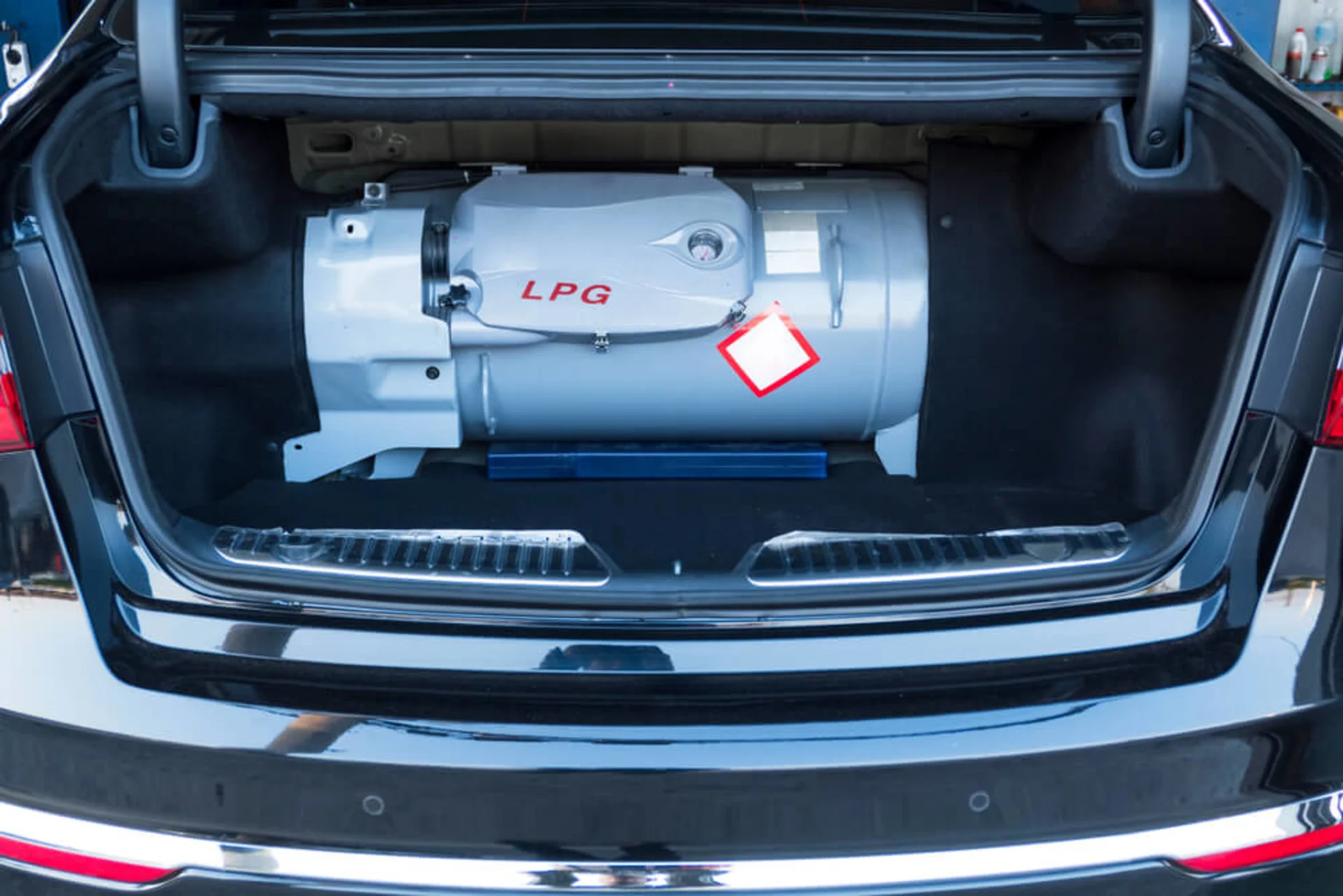
LPG is the third most widely used automotive fuel globally after petrol and diesel, and its staying power is rooted in simplicity rather than spectacle. It can be used in existing internal combustion engines through conversion systems, allowing vehicles to operate on petrol or LPG depending on availability and cost. This dual-compatibility has made LPG particularly attractive in environments where replacing entire vehicle fleets is economically unrealistic.
Chemically, LPG burns cleaner than petrol and diesel, producing fewer particulates and lower levels of harmful emissions. It is not a zero-emission fuel, but within the internal combustion family it sits on the lower end of the emissions spectrum. It also carries a high octane rating, which improves resistance to engine knock and can support smoother combustion under demanding operating conditions. These technical characteristics matter less in theory than in practice, especially for high-mileage users who prioritize cost and reliability over technological novelty.
Africa provides a particularly compelling context for understanding LPG’s persistence. The continent’s transport systems are shaped by imported used vehicles, long vehicle lifespans, and uneven infrastructure development. Electrification, while accelerating in pilot markets, still faces constraints around grid capacity, charging density, and affordability for mass-market users. In this environment, the most immediate question is not which technology represents the future, but which solution can reduce cost and improve efficiency today without requiring systemic overhaul.
LPG fits this requirement in a way few other alternatives currently do. It leverages existing engines, requires relatively modest infrastructure investment, and can be deployed incrementally through conversion workshops and established fuel distribution networks. This makes it particularly suited to fragmented transport systems where change tends to occur gradually rather than through abrupt transitions.
In Nigeria, the conversation around LPG mobility has gained renewed momentum in recent years. The country sits on significant natural gas reserves yet has historically relied heavily on petrol and diesel for transportation. As fuel subsidy reforms reshape pricing dynamics and operational costs rise for both consumers and fleet operators, attention has increasingly turned toward gas-based alternatives.
Within this context, LPG is being framed less as an experimental fuel and more as a practical response to economic pressure. It is already produced domestically as part of Nigeria’s broader gas processing value chain, which strengthens its relevance as a locally available energy option. For commercial fleets, ride-hailing drivers, and logistics operators, the appeal is straightforward: lower running costs, more predictable fuel expenditure, and improved efficiency in high-utilization vehicles. The adoption narrative here is driven less by environmental ambition and more by operational survival and cost optimization.
A similar but more structured trajectory can be observed in Egypt, where LPG has long been integrated into urban transport systems, particularly taxis. Cairo’s large taxi fleet has historically served as a proving ground for conversion programs that demonstrate the viability of Autogas in dense urban environments. Over time, these initiatives have normalized LPG as a mainstream alternative within specific segments of the transport economy, rather than positioning it as a niche solution.
In Morocco, LPG adoption has developed more gradually, with emphasis placed on fleet efficiency and fuel diversification strategies. While not as deeply embedded as in North Africa’s larger urban hubs, it has nonetheless found relevance among commercial operators seeking to manage fuel costs in a volatile energy environment. South Africa presents a different but equally instructive case, where LPG exists primarily within the aftermarket conversion ecosystem. Here, it is used selectively in light commercial vehicles, taxis, and logistics fleets that prioritize cost savings without committing to full fleet replacement cycles.
In East Africa, Kenya represents an emerging but still developing LPG mobility landscape. Adoption is visible mainly in urban fleets and institutional vehicles, with experimentation among operators seeking alternatives to rising fuel costs. However, infrastructure limitations remain a key constraint, particularly in terms of refuelling network density and conversion ecosystem scale. As a result, LPG adoption is still in its early stages compared to more mature markets on the continent.
What ties these different national experiences together is not policy uniformity but economic logic. Across African markets, LPG tends to succeed where fuel costs are volatile, vehicle lifespans are long, and infrastructure constraints make full technological transitions difficult. Even where LPG delivers slightly lower energy density than petrol, resulting in marginally higher consumption per kilometre, the total cost of ownership often remains lower due to cheaper fuel pricing, reduced engine wear, and improved maintenance outcomes.
This cost advantage is particularly significant for high-mileage users such as taxis, delivery services, and logistics operators. In these segments, even small reductions in per-kilometre operating costs compound into meaningful financial savings over time. LPG’s value proposition is therefore less about headline efficiency and more about cumulative operational economics.
Infrastructure considerations further reinforce its relevance. Unlike electric mobility, which depends heavily on grid expansion and charging networks, LPG scales through decentralized systems. Conversion workshops, cylinder distribution, and dual-fuel configurations allow adoption to spread incrementally without requiring synchronized national infrastructure upgrades. This makes it especially compatible with African transport ecosystems, where change is often uneven and regionally differentiated.
From an environmental standpoint, LPG occupies an intermediate position. It does not eliminate emissions, but it reduces particulate matter, carbon monoxide, and nitrogen oxides compared to petrol and diesel. In cities already grappling with air quality challenges, this reduction is meaningful even if it falls short of full decarbonization goals. As such, LPG is best understood as a transitional fuel rather than a destination technology.
The broader significance of LPG in Africa’s mobility landscape lies in what it represents: a form of energy pragmatism. While global narratives increasingly emphasize leapfrog transitions to fully electric systems, many African markets are navigating layered transitions where multiple fuels coexist and evolve simultaneously. In this context, LPG functions as a bridge technology that improves current systems while broader infrastructure matures.
Ultimately, its continued relevance in 2026 is not a contradiction of the energy transition but a reflection of its uneven pace. Africa’s mobility future will not be defined by a single fuel replacement moment. It will be shaped by overlapping systems, incremental adoption, and context-specific solutions.
LPG fits neatly into that reality. It is not the most visible part of the transition, but in many African cities and fleets, it is already quietly doing the work of making mobility more affordable, slightly cleaner, and more economically sustainable.
And in a region where practicality often outlasts prediction, that quiet utility is precisely what keeps it relevant.