



The partnership between BasiGo and Rubis Energy Kenya represents more than the opening of another electric vehicle charging station. It signals the beginning of a new phase in Kenya’s e-mobility market where charging infrastructure is becoming a competitive business in its own right rather than merely a support service for electric vehicles.
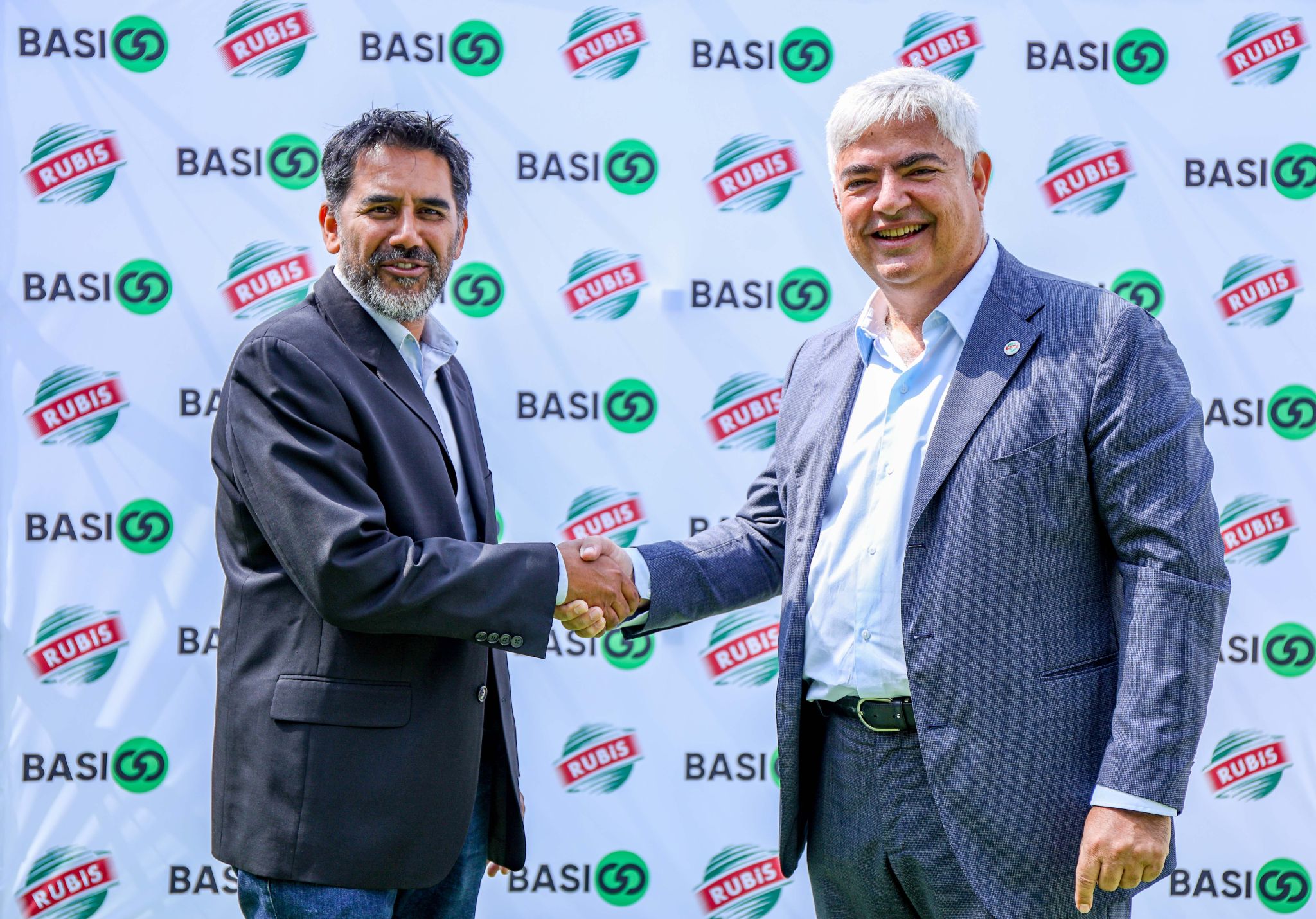 The two companies have commissioned their first jointly operated public DC fast charging station at the Rubis service station in Sabaki, Athi River, with additional facilities in Meru, Nanyuki and Nyeri expected to become operational later this month. The stations are equipped with 100kW DC fast chargers supporting both CCS2 and GB/T standards and will be accessible to electric buses, passenger cars, vans, trucks and other compatible electric vehicles. Charging will be offered at an indicative tariff of KES 48 per kWh.
While the announcement focuses on four new charging locations, its broader significance lies in the partnership model itself. BasiGo contributes its expertise in commercial electric vehicle operations and charging technology, while Rubis Energy Kenya brings a nationwide retail footprint of more than 300 service stations. Rather than building entirely new charging hubs, the collaboration leverages an established fuel retail network to accelerate deployment, reducing both capital costs and the time required to expand nationally.
For BasiGo, which has built Kenya’s largest DC fast charging network for electric buses, the partnership extends its infrastructure beyond fleet depots into publicly accessible corridors. Chief Executive Officer and Co-Founder Jit Bhattacharya described the initiative as creating the infrastructure needed to connect communities beyond Nairobi, while Kenya Managing Director Moses Nderitu argued that infrastructure, rather than customer willingness, has become the principal constraint to commercial EV adoption.
 The partnership also reflects the changing role of traditional fuel retailers. As demand for electric mobility grows, petroleum companies are increasingly positioning themselves as integrated energy providers. Rubis Energy Kenya Managing Director Frederic Maupetit described the initiative as part of the company’s commitment to Kenya’s energy transition, while Rubis Energy East and Southern Africa Chief Executive Officer Olivier Sabrie said Kenya is becoming a proving ground for a model that could be replicated throughout the region.
The announcement comes amid an increasingly competitive race to build Kenya’s public charging network. In May 2026, TotalEnergies Marketing Kenya announced that it had expanded its national charging network to approximately 30 charging stations, making one of the country’s largest investments by a traditional energy company. The rollout includes locations along major transport corridors and within Nairobi as the company integrates EV charging into its existing service station network.
Kenya Power has also accelerated its entry into the market. In May, the utility commissioned a public fast charging station in Voi along the Nairobi–Mombasa Highway, strengthening charging coverage on one of East Africa’s busiest transport corridors. The project forms part of a broader programme to deploy approximately 45 public fast chargers across six counties, positioning the national utility as an important infrastructure provider rather than solely an electricity distributor.
 BasiGo itself has been expanding aggressively. In late 2025, the company opened new charging depots at Taj Mall, Komarock and Riruta in Nairobi, with another planned for Juja, supporting its growing fleet of electric buses assembled in partnership with Associated Vehicle Assemblers. Earlier this year, the company also announced plans to extend charging facilities along Kenya’s coastal, western and central transport corridors as it scales intercity electric bus operations.
Other industry players are pursuing complementary strategies. Roam has expanded its charging infrastructure for electric motorcycles and light electric vehicles, including a fast charging station in Nairobi built around open charging standards that support multiple vehicle brands. Meanwhile, battery swapping companies including Ampersand, ARC Ride, Spiro and Charge Up continue to expand battery exchange networks targeting Kenya’s rapidly growing electric motorcycle market, reducing charging downtime for commercial riders.
Collectively, these investments indicate that Kenya’s electric mobility sector is entering a new stage of development. The market is moving beyond isolated demonstration projects toward competing infrastructure networks built by vehicle manufacturers, utilities, petroleum retailers and specialist charging companies. Increasingly, competitive advantage will depend not only on the number of electric vehicles sold, but also on who owns the charging ecosystem that keeps those vehicles moving.
The government’s policy direction reinforces this trajectory. Kenya continues to promote wider EV adoption through an e-mobility strategy that encourages charging infrastructure along major highways, integration of charging facilities into existing fuel stations, and expansion beyond Nairobi into secondary cities. Industry projections now anticipate thousands of public charging points over the coming decade, supported by both private investment and public infrastructure programmes.
Against this backdrop, the BasiGo–Rubis Energy Kenya partnership is significant not because it introduces four charging stations, but because it demonstrates how future infrastructure is likely to be deployed. The combination of an established fuel retail network, commercial fleet demand and open public access offers a scalable model that could be replicated across East and Southern Africa. As more operators enter the market, Kenya is increasingly positioning itself as the region’s principal laboratory for commercial electric mobility infrastructure.