



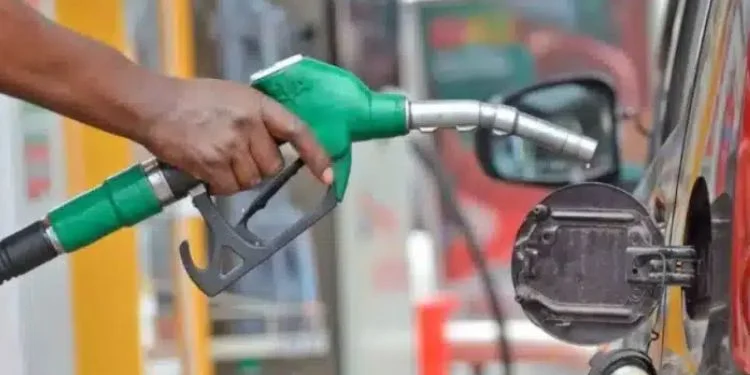
Africa is entering a new phase in its relationship with energy.
The latest surge in global fuel prices has exposed how vulnerable many African economies remain to external oil shocks. Across the continent, governments are grappling with rising inflation, public transport disruptions, food price increases and growing pressure from citizens struggling with the cost of living.
But unlike previous fuel crises, this one is producing a deeper structural shift. Governments, automakers, energy firms, logistics operators and technology startups are increasingly treating electric mobility and alternative energy systems not simply as environmental initiatives, but as economic survival strategies.
The crisis has accelerated conversations around energy independence, transport reform, industrialization and local manufacturing. In many African capitals, policymakers are now asking the same question: how long can economies remain dependent on imported petroleum in an increasingly unstable global energy market?
Kenya: Fuel Protests Push Government Toward Electric Mobility
Kenya has become one of the clearest examples of how rising fuel prices are forcing governments to rethink long-term economic strategy.
Over the past several weeks, rising global oil prices linked to conflict involving Iran and disruptions in international energy markets pushed fuel prices sharply upward in Kenya. The increases triggered transport protests and widespread public frustration as public service vehicle operators warned that higher diesel costs were becoming unsustainable.
In response, President William Ruto announced that Kenya would reduce diesel prices by KSh 10 per litre in the next fuel pricing cycle while maintaining fuel stabilization measures to cushion consumers. Reuters also reported that Kenya spent more than KSh 28 billion on fuel subsidies between April and June 2026.
At the same time, the government introduced one of its strongest electric mobility signals yet.
This week, President Ruto announced that the first 100,000 electric vehicles imported into Kenya would be exempt from import duty. The policy is intended to accelerate EV adoption while reducing Kenya’s long-term dependence on imported fuel.
The government also said it plans to deploy approximately 3,000 electric vehicles for administrative and security operations as part of broader efforts to modernize state transport systems.
Kenya’s private sector has responded rapidly.
Electric bus company BasiGo has expanded operations by assembling electric buses locally in Kenya while partnering with Chinese automaker BYD. The company’s model allows operators to pay for battery use through mileage-based subscriptions rather than purchasing expensive batteries outright. This reduces upfront costs for operators already struggling with diesel volatility.
BasiGo CEO Jit Bhattacharya has repeatedly argued that electric buses are becoming economically viable because fuel costs continue to rise faster than electricity costs in many African markets.
Kenyan electric mobility company Roam is also scaling production of electric motorcycles and buses designed specifically for African operating conditions. The company has increasingly targeted commercial riders and logistics operators seeking lower operating costs amid fuel uncertainty.
The rapid growth of the sector is already affecting utilities. Kenya Power recently reported significant growth in electricity demand from electric vehicle charging, reflecting expanding adoption of electric motorcycles, buses and private EVs.
However, Kenya’s transition remains complicated. Policymakers are simultaneously considering proposals that could introduce VAT on some EV-related products under the Finance Bill 2026, creating concern among industry players that taxation could slow momentum in East Africa’s emerging EV sector.
Ethiopia: Turning a Fuel Crisis Into an EV Revolution
Ethiopia has emerged as Africa’s most aggressive electric mobility market.
The country’s transition is being driven primarily by economics rather than climate policy. Ethiopia spends billions of dollars annually importing fuel, placing severe pressure on foreign exchange reserves and government finances.
In response, authorities moved aggressively to reduce fuel dependence by accelerating electric vehicle adoption and restricting imports of new gasoline and diesel-powered private vehicles.
According to recent reports, Ethiopia now has more than 115,000 electric vehicles on its roads, making it one of Africa’s fastest-growing EV markets.
Trade and Regional Integration Minister Kassahun Gofe stated that rising fuel import costs and subsidy pressures had become increasingly unsustainable for the Ethiopian economy.
Private companies have responded aggressively to the opportunity.
Chinese automakers including BYD, Chery and Neta Auto have expanded their focus on Ethiopia and East Africa as demand for affordable EVs grows. Chinese manufacturers increasingly view Africa as one of the world’s next major electric mobility growth markets.
Industry executives say Ethiopia’s abundant hydropower generation gives it an important strategic advantage because electricity can increasingly replace imported petroleum in the transport sector.
Nigeria: Subsidy Reforms Trigger Economic Pressure and Innovation
Nigeria continues to face the consequences of fuel subsidy removal under President Bola Ahmed Tinubu’s administration.
The reforms were designed to reduce fiscal pressure and stabilize public finances, but they also triggered significant increases in transport costs and inflation.
For ordinary Nigerians, the impact has been immediate. Public transportation costs surged while businesses dependent on diesel generators faced rising operational expenses.
Yet Nigeria’s private sector has also begun adapting rapidly.
Electric mobility companies are increasingly positioning themselves as alternatives to petrol-dependent transport systems.
Ride-hailing company eDryv stated during recent fuel shortages that its electric fleet was less exposed to sudden energy price spikes because electricity costs remained relatively stable compared to petrol prices.
Meanwhile, electric motorcycle company Spiro has expanded battery-swapping networks across Nigeria and several other African markets. Under CEO Kaushik Burman, the company has focused heavily on motorcycle riders and delivery operators whose incomes are highly sensitive to fuel costs.
Nigeria’s energy landscape is also changing through refining capacity. The Dangote Refinery has become increasingly important in reducing the country’s dependence on imported refined fuel while positioning Nigeria as a potential regional fuel supplier during periods of international supply disruption.
South Africa: Building Infrastructure Before Mass EV Adoption
South Africa remains Africa’s largest automotive market, but its EV transition has been slower than countries such as Kenya and Ethiopia.
High vehicle costs, electricity instability and limited charging infrastructure have slowed widespread adoption. However, the country is becoming one of Africa’s most important testing grounds for EV infrastructure innovation.
This month, South African company Zero Carbon Charge launched an off-grid solar-powered EV charging station along the Johannesburg-Durban corridor. The project was designed specifically to address concerns about grid instability and power outages.
South Africa’s private sector is increasingly exploring hybrid strategies that combine renewable energy generation with transport infrastructure.
At the same time, global automakers are expanding aggressively into the market.
Chinese automaker Geely recently confirmed plans to increase its South African presence through expanded dealership networks and broader product offerings. Company executives acknowledged that while EV demand is growing, many consumers still require affordable internal combustion engine vehicles because charging infrastructure remains limited.
The South African market increasingly reflects a broader African reality: the transition away from fuel dependence is happening gradually rather than uniformly.
Rwanda: Electric Motorcycles and Urban Mobility Reform
Rwanda has become one of Africa’s most innovative electric motorcycle markets.
The country has focused heavily on electrifying motorcycle taxi transport systems, which form a critical part of urban mobility across Kigali and East Africa.
Startup Ampersand has emerged as one of the continent’s leading electric motorcycle companies by building battery-swapping systems that allow riders to exchange depleted batteries within minutes rather than waiting for recharging.
The company argues that electric motorcycles are becoming financially attractive for riders because fuel prices continue to rise while battery-swapping costs remain comparatively stable.
Rwanda’s government has supported the transition through policy incentives and infrastructure investment, viewing electric mobility as both an economic and environmental strategy.
Egypt and Morocco: Positioning for EV Manufacturing
North African countries are responding differently to the fuel crisis.
Egypt and Morocco are increasingly positioning themselves as industrial manufacturing centers within the emerging global EV supply chain.
Chinese automaker BAIC is developing vehicle assembly operations in Egypt as the country seeks to strengthen local automotive manufacturing capacity.
Morocco, meanwhile, is becoming increasingly important to the global battery industry.
Chinese battery manufacturer Gotion High-Tech is developing a major EV battery factory in Kenitra, Morocco, in what could become one of Africa’s most important industrial energy projects. The investment reflects Morocco’s growing role in connecting African manufacturing with European automotive markets.
Rather than focusing only on importing electric vehicles, Morocco’s strategy aims to secure a position within the global EV production ecosystem itself.
A Continental Shift Is Underway
Across Africa, governments are increasingly realizing that repeated fuel shocks create long-term economic vulnerability.
For decades, African economies have remained heavily exposed to fluctuations in global oil markets. Every geopolitical crisis immediately affects transport costs, inflation, agriculture and household incomes across the continent.
Now, both governments and private sector leaders are beginning to pursue deeper structural changes.
Electric mobility startups are attracting major investment. Utilities are positioning EV charging as a future revenue stream. Automakers are expanding assembly operations. Governments are rewriting tax and transport policies around electrification.
According to recent reporting, Africa imported more than 44,000 electric vehicles from China in 2025, more than double the previous year.
The transition remains uneven and infrastructure gaps remain significant. Electricity reliability continues to be a major challenge in many markets, while EV financing and charging access remain limited.
Yet the broader direction is becoming increasingly difficult to ignore.
Africa’s fuel crisis is no longer only about subsidies, pump prices or transport protests. It is accelerating one of the continent’s most important industrial, energy and mobility transformations in decades.