Automotive industry / Egypt
Mansour Group and Tianneng Study Battery Manufacturing Investment in Egypt
The partners are assessing lead-acid and lithium battery manufacturing alongside energy-storage opportunities, with the project’s location, product mix and feasibility still under review.
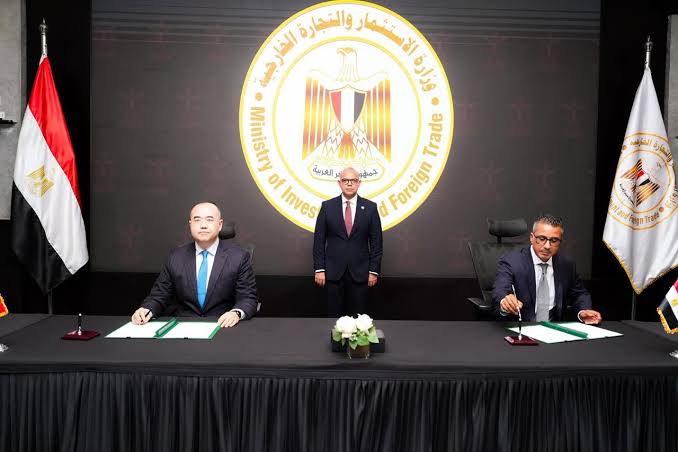
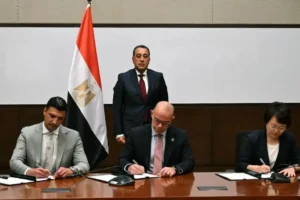
Mansour Group and China’s Tianneng Battery Group have signed a memorandum of understanding to assess battery manufacturing and energy-storage investment in Egypt, with the proposed scope covering conventional automotive lead-acid batteries as well as lithium batteries for new-energy vehicles.
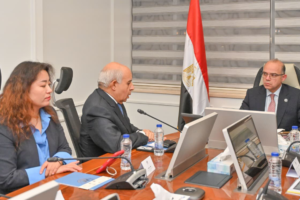
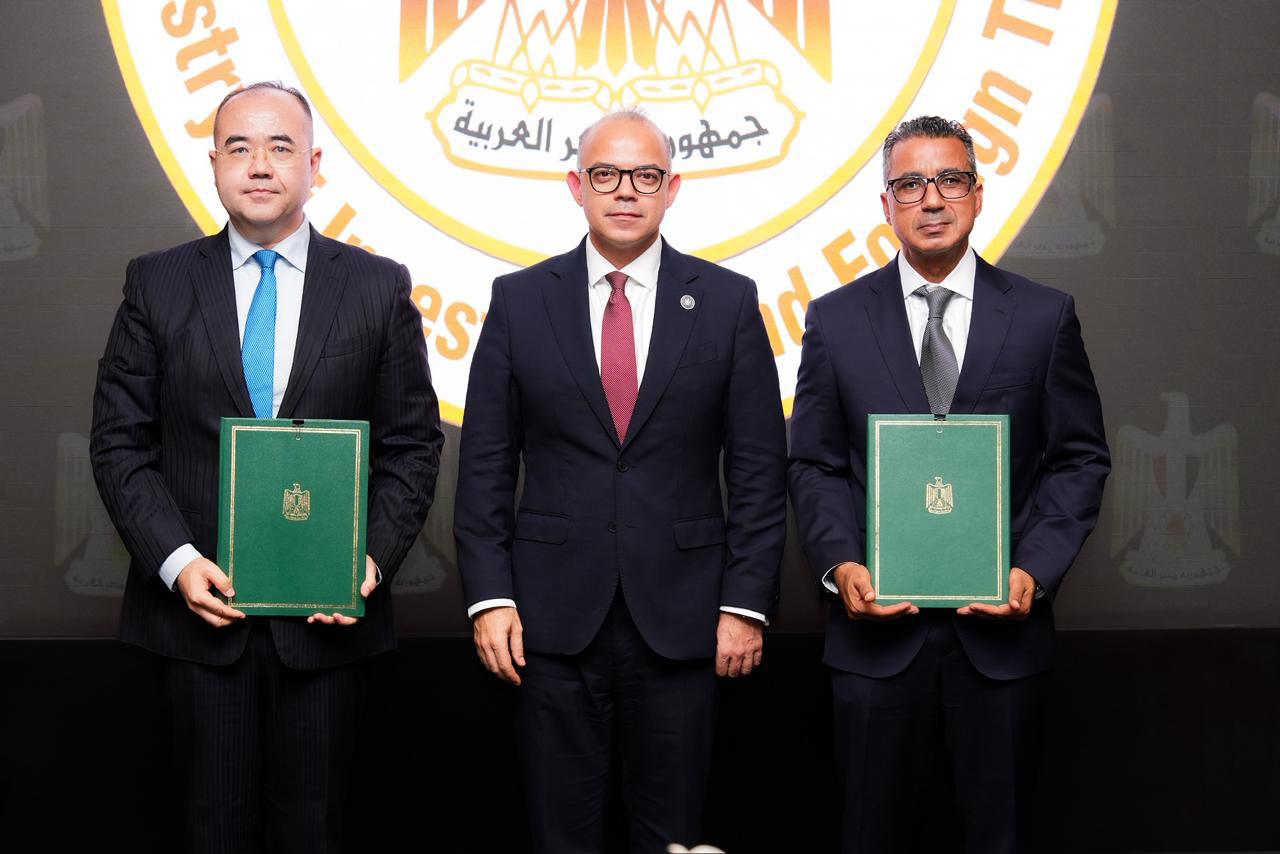
The agreement was signed on 2 September 2026 in the presence of Mohamed Farid Saleh, Egypt’s Minister of Investment and Foreign Trade. It remains at the study stage, with the parties still assessing the location, product mix and feasibility of the proposed investment.
The discussions bring together one of Egypt’s largest privately owned business groups and a Chinese battery manufacturer with roughly four decades of industry experience. Mansour Group has extensive interests in automotive distribution, machinery and industrial equipment, while Tianneng produces automotive and motive-power batteries, lithium batteries, energy-storage systems and battery-recycling solutions.
A dual focus on established and new-energy batteries
The MoU specifically covers a study into manufacturing lead-acid batteries used in vehicles and lithium batteries for new-energy vehicles. The broader cooperation also extends to energy-storage solutions, giving the proposed project potential relevance beyond the automotive sector.
Farid said lithium batteries and components for new-energy vehicles are among the sectors Egypt regards as promising as it seeks to deepen local manufacturing and increase domestic value addition. He said cooperation with Tianneng could allow Egypt to benefit from the Chinese group’s technical expertise while supporting the localization of industries supplying new-energy vehicles.
The minister also pointed to Egypt’s location, infrastructure, transport and logistics networks, industrial zones and the Suez Canal Economic Zone as factors that could support both domestic supply and exports. He said the government was prepared to support the assessment phase by presenting alternative industrial sites and helping accelerate land-allocation and preparation procedures once a final location is selected.
Eric Xu, Vice President of Tianneng Group and the executive responsible for international business, said the company has operated in the battery industry for around 40 years. He outlined a portfolio that includes automotive batteries, batteries for mobility equipment, battery recycling and energy-storage systems, with technologies spanning lead-acid, lithium, sodium-ion and solid-state batteries.
The partners and government participants
Xu said Tianneng was interested in working with Mansour Group and examining investment opportunities in Egypt, citing the Egyptian market and the country’s regional position. He said the company was evaluating possible sites and determining which products would be suitable for local manufacture while a feasibility study is prepared.
Mansour Group was represented at the discussions by Lotfy Mansour, Chief Operating Officer and Head of Operations, and Mohamed El-Ghazaly Harb, General Manager for Public Policy and Government Affairs at Al-Mansour Automotive and Mantrac. The official government statement identified both executives as participants, although it did not publish attributed remarks from either of them.
Also attending were Mostafa Sheikoun, Chairman of the General Authority for the Suez Canal Economic Zone; Ahmed Gamal, Vice Chairman of the authority; Walid Anwar, Vice Chairman of the General Authority for Investment and Free Zones; and Abdel Aziz El-Sherif, head of Egypt’s Commercial Representation Authority. Their attendance reflects the range of government bodies likely to be involved if the project moves from feasibility work into site allocation and implementation.
For Mansour Group, the proposed investment would sit close to its existing automotive and equipment businesses. The group has longstanding relationships with international vehicle and machinery brands, including General Motors, Peugeot, MG and Caterpillar, giving it an established position across vehicle distribution, servicing and industrial equipment in Egypt and other markets.
Industrial opportunities and the commercial-vehicle market
For Tianneng, an Egyptian manufacturing base could provide access to both the established replacement-battery market and the emerging electric-vehicle and energy-storage sectors. The company has particular strength in lead-acid batteries, while also investing in lithium and other newer chemistries. Xu said Tianneng ranks first in China in lead-acid battery production and has substantial experience in advanced battery technologies.
The dual focus on lead-acid and lithium batteries is notable because Egypt’s vehicle market is likely to require both technologies for some time. Conventional internal-combustion vehicles continue to account for most of the installed vehicle fleet, sustaining demand for starter batteries, while government policy and private investment are gradually expanding the market for electric and other new-energy vehicles.
Local battery production could also support Egypt’s broader automotive localization strategy. Batteries are a significant component in both conventional and electric vehicles, and establishing domestic manufacturing could reduce reliance on imports while creating opportunities for local suppliers, recycling businesses, logistics providers and technical-service companies.
The proposed lithium-battery element could become particularly important if Egypt succeeds in attracting more electric-vehicle assembly and component manufacturing. However, the announcement does not specify intended cell chemistry, production capacity, whether lithium cells would be manufactured locally or imported for pack assembly, or the planned level of local content.
Feasibility work and outstanding decisions
No investment value has been disclosed, and the parties have not announced a factory site, construction timetable or production start date. The Ministry of Investment and Foreign Trade said Mansour Group, Tianneng and the relevant authorities will continue coordinating on project studies, location selection and the products to be manufactured before implementation decisions are made.