Egypt’s New Administrative Capital is becoming a significant test bed for what an integrated urban fleet built around electric vehicles, alternative fuels and real time fleet management can look like.
ACTA, the transport company operating the capital’s public bus and Capital Taxi services, has expanded its fleet to 210 vehicles as Egypt develops the transport network serving the new city and surrounding urban communities.
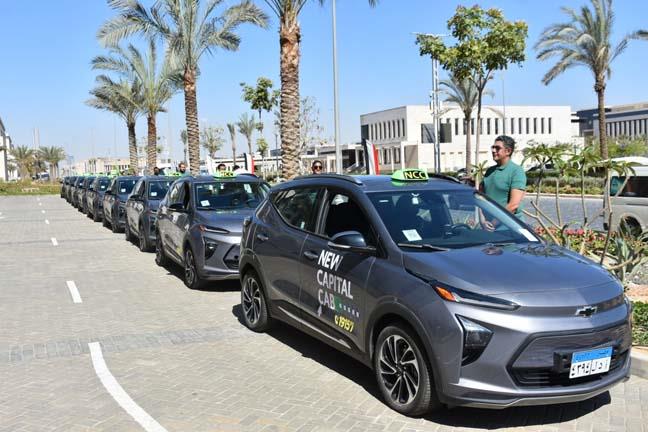
 The fleet now includes 40 electric buses, 20 buses powered by natural gas and 10 diesel minibuses. Alongside the bus operation is an increasingly significant electric taxi fleet: 140 battery electric vehicles operating under the Capital Taxi service, comprising 58 Chevrolet Bolt and 82 MG4 cars.
The numbers tell only part of the story.
ACTA is building the vehicles into a digitally managed transport system rather than operating them as standalone fleets. Buses are equipped with vehicle tracking connected to a central control centre, passenger information systems, surveillance cameras and electronic fare collection equipment.
The electric taxis similarly carry GPS tracking, cameras and electronic point of sale equipment, while passengers can access the service digitally. The vehicles can therefore be monitored as part of a wider operating platform rather than managed simply as individual taxis circulating through the city.
Electric buses move further into the fleet
ACTA’s electric bus fleet has also been growing.
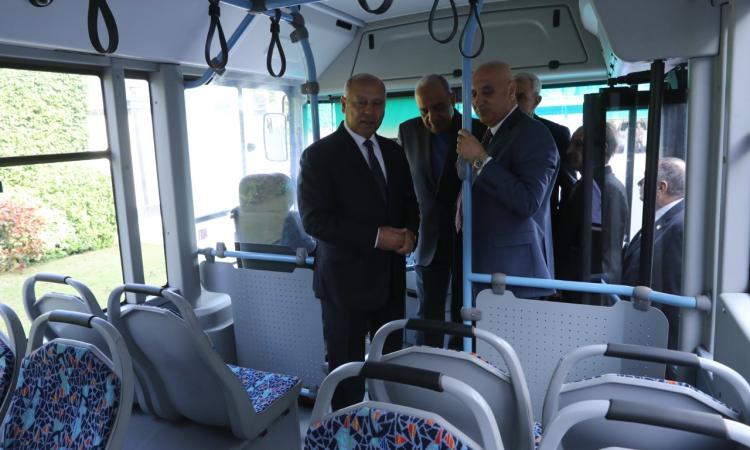
In July, Transport and Industry Minister Kamel El Wazir inaugurated 10 new electric buses for the New Administrative Capital, increasing ACTA’s electric bus fleet from 30 to 40 vehicles.
The buses are locally manufactured and equipped with digital passenger information, vehicle tracking, electronic ticketing and fare collection, internal and external route displays, USB charging and accessibility features for passengers with disabilities. They were introduced for immediate deployment on routes serving the capital.
That expansion is significant because ACTA is no longer testing electric buses in small numbers. With 40 electric vehicles among its 60 full size buses, battery electric propulsion now represents the majority of its main bus fleet.
Natural gas remains another part of the transition, with 20 gas powered buses operating alongside the electric vehicles.
The result is a mixed energy fleet in which conventional diesel has increasingly been pushed towards a secondary role. The 10 recently introduced minibuses remain diesel powered, but were added for a specific feeder function connecting Capital Gardens and Capital Flower with the Capital Gardens station on Egypt’s Light Rail Transit network.
From vehicles to an integrated mobility network
The more consequential development may be how ACTA’s vehicles are being connected with Egypt’s investment in rail based public transport.
The bus fleet is being used to provide connections with the Light Rail Transit system, while preparations are continuing for integration with the first phase of the East Nile Monorail.
The Capital Taxi network extends the reach further. Its service footprint connects the New Administrative Capital and surrounding communities with destinations including Shorouk, Rehab, Madinaty, Capital Gardens and Capital Flower, as well as Adly Mansour Station, Heliopolis and New Cairo.
This effectively gives ACTA several fleet functions within the same mobility ecosystem: larger buses for scheduled mass transit, minibuses for feeder services and electric taxis providing more flexible connections.
The model has been several years in development.
When Egypt began deploying electric taxis in the New Administrative Capital in 2024, the government announced plans for 145 electric vehicles, comprising 60 Chevrolet Bolts and 85 MG4s. The first phase began with 10 vehicles.
Even at that stage, the vehicles were being equipped with internal and external cameras, GPS tracking and continuous communication with a central control room, while passengers could book vehicles digitally and pay by card or cash.
The latest fleet disclosure shows 140 electric taxis currently in ACTA’s fleet, slightly below that originally announced 145 vehicle programme.
A growing transport operation
ACTA’s operating figures suggest that the fleet is also handling increasing passenger volumes.
The company transported approximately 3.8 million passengers during 2025, according to the latest figures, while operating revenue reached EGP 122.04 million and net profit was reported at EGP 101.389 million.
That compares with 2.8 million passengers during 2024, when operating revenue was reported at EGP 96.857 million and net profit after tax at EGP 47.427 million.
For fleet operators, the New Administrative Capital project is worth watching for reasons beyond the number of electric vehicles involved.
It brings together several trends increasingly shaping urban fleet operations: electrification, natural gas, local vehicle manufacturing, electronic fare collection, live vehicle tracking, centralized fleet control, multimodal integration and app based passenger services.
It also illustrates an important distinction in the transition towards cleaner fleets. The vehicles themselves are only one component.
Charging, vehicle availability, route planning, passenger information, fleet monitoring, driver management, maintenance and integration with other transport modes ultimately determine whether electric and alternative fuel fleets can operate effectively at scale.
ACTA’s 210 vehicle operation is therefore becoming more than an electric vehicle deployment programme. It is emerging as a working example of how Egypt intends to combine cleaner vehicles with digital fleet management and rail connectivity as it builds the transport architecture of its newest city.