Agricultural technology company Hello Tractor is expanding the use of GPS tracking, Internet of Things (IoT) sensors and equipment utilization data to improve tractor-hiring services in Nigeria, addressing longstanding challenges involving machinery availability, fleet security, maintenance and agricultural equipment financing.
In an operational commentary published on 13 October 2026, titled Data Is the New Fertiliser, the company highlighted how connected machinery is improving tractor deployment across farming regions, particularly in Nasarawa State, where farmers have historically depended on equipment arriving from locations including Zaria, Jigawa and Kano.
Such movements frequently coincide with narrow planting windows, making timely access to tractors essential. For machinery owners, however, deploying expensive equipment across distant agricultural communities creates challenges involving supervision, security, maintenance and payment collection.
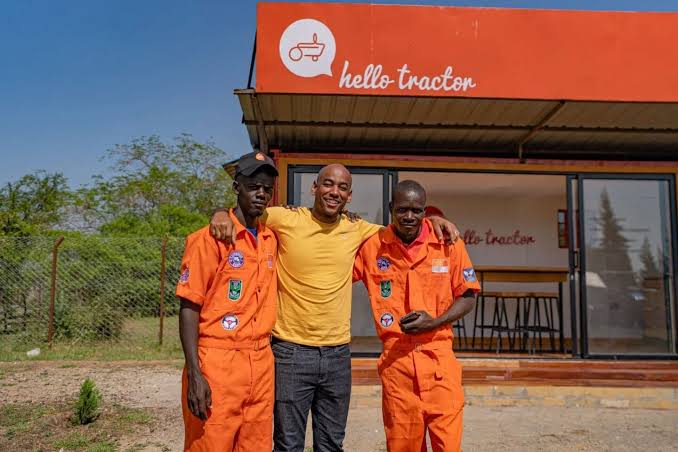
Founded by Jehiel Oliver, Hello Tractor operates a digital platform connecting equipment owners with farmers requiring mechanization services. Its technology enables fleet managers to monitor tractor locations, operating hours, acreage covered and servicing requirements, while coordinating bookings through local agents.
The company reported in October 2026 that its platform had connected more than 8,000 tractors and served over 2.5 million smallholder farmers across more than 18 countries.
In Nigeria, Hello Tractor established a mechanization service hub at Gunki, Nasarawa State, in May 2023, providing a local base for machinery deployment, technical support and access to spare parts. A subsequent initiative involving Heifer International and government partners saw 10 GPS-enabled tractors deployed in Nasarawa in 2025, with a programme target of servicing more than 20,000 hectares.
Dr Nneka Enwonwu, Hello Tractor’s Nigeria Country Director, has emphasized the importance of equipment monitoring, maintenance and effective deployment in improving agricultural mechanization. In October 2026, she called for greater attention to the operational performance of tractor fleets rather than measuring government mechanization programmes solely by the number of machines purchased.
Equipment financing is another important component of the company’s business. In April 2022, Heifer International announced a US$1 million investment to support tractor purchase loans, allowing borrowers to repay financing through revenue generated from machinery-hiring services.
GPS and IoT records provide lenders with information about equipment utilization, agricultural work completed and maintenance performance, potentially improving credit assessment and monitoring of financed machinery. The company has reported a non-performing loan rate below 2% within its pay-as-you-go financing programme, although the figure has not been independently verified.
The model is also attracting interest from agricultural equipment manufacturers and financial institutions. In Kenya, Hello Tractor has partnered with John Deere and Absa Bank on a KES 500 million mechanization financing programme, while Nigeria’s National Agricultural Development Fund (NADF) has separately pursued tractor mechanization initiatives with Heifer International involving John Deere equipment.
For tractor owners, digital monitoring can reduce the difficulties of managing machinery across distant farming communities, including unauthorized movements, prolonged downtime and inefficient deployment. For farmers, the commercial benefit lies in securing affordable mechanization services when planting conditions require them.
The expansion of connected tractor fleets is consequently shifting attention from machinery ownership alone towards equipment utilization, service reliability and the ability of agricultural contractors to generate sufficient revenue to sustain and expand their operations.