Featured opinion by Onivia Motors
Africa is entering one of the most consequential mobility transitions in its history. Yet it remains one of the world’s most underserved automotive markets.
The Automotive Infrastructure Gap Is Costing African Economies
Population growth, urbanization, regional trade, and the expansion of African businesses are creating unprecedented demand for the movement of people, goods, and services. Yet across much of the continent, the vehicles supporting that movement were never designed for African operating conditions, local transportation models, or the economic realities of drivers and fleet owners.
The majority of vehicles in sub-Saharan Africa are imported, and most are already well into their operational lives before they arrive. They then face demanding roads, high temperatures, dust, limited maintenance infrastructure, and intensive commercial use their original designers never anticipated. The result is an automotive market gap that has morphed into an infrastructure gap — one that kills economic opportunity, limits commerce, fragments supply chains, and isolates communities.
Moving Beyond the Import Model
Should Africa’s future mobility needs continue to be met primarily through vehicles designed and manufactured elsewhere? Oniva Motors believes the answer is NO.
Africa should not have to choose between expensive new imports and aging used vehicles poorly suited to local conditions. The continent needs vehicles designed around the realities of African transportation.
That means durability over unnecessary complexity. Vehicles that are easier and more economical to maintain. Passenger, cargo, and utility vehicles designed around the work they will actually perform every day. And most importantly, vehicles built closer to the markets they serve.
Designing Around How and Why Africa Moves
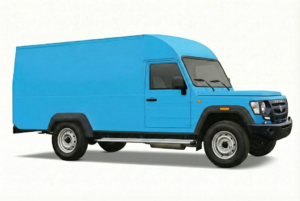
Saago
High-Capacity Cargo for African Commerce
Purpose-built for commercial freight operations — the Saago maximizes cargo volume while maintaining the rugged reliability African logistics demand.
The future of African mobility is about more than selling vehicles. Too often, discussions about the future of mobility begin with a technology and then search for a market. Oniva Motors took the opposite approach.
We began by gaining an in-depth understanding of the daily realities of transport operators, passengers, farmers, mechanics, logistics companies, and small businesses. Then we applied our body technology to solve their specific problems — designing vehicles that meet Africans where they are now and take them where they aspire to go.
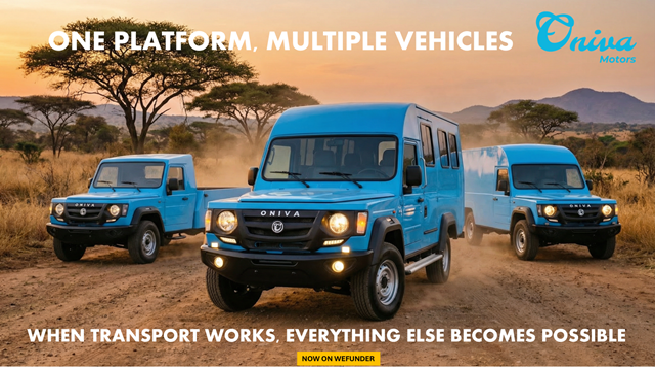
Our initial vehicle family includes three models built for distinct transportation needs: an intercity passenger vehicle that blends safety, ruggedness, and comfort without downtime or hard-to-source parts; a pickup that withstands heavy loads and demanding road conditions; and a cargo vehicle that delivers security, reliability, and predictable operating costs. These are not niche concerns. They are the foundations of productive local economies.
All three are built on a common vehicle platform capable of supporting passenger, cargo, pickup, and special-purpose configurations. Sharing a chassis, drivetrain, front end, and key components across multiple vehicle types simplifies production, maintenance, technician training, and parts availability. This platform approach matters because Africa’s mobility requirements are diverse, but the economics of manufacturing demand efficiency. A flexible architecture lets a manufacturer serve multiple markets without building a separate production system for every model.
The Next Mobility Revolution Is Also an Industrial Revolution
The most transformative impact of local vehicle production happens beyond the factory gates: skilled employment, technical expertise that values local knowledge, a broad network of suppliers, and far less reliance on long international supply chains.
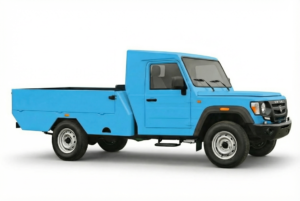
Taatan
The Versatile African Workhorse
A rugged pickup built for African businesses — from farms to construction sites, the Taatan delivers reliable performance where it matters most.
Local production stimulates service providers, training institutions, and small businesses. It creates demand for local technicians, engineers, logistics professionals, construction workers, software providers, and component manufacturers. It gives universities and technical institutions a central role in materials research, engineering, testing, prototyping, and workforce development. And it gives transport unions and cooperatives a seat at the table — helping manufacturers understand customer requirements while supporting distribution, financing, and driver training.
Governments can accelerate this ecosystem through smart industrial policy, investment incentives, infrastructure support, and public-private collaboration. But affordability cannot be solved by manufacturing alone. African transport operators purchase vehicles as productive assets, not consumer goods — the vehicle generates the income that repays its financing. New ownership and financing structures must reflect these real commercial cash flows. Lease-to-own programs, cooperative financing, credit guarantees, transport union partnerships, and development-finance participation are all essential to making Oniva vehicles accessible to the operators who need them most.
For fleet owners, an Oniva vehicle will be more than a physical asset. It will become part of a digital operating system — creating opportunities for local technology companies and mobility platforms to build services around vehicle financing, insurance, maintenance, parts distribution, routing, and fleet optimization.
Our work with transport organizations has already demonstrated significant interest in purpose-built vehicles. That demand reinforces our belief that African operators are not simply looking for the cheapest vehicle available. They are looking for vehicles that are reliable, repairable, economical, and capable of helping them build sustainable businesses.
A Different Model for African Automotive Manufacturing
Traditional automotive manufacturing is highly capital-intensive: large factories built around enormous production volumes, complex tooling, and long supply chains. That model is not the right starting point for Africa. The goal should not be to recreate yesterday’s automotive industry on the continent. It should be to build a more flexible, efficient, and locally grounded model.
Oniva’s manufacturing strategy combines smaller, flexible, centralized production of specialized body kits — using our patented body panel technology — with regional vehicle assembly facilities that require significantly less capital than traditional automotive plants. This approach maintains consistent quality and protects critical manufacturing expertise while allowing final assembly to happen closer to customers.
We aim to develop a network of environmentally responsible regional production and assembly facilities that manufacture multiple vehicle configurations on the same core infrastructure and scale alongside demand — an ecosystem that generates thousands of jobs, transfers technology and know-how, trains local workers, incorporates locally and regionally sourced components, and adapts production to changing market needs.
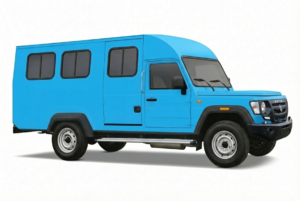
Malaw
Africa’s Purpose-Built Passenger Vehicle
The Malaw is designed from the ground up for African public transport — rugged, spacious, and built to handle the demands of daily passenger service.
This is not about lowering standards. It is about manufacturing vehicles for the needs, scale, and economics of African markets while meeting rigorous safety, quality, and environmental requirements — and ensuring the economic value of mobility is retained within African economies.
The Transition to Cleaner Mobility Must Be Practical
Africa will participate in the global transition toward lower-emission transportation and electric mobility. But Africa’s transition should be pragmatic rather than ideological.
The most immediate priority is replacing aging, inefficient, highly polluting vehicles with modern, better-performing ones — delivering meaningful safety and environmental benefits now, while charging infrastructure, electricity reliability, and battery costs improve. Oniva’s vehicle platform and manufacturing facilities are designed to accommodate new powertrain technologies as infrastructure and economics evolve.
The objective is not to delay cleaner mobility. It is to create a transition that works in the real world and remains affordable for the people and businesses whose livelihoods depend on transportation.
Oniva’s Ambition for Africa
Oniva Motors’ ambition extends beyond producing a line of vehicles. We want to contribute to a new African automotive ecosystem built around regional manufacturing, local savoir-faire and skills, practical technology, and vehicles designed specifically for the environments in which they operate. We envision a network of production and assembly facilities across Africa, beginning in markets where transportation demand, institutional partnerships, and government support create strong foundations for growth.
Ultimately, Africa’s mobility future should not be defined by what the rest of the world no longer needs. It should be defined by what Africa chooses to build.
The continent has the talent, the market demand, and the entrepreneurial energy to create its own mobility solutions. The opportunity Oniva Motors offers is to connect those strengths through investment, partnership, engineering, and long-term commitment.
Africa’s next mobility revolution will not simply happen on African roads. It will be designed in African engineering centers, assembled in African factories, maintained by African technicians, and powered by African ambition.
Oniva Motors has understood what many still refuse to: the companies that ultimately shape African mobility will not be those that sell the most vehicles. They will be those that build the most useful ecosystem around the vehicle. And the strongest mobility systems will emerge when manufacturers, governments, financial institutions, universities, transport organizations, and local communities build them together