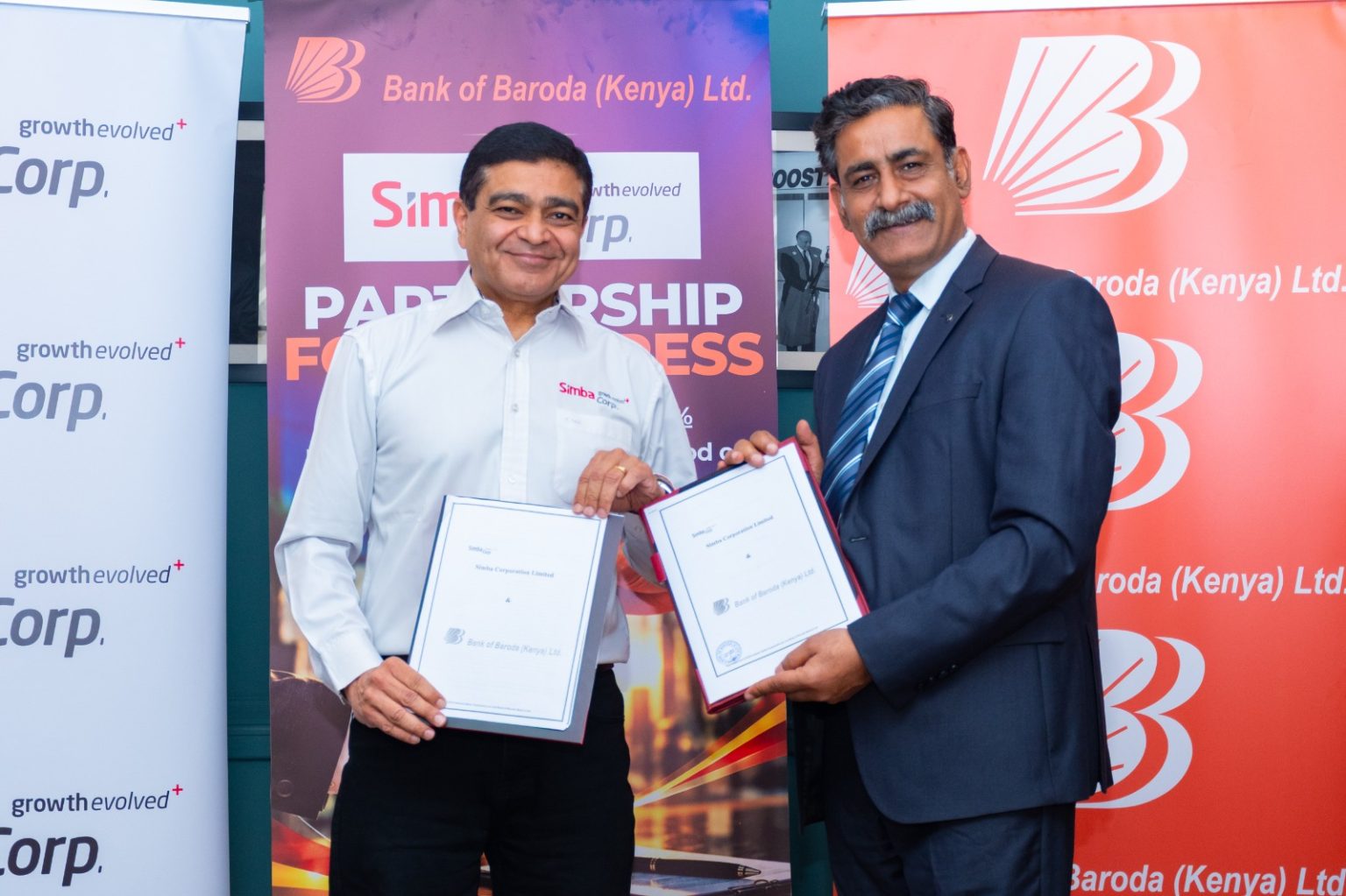
Bank of Baroda Kenya has entered into a vehicle and asset-financing partnership with Simba Corporation, offering financing of up to 95% on eligible vehicles as Kenyan banks increasingly compete to finance commercial fleets, agricultural machinery and passenger vehicles through agreements with automotive distributors.
The agreement, signed on 2 October 2026 at Simba Corporation’s headquarters along Mombasa Road in Nairobi, covers commercial trucks, buses, light commercial vehicles and passenger cars sold through Simba Corporation and its authorized dealerships. The distributor represents several automotive brands in Kenya, including FUSO, Ashok Leyland, Mahindra, Mitsubishi, MG and Proton.
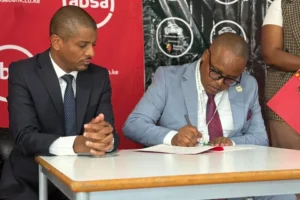
The partnership was formalized in the presence of Adil Popat, Executive Chairman of Simba Corporation; Dinesh Kotecha, the group’s Chief Executive Officer; Astitva Bhardwaj, Managing Director of Bank of Baroda Kenya; and Aman Kumar, the bank’s Deputy Managing Director.
Under the arrangement, eligible customers can obtain financing of up to 95% of the vehicle invoice value, including VAT but excluding optional accessories. Commercial vehicle buyers can repay loans over periods extending to 84 months, while passenger vehicle financing is available for up to 60 months.
Interest rates start at 13.8% annually, subject to the prevailing Central Bank Rate and individual borrower risk assessments. The facility carries no processing, commitment, prepayment or renewal fees, while qualifying customers may receive repayment holidays of up to six months. The bank also provides an option to finance the full insurance premium.

For commercial transport operators, the longer repayment period allows the cost of acquiring productive assets to be spread over seven years, reducing the immediate capital required to expand fleets. A business qualifying for 95% financing on a KSh10 million (approximately US$77,600) vehicle would contribute KSh500,000 (US$3,880) towards the purchase price, excluding any additional costs not covered by the facility.
The arrangement also provides access to additional working capital facilities for eligible business customers, addressing the financing requirements that accompany vehicle acquisition, including fuel, maintenance, insurance and day-to-day transport operations.
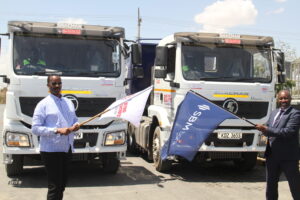
The October agreement builds on an earlier Bank of Baroda financing arrangement targeting Mahindra commercial vehicles and agricultural equipment distributed by Simba Corporation. That programme offered financing of up to 90%, repayment periods extending to 60 months, waived loan application charges and a 90-day repayment holiday.
The earlier Mahindra-specific partnership involved Kotecha, Naresh Leekha, Managing Director of Simba Corp Motors, and former Bank of Baroda Kenya executives Vinay Rathi and Ravi Pathak, who served as Managing Director and Deputy Managing Director respectively.
The new agreement broadens the financing proposition beyond Mahindra products, allowing customers to consider vehicles across Simba Corporation’s wider distribution portfolio.
It also comes amid increasing competition among Kenyan financial institutions seeking to expand lending against commercial vehicles and agricultural equipment.
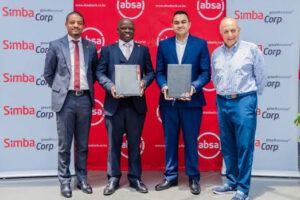
In August 2026, Absa Bank Kenya announced a separate financing partnership with Simba Corporation, offering up to 95% financing for commercial vehicles over 72 months and up to 100% financing for school buses over 84 months. Agricultural customers were offered financing of up to 90% for tractors, farm machinery and pick-ups, repayable over 60 months.
That agreement involved Renato D’Souza, Absa Bank Kenya’s Director of Business Banking; James Agin, Managing Executive for Corporate and Investment Banking; Suraj Shah, Executive Director of Simba Corporation; and Popat.
Absa’s arrangement forms part of its broader Asset-Based Finance 2.0 programme, through which the bank plans to deploy KSh100 billion (approximately US$776 million) over three years to finance productive assets across manufacturing, logistics, infrastructure, agriculture and other sectors.
The parallel agreements illustrate the growing importance of financing partnerships to automotive distributors operating in Kenya, where vehicle sales depend increasingly on the availability of affordable credit and repayment structures suited to commercial operations.
For Simba Corporation, arrangements with multiple lenders expand the financing options available to customers purchasing trucks, buses, pick-ups, tractors and passenger vehicles. For banks, dealership partnerships provide an established channel for originating secured loans backed by identifiable productive assets.
The commercial implications extend to Kenya’s agricultural mechanization market, where farmers and agricultural contractors frequently require financing to acquire tractors and associated equipment. High upfront costs, seasonal cash flows and the difficulty of matching conventional loan repayments to agricultural income remain significant constraints on machinery ownership.
The Bank of Baroda agreement does not disclose a dedicated financing commitment, expected vehicle volumes or projected loan disbursements. Its significance lies principally in the combination of high loan-to-value financing, extended commercial vehicle repayment periods and reduced upfront lending charges.
For prospective borrowers, the applicable interest rate, repayment holiday, insurance arrangements and final financing percentage will remain subject to individual credit assessment and the category of vehicle being purchased.