Most mines in this briefing chose one automation partner and built their operation around it. Kamoa-Kakula, the copper complex in the DRC's Katanga Copperbelt near Kolwezi, deliberately did not. It runs parallel underground equipment fleets from both Sandvik and Epiroc on the same site, a hedge against depending on a single vendor's supply chain in one of the most logistically difficult mining jurisdictions on earth.
In 2025 and 2026, that decision to spread the risk turned out to matter for reasons nobody at either company had originally planned for. Kamoa-Kakula is owned by Ivanhoe Mines and Zijin Mining Group, each holding 39.6 percent, alongside Crystal River Global at 0.8 percent and the government of the Democratic Republic of Congo holding the remaining 20 percent. The complex has generated more than 12,000 jobs through its construction and ongoing operations, with more than 95 percent of those positions filled by Congolese nationals, a detail that matters as much as any production figure for a project of this scale operating in this part of the world. An updated independent technical report, completed with an effective date of December 31, 2025, put the operation's indicated mineral resource at 1.272 billion tonnes grading 2.65 percent copper, containing 34 million tonnes of contained copper, with probable reserves of 466 million tonnes at 2.82 percent copper. On a discounted cash flow basis, the underlying Kakula deposit alone carries an after tax net present value of 5.5 billion dollars.
Two vendors, one underground mine
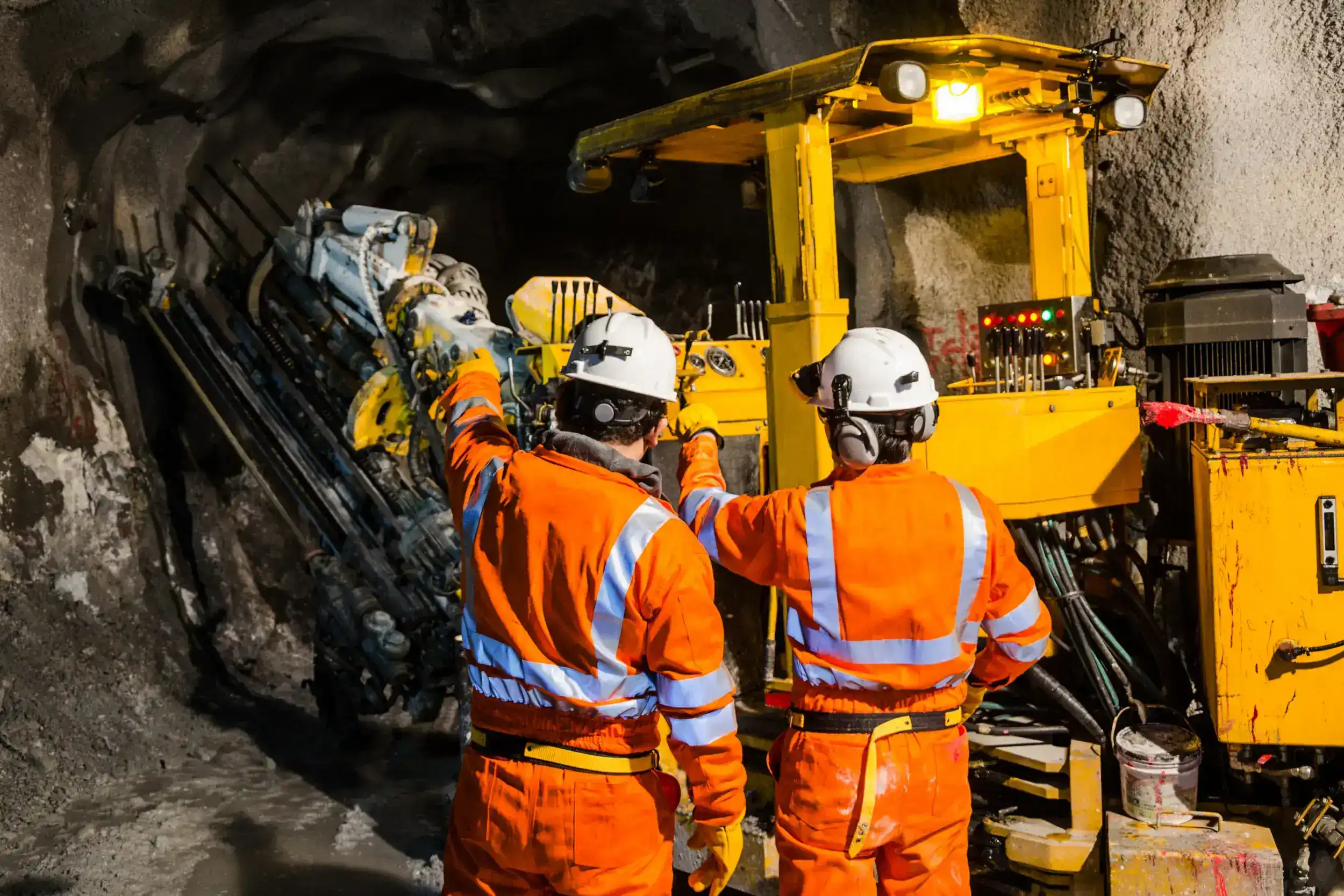
Sandvik has operated at Kamoa-Kakula since 2019, supplying equipment through Jimond Mining Management Company, the Chinese contractor responsible for underground mining at the site. By late 2023, Sandvik's fleet had grown past 100 mobile units, and a further order that November, worth around 26 million dollars, added eight Toro TH663i trucks, five Toro LH621i loaders, and two DL432i longhole production drills, the company's first underground drills on site. Mats Eriksson, president of Sandvik Mining and Rock Solutions, described the repeat business as validation rather than simply a bigger order: "Sandvik's intelligent load and haul equipment has been in operation at Kamoa Kakula since 2019, and I am pleased to see us again selected to supply our highly productive offering."
Epiroc built a parallel, separately negotiated relationship with Kamoa Copper SA across three successive orders since 2022, supplying Minetruck MT65 haulers, Scooptram ST18 loaders, and Boomer face drilling rigs, along with Simba production drilling rigs added in a third order worth almost 60 million euros, Epiroc's largest single order at the time. Every unit shipped under these orders arrives fitted with Epiroc's Rig Control System, hardware built to accept progressive levels of remote control and automation as Kamoa Copper chooses to activate them, rather than requiring a full fleet replacement to add that capability later. Jan Johannes Hough, executive engineering at Kamoa Copper SA, explained the underlying logic plainly: "Kamoa Copper SA chose Epiroc to be one of our strategic partners for the supply of trackless mobile mining equipment due to its proven and matured industry track record."
Running two competing equipment ecosystems side by side is unusual, and it reflects a specific pressure particular to operating in the DRC rather than a template every mine should copy automatically. Import logistics into a landlocked, infrastructure constrained part of Central Africa are difficult enough that concentrating all equipment risk with a single supplier, whose disruption could halt an entire fleet, was judged a bigger threat to production continuity than the added complexity of managing two parallel maintenance and training programs on one site.
The disruption that actually tested that decision
That resilience planning was tested more severely, and for longer, than anyone expected. On May 18, 2025, seismic activity triggered severe flooding at the Kakula underground mine. Independent geotechnical engineers later found that ore blocks earmarked for secondary extraction in the eastern side of the mine, where a high proportion of the orebody had already been removed, began yielding stress in a cascading pattern that overloaded regional support pillars. Backfill placed in the mined out areas offered some mitigation but did not prevent the redistribution of stress. Underground mining was suspended entirely while the company brought in two independent geotechnical firms, Beck Engineering of Australia and Open House Management Solutions of South Africa, to assess the damage.
Western side mining resumed within weeks, but the eastern side, where the flooding was concentrated, required a far longer, staged recovery. Ivanhoe deployed high capacity submersible pumps operating at a combined 2,600 litres per second, and by December 2025 had dewatered roughly 70 percent of the western underground workings and 60 percent of the eastern side, rehabilitating 13.4 kilometres of underground tunnels in the process. More than 2,200 megalitres of water still sat below the reach of that pumping system at year end, water the company said would need to be removed gradually using a further stage of infrastructure rather than all at once.
A recovery that kept getting revised, not simply completed
What makes this story more complicated, and more useful, than a standard comeback narrative is that the guidance attached to that recovery kept moving, and not always upward. Ivanhoe initially withdrew its roughly 600,000 tonne production target for 2026 entirely in the weeks after the flooding, unwilling to commit to a number it could not stand behind. By December 2025, with dewatering progressing, the company issued fresh guidance of 380,000 to 420,000 tonnes for 2026. Then, in an updated technical report released March 31, 2026, that guidance was cut again, down to 290,000 to 330,000 tonnes, as the company acknowledged continuing geotechnical and hydrological constraints and shifted its near term focus toward underground development work rather than aggressive production ramp up. The same report pushed the timeline for the operation returning to more than 500,000 tonnes a year out to 2028, later than earlier plans had assumed.
Actual results through the first half of 2026 tracked that more cautious picture. Kamoa-Kakula produced 71,417 tonnes of copper in the first quarter and 64,328 tonnes in the second, with the Phase 1 and 2 concentrators running in batch mode for part of the period because there simply was not enough ore available from Kakula to run them continuously. Ivanhoe's own executive leadership did not pretend otherwise. Robert Friedland, the company's executive co chair, was careful to frame 2025 and 2026 explicitly as recovery years rather than growth years: "Even during the recovery years of 2025 and 2026, this remarkable copper complex is set to produce approximately 400,000 tonnes of copper, an extraordinary testament to the quality of Kamoa-Kakula's world leading natural endowment."
Where the genuine progress actually shows up
The more solid good news at Kamoa-Kakula in 2026 has come from outside the flooded mine itself. The company's on site copper smelter, designed to be Africa's largest single line blister copper facility, began cold commissioning in September 2025 and produced first anode copper that October, on schedule despite everything happening underground at the same time. By the second quarter of 2026 it was producing tens of thousands of tonnes of anode copper and more than 100,000 tonnes of high strength sulphuric acid as a byproduct, sold to six offtakers at the mine gate. The first shipment of finished copper anodes travelled along the Lobito Railway Corridor to the Atlantic port of Lobito, bound for refining in Europe, a logistics route with real strategic significance for a landlocked copper producer that has historically depended on far longer and more constrained supply corridors.
A 60 megawatt solar facility with battery backup was also under commissioning through the third quarter of 2026, part of the same broader push toward lower carbon, more reliable power that runs through most of the automation and electrification stories in this briefing. President and chief executive Marna Cloete tied the underground recovery effort directly to the people executing it rather than to the equipment involved, crediting "the mining crews, the engineering teams and our long term contractors for their extraordinary efforts in restoring pumping capacity and restarting operations."
What this actually demonstrates for African mining
The lesson Kamoa-Kakula offers is not the clean resilience story it might have been if the 2025 flooding had simply been fixed within a year. It is a more honest and, for that reason, more useful one: even a Tier One deposit, backed by two separate equipment vendors specifically to avoid single points of failure, can still face a year and a half of repeatedly revised guidance when the underlying disruption is geological rather than mechanical. The dual OEM strategy protected Kamoa-Kakula's equipment supply chain exactly as intended, neither Sandvik nor Epiroc's fleet was ever the constraint during the recovery. What it could not protect against was the physical reality of a flooded, seismically disturbed underground mine, a risk category no vendor diversification strategy is designed to solve.
For African mine managers and financiers evaluating their own resilience planning, that distinction matters. Spreading equipment risk across multiple suppliers is a genuinely sound hedge against supply chain disruption in difficult logistics environments, and Kamoa-Kakula's experience through 2025 and 2026 does nothing to undermine that case. But it is a narrower form of insurance than it might appear, one that protects against a specific category of risk, vendor failure, while leaving a mine just as exposed as any single vendor operation to the geotechnical and hydrological risks that come with pushing a high grade underground deposit toward its production limits.