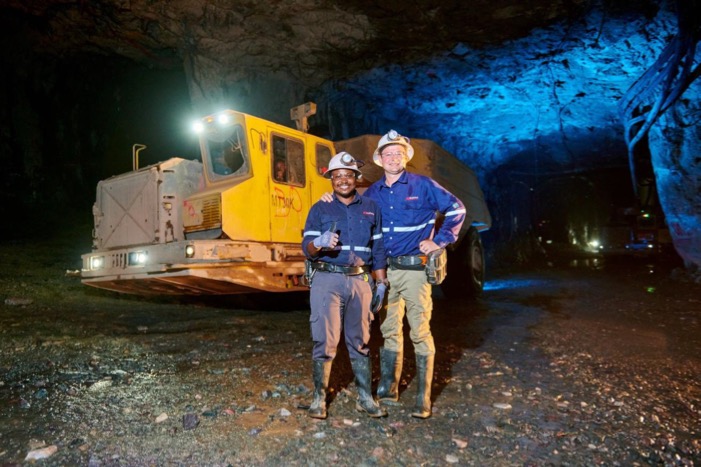
As the mining industry accelerates its digital transformation, autonomous transport is emerging as one of the most significant innovations in modern mining operations. Drawing on years of experience in autonomous vehicle development within confined industrial environments, Scania continues to advance technologies that support safer operations, improved productivity and more resource efficient transport systems.
Mining presents an ideal environment for autonomous transport. Vehicles operate along predictable haul routes between loading points, stockpiles, crushers and processing facilities, allowing autonomous systems to perform repetitive transport tasks with a high degree of precision and consistency.
Experience Built in Demanding Environments
Scania has gained extensive experience through earlier autonomous transport initiatives in confined environments, particularly in mining. These projects have provided valuable insights into how autonomous technologies can operate safely and efficiently under some of the world's most demanding operating conditions.
The knowledge gained continues to shape Scania's approach to autonomous transport, reinforcing the importance of designing systems that integrate seamlessly with broader mining operations rather than functioning as standalone technologies.
Enhancing Safety Across Mining Operations
Safety remains one of the strongest drivers behind the adoption of autonomous transport.
Mining environments expose operators to a range of hazards, including heavy equipment interaction, dust, poor visibility, unstable ground conditions and operator fatigue. By automating repetitive haulage tasks, autonomous transport systems can reduce the need for personnel to work in high risk areas, helping to improve overall site safety.
Scania's autonomous transport concepts incorporate advanced positioning technologies, perception sensors, onboard computing and intelligent decision making systems that enable vehicles to understand their surroundings and navigate predefined routes safely.
Remote monitoring and supervisory control capabilities further reduce the need for on site human presence while maintaining continuous oversight of fleet operations.
Delivering Greater Operational Efficiency
Autonomous transport has the potential to improve operational efficiency by enabling continuous vehicle operation, minimizing unnecessary downtime and delivering consistent driving performance.
Unlike manually operated vehicles, autonomous trucks maintain optimized acceleration, braking and speed profiles throughout each haul cycle. This consistency can improve equipment utilization, reduce fuel consumption and contribute to more predictable production outcomes.
Operational performance ultimately depends on how autonomous systems are designed, integrated and managed within the broader mining operation. When implemented effectively, automation can become an important contributor to improved productivity and resource efficiency.
Data Driven Fleet Optimization
Autonomous vehicles generate large volumes of operational data that can support better decision making across mining operations.
Information relating to vehicle location, equipment health, haul cycles, traffic movements and operating performance enables mine operators to optimize fleet coordination, improve maintenance planning and identify opportunities for continuous operational improvement.
Scania recognizes that data is a critical component of autonomous transport, supporting not only vehicle operation but also long term fleet optimization and asset management.
A Connected Transport Ecosystem
Scania views autonomous transport as part of a much broader operational ecosystem.
Successful deployment requires close integration between autonomous vehicles, digital infrastructure, communications networks, fleet management platforms and mine operating procedures. Vehicles, infrastructure and operational processes must work together to achieve the desired improvements in safety, productivity and sustainability.
This ecosystem approach enables autonomous transport to become an integrated component of intelligent mining operations rather than an isolated technology solution.
Collaboration Driving Innovation
Scania has collaborated with technology partners to explore autonomous transport concepts in demanding mining environments, including successful demonstration projects in Australia.
These initiatives have provided practical experience in applying vehicle automation, fleet coordination and real time monitoring technologies within active mining operations. The lessons learned continue to inform Scania's ongoing development of autonomous transport solutions for confined industrial environments.
Looking Ahead
As mining companies continue investing in digitalization, automation and sustainability, autonomous transport is expected to play an increasingly important role in the future of mining logistics.
Scania remains committed to advancing autonomous transport technologies that help mining operations improve safety, optimize productivity and use resources more efficiently. By combining vehicle intelligence, connected systems and operational expertise, Scania is helping shape the next generation of smart mining transport.
Autonomous transport is not simply about removing the driver. It is about creating a safer, more efficient and better connected mining ecosystem where technology enables people, equipment and operations to perform at their highest potential.