

The Northern Corridor Transit and Transport Coordination Authority (NCTTCA) and the Kenya Transporters Association (KTA) have expanded their cooperation on fuel-efficient trucking and sustainable fleet management, following the signing of a Memorandum of Understanding in Mombasa on 1 October 2026.
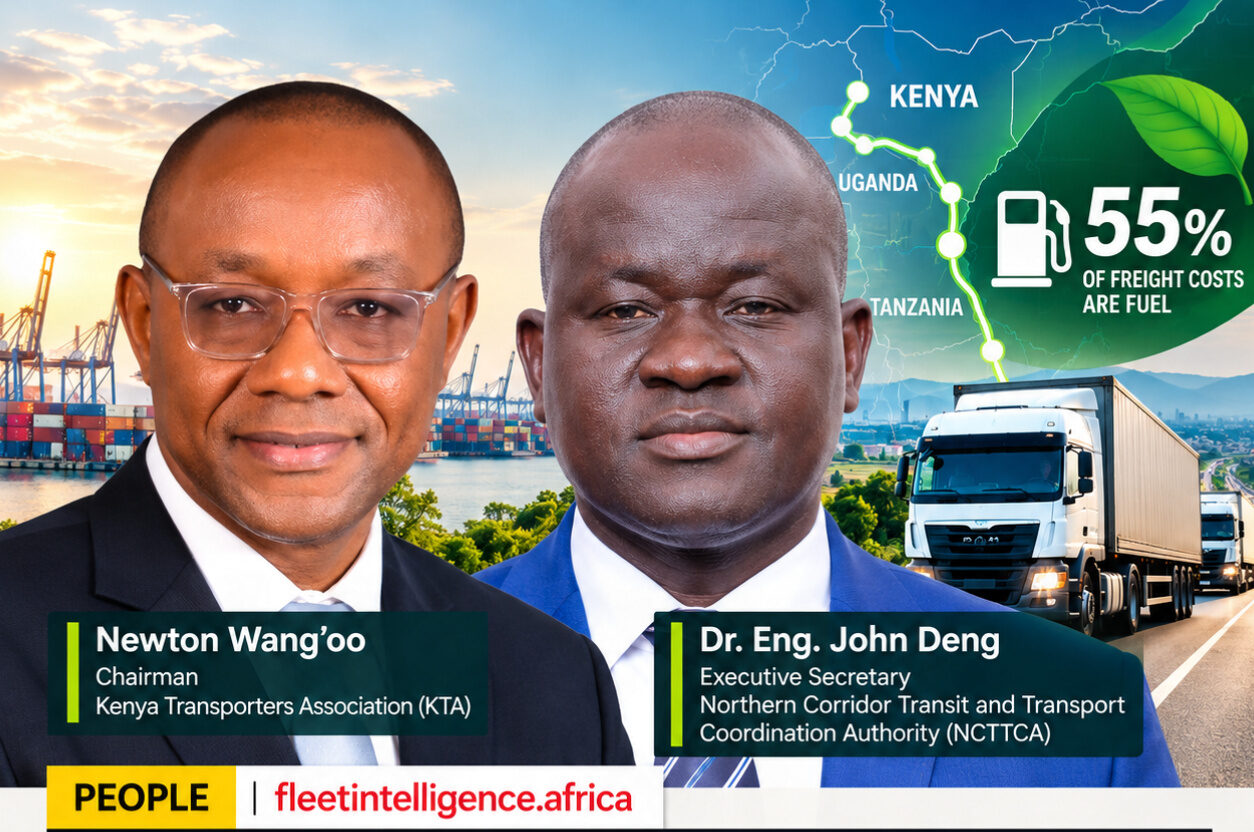
The agreement comes as fuel costs account for an estimated 50–55% of operating expenditure on individual freight journeys, according to KTA Chairman Newton Wang’oo. The partnership will promote eco-driving, improved vehicle maintenance, fuel monitoring and data-driven fleet management among transport companies operating along the Northern Corridor.
The initiative supports the Northern Corridor Green Freight Strategy 2030, which targets a 10% improvement in freight fuel efficiency, a 10% reduction in carbon dioxide emissions intensity and a 12% reduction in particulate matter, black carbon and nitrogen oxide emissions. The strategy also aims to train at least 1,000 heavy commercial vehicle drivers in eco-driving by 2030.
In a related programme supported financially by the Kühne Climate Centre, NCTTCA has partnered with Smart Freight Centre to train transport managers in efficient freight operations, emissions monitoring and fleet management. The latest four-day training programme was reported on 22 October 2026.
NCTTCA Executive Secretary Dr. Eng. John Deng said the programme was intended to embed fuel efficiency into everyday transport operations, including driver induction, vehicle maintenance, fuel monitoring and performance management.
Wang’oo estimated that better driving practices could save transporters up to 150 litres of diesel on a return journey between Mombasa and Kampala, covering approximately 2,300 kilometres.
The initiative comes against the findings of the 2025 Northern Corridor Greenhouse Gas Emissions Baseline Report, which estimates that freight transport along surveyed Kenyan sections of the corridor generates approximately 2.59 million tonnes of carbon dioxide equivalent annually. The Mombasa–Nairobi section accounts for approximately 1.58 million tonnes of that total.