Cummins is advancing the commercialization of hybrid-electric technology for ultra-class mining haul trucks, working with Komatsu to introduce powertrain systems that reduce diesel consumption while allowing mining companies to retain their existing equipment fleets and avoid substantial investment in external charging infrastructure.
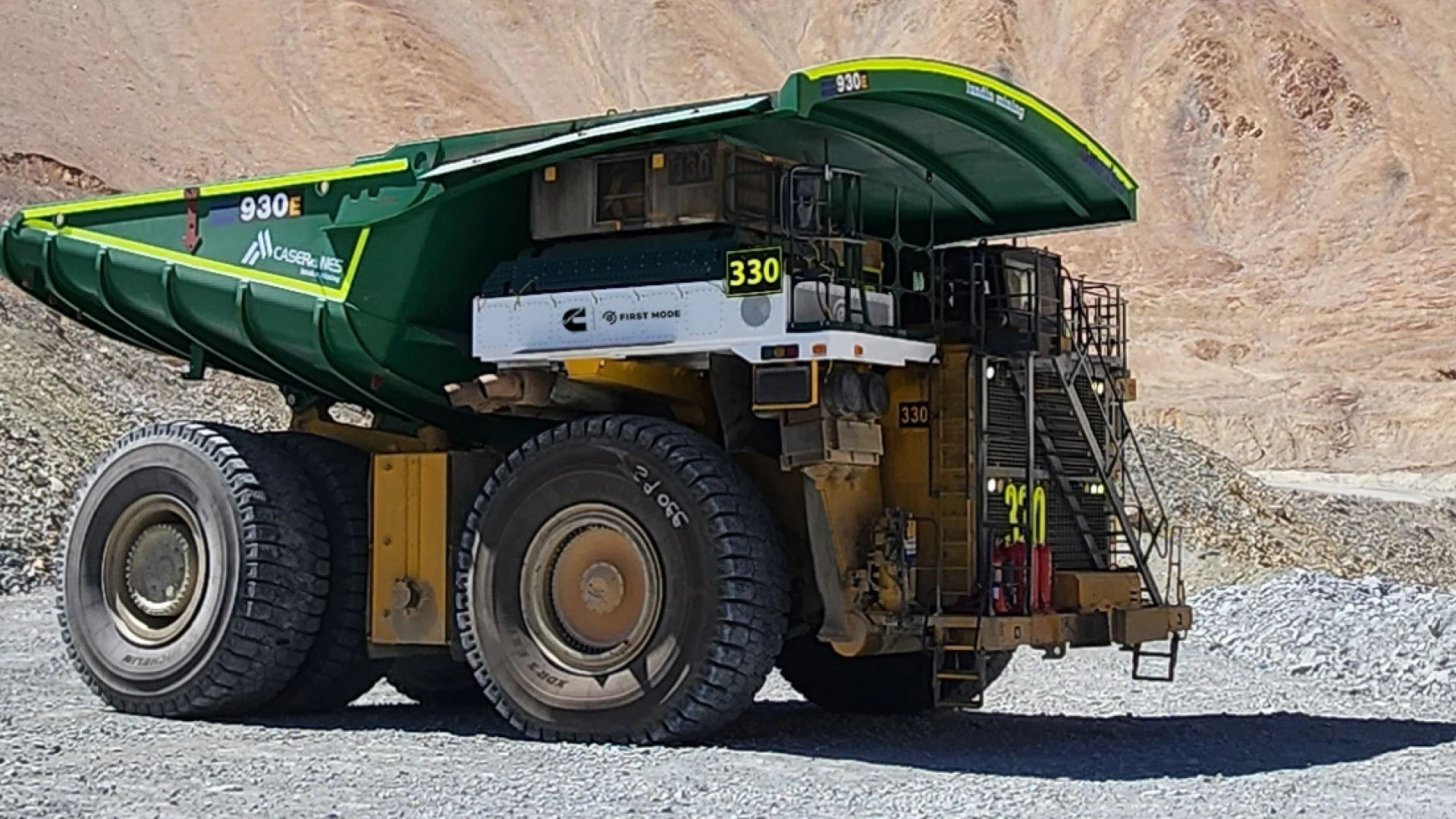
In an update published on 21 October 2026, the American engine manufacturer outlined progress in scaling hybrid haulage technology following field trials involving a Komatsu 930E mining truck at the Caserones copper-molybdenum mine in Chile.
The system combines a Cummins diesel engine with battery technology that captures energy during braking and downhill operations, storing electricity for use when additional power is required. This reduces engine loading and fuel consumption during demanding haul cycles, particularly in open-pit mining operations where trucks regularly navigate steep gradients while transporting heavy loads.
The technology incorporates engineering capabilities acquired from First Mode, whose work in mining equipment electrification included the development of hydrogen-powered haulage systems. Cummins acquired First Mode assets in 2025, strengthening its ability to develop alternative powertrains for heavy industrial machinery.
At Caserones, the hybrid system has been integrated into a Komatsu 930E haul truck with a nominal payload capacity of approximately 272 tonnes. The installation entered field operations in February 2026, providing an opportunity to assess performance under actual mining conditions rather than controlled testing environments.
Cummins reported that operating data from the mine was meeting or exceeding expectations, with results closely reflecting earlier testing at its Washington State proving grounds. The company also identified reduced engine loading as a potential benefit for equipment reliability and maintenance costs.
Earlier development estimates suggested that hybrid technology could reduce fuel consumption and associated emissions by as much as 25–30%, depending on operating conditions. Cummins has not yet disclosed independently verified savings from a large-scale commercial fleet deployment.
The programme is supported by a wider collaboration between Cummins and Komatsu, formalized through a memorandum of understanding in September 2025, alongside the involvement of Wabtec, whose electric-drive technology is used in Komatsu mining equipment.
For mining operators, the principal commercial attraction is the ability to improve the efficiency of existing diesel-electric trucks without replacing entire fleets. Ultra-class haul trucks represent substantial capital investments, and extending their operating life while reducing fuel expenditure could offer an alternative to immediate investment in fully battery-electric equipment.
The approach is particularly relevant to African mining operations, where equipment electrification can be constrained by electricity supply, charging infrastructure, capital requirements and the practical difficulties of introducing new power systems at remote mine sites.
Unlike fully battery-electric haul trucks, hybrid retrofits continue to use diesel engines and do not require dedicated external charging facilities. Their application nevertheless depends on compatibility with existing equipment, mine operating conditions and the financial returns available from reduced fuel consumption.
Cummins is also developing a next-generation hybrid system intended to provide more than one megawatt of supplemental power. The company has outlined projected improvements in haul-cycle performance of 3–9%, with further development work directed towards operations at high elevations.
The manufacturers are addressing maintenance, technician training and spare-parts support as part of preparations for wider deployment, recognizing that commercial adoption will depend on the reliability and serviceability of the technology across geographically dispersed mining operations.
Although hybrid propulsion can be integrated into increasingly automated mining fleets, it remains distinct from Autonomous Haulage Systems, which require separate navigation, control and operational technologies.
Cummins has not announced a confirmed deployment of the new hybrid retrofit system at an African mine, while the Caserones installation remains an important reference for its commercialization plans.
With further product development targeted for 2027, the collaboration positions hybrid retrofits as an intermediate option for mining companies seeking to reduce fuel costs and emissions while preserving investments in existing ultra-class haul truck fleets.