Caterpillar has entered the wide body mining truck segment in Southern Africa, bringing one of the world’s largest mining equipment manufacturers into a category that has been developed and expanded largely by Chinese equipment makers.
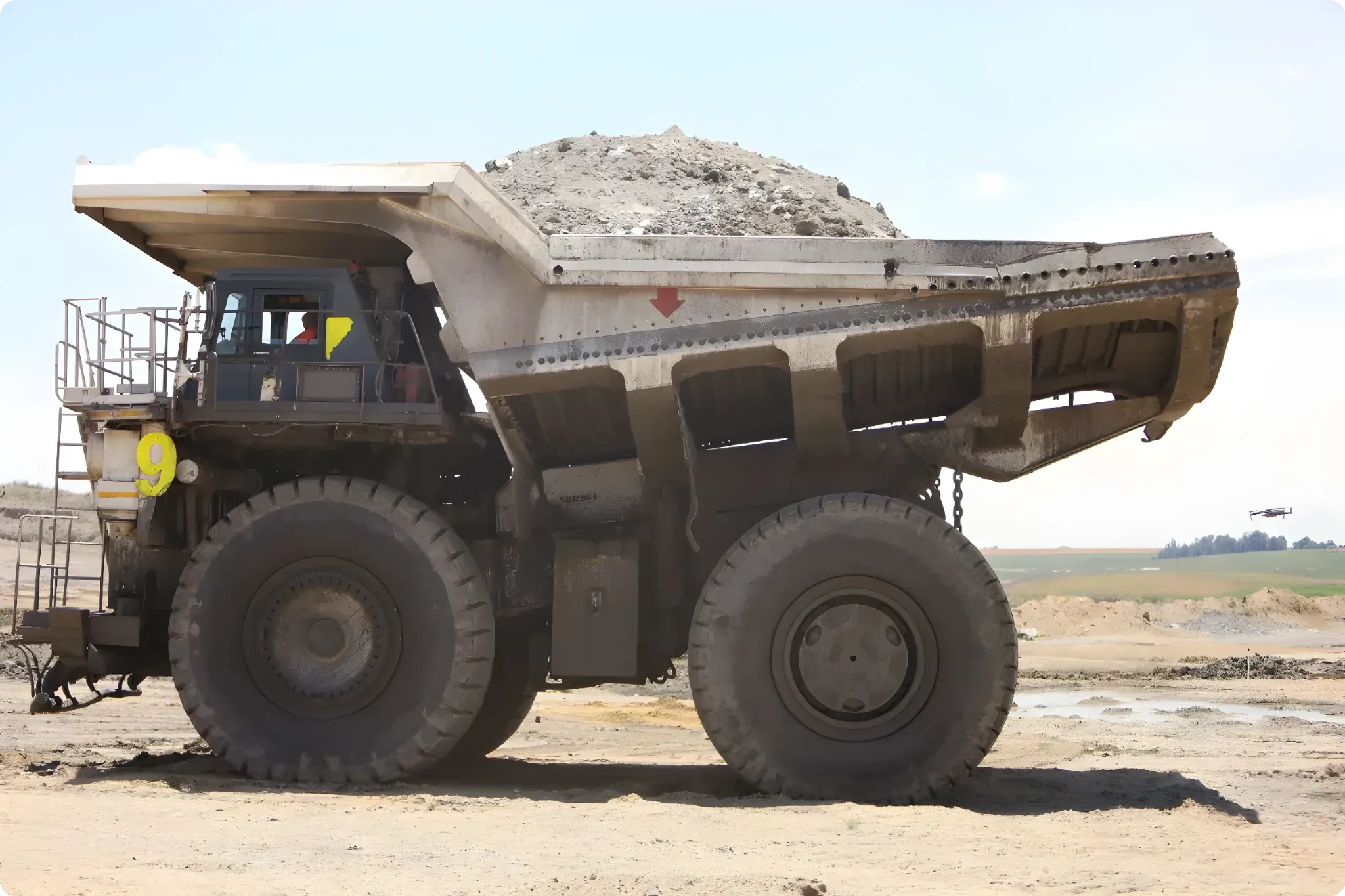
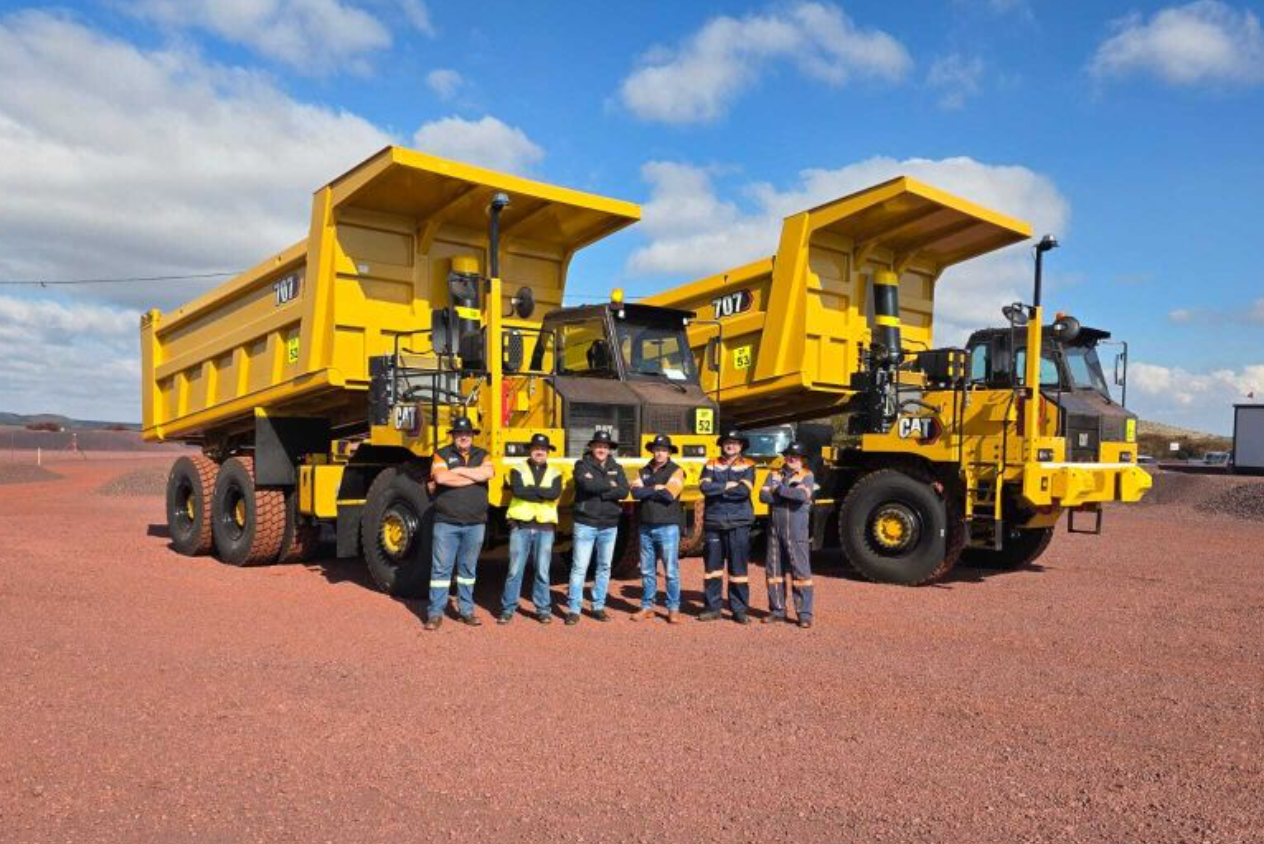 On 10 July 2026, Caterpillar dealer Barloworld Equipment announced the handover of two Cat 707 wide body trucks to a mining customer in South Africa’s Northern Cape. They are the first Cat 707 WBT units sold in Southern Africa, following the truck’s global launch in January 2026.
Although the initial deployment involves only two machines, Caterpillar’s entry is significant because of where the Cat 707 sits in the mining equipment market. Wide body trucks have become increasingly common at mines, quarries and large earthmoving projects, providing an alternative between road-derived construction trucks and the much larger purpose-built rigid haul trucks traditionally associated with major mining operations.
The Cat 707 has a maximum payload of 66 tonnes and can be supplied in standard or heavy duty configurations, with 40 m³ and 42 m³ body options. Caterpillar has built the truck around an integrated powertrain comprising a Cat engine, six speed automatic transmission, proprietary Cat axles and the company’s own electronic controls and wiring systems, mounted on a reinforced chassis.
Two engine configurations are available. A 400 kW Cat C13B meets China Nonroad Stage IV emissions requirements, while a 358 kW C13 is available at an emissions level equivalent to US EPA Tier 3. Both include an engine brake, while an integrated hydraulic retarder can be specified as an option.
The combination of the engine brake, optional hydraulic retarder and service and parking brakes provides three levels of braking and retardation. This is particularly relevant on mine haul roads involving repeated loaded descents, where speed control affects safety, brake wear and hauling cycle times.
Caterpillar has also designed the 707 to work with equipment already widely represented in its mining portfolio. The truck provides suitable pass matching with Cat 986, 988 and 988 XE wheel loaders and Cat 350, 374 and 395 hydraulic excavators.
This gives the 707 a natural route into mines already operating Caterpillar loading equipment. Matching excavator or loader capacity with truck payload can reduce loading passes and improve cycle efficiency, while allowing the manufacturer and dealer to support a larger proportion of the loading and hauling fleet.
The two Northern Cape trucks have been supplied with VisionLink connectivity, providing equipment monitoring and fleet visibility. Barloworld Equipment has also linked the deployment to a customer replacement strategy aligned with PDMI Level 9 readiness requirements.
The digital capability is relevant because mining equipment purchasing increasingly extends beyond the mechanical specification of an individual machine. Utilisation, idle time, operating behaviour, maintenance requirements and equipment availability all contribute to the actual cost of moving material. Connected equipment gives operators more information with which to manage those variables.
The competitive context makes Caterpillar’s move particularly noteworthy.
Wide body mining trucks have developed differently from the traditional rigid haul truck market. Chinese manufacturers have been instrumental in establishing the category, particularly in applications where operators want substantially more payload than a conventional construction truck can provide without moving directly into the cost and infrastructure requirements of much larger mining haul trucks.
That growth has made wide body trucks increasingly visible across emerging mining markets, including Africa. Caterpillar is therefore entering an established category rather than creating a new one.
The Cat 707 also indicates how Caterpillar intends to compete. Rather than positioning the truck solely around payload or acquisition price, the company is bringing the machine into its existing equipment, dealer and aftermarket ecosystem.
That distinction could be important in African mining operations, where equipment economics are strongly influenced by availability, parts supply, field service, component life, fuel consumption, tyre costs and the ability to keep machines operating over long production cycles.
In Southern Africa, Barloworld Equipment already supports a substantial population of Caterpillar machines across mining and other heavy industries. The 707 may be a new product, but it enters the market through an established network of technicians, workshops, parts distribution and customer support.
Caterpillar is also emphasising equipment life. The reinforced chassis and integrated powertrain have been designed with long service life in mind, including the possibility of maintaining the truck through a second lifecycle. Customer Value Agreements can add planned maintenance and other support arrangements to the ownership proposition.
This places lifecycle economics at the centre of the competition. For a mine, the lowest purchase price does not necessarily produce the lowest cost per tonne if differences in availability, maintenance, component replacement or operating efficiency emerge over thousands of working hours.
The 707 does not replace Caterpillar’s conventional rigid mining truck range. It extends the company’s offering into a different operating and payload category. Whether a wide body truck provides the best solution for a particular operation will depend on haul distance, gradients, road conditions, material density, loading equipment, production targets and the mine’s maintenance model.
For African mining companies, Caterpillar’s entry adds another major manufacturer to that calculation. It may also intensify competition in a segment in which Chinese OEMs have demonstrated that mines are willing to consider alternatives to the traditional hierarchy of global mining truck manufacturers.
The broader significance of the Northern Cape deployment will therefore be determined over time. As the first Cat 707s in Southern Africa accumulate operating hours and production data, mines will be able to judge the platform on the measures that ultimately matter: availability, productivity, operating cost and cost per tonne moved.
Caterpillar’s entry nevertheless marks an important stage in the evolution of the wide body truck market. A category that grew largely outside the portfolios of the traditional global mining equipment leaders now has Caterpillar competing within it.