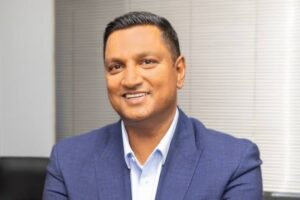
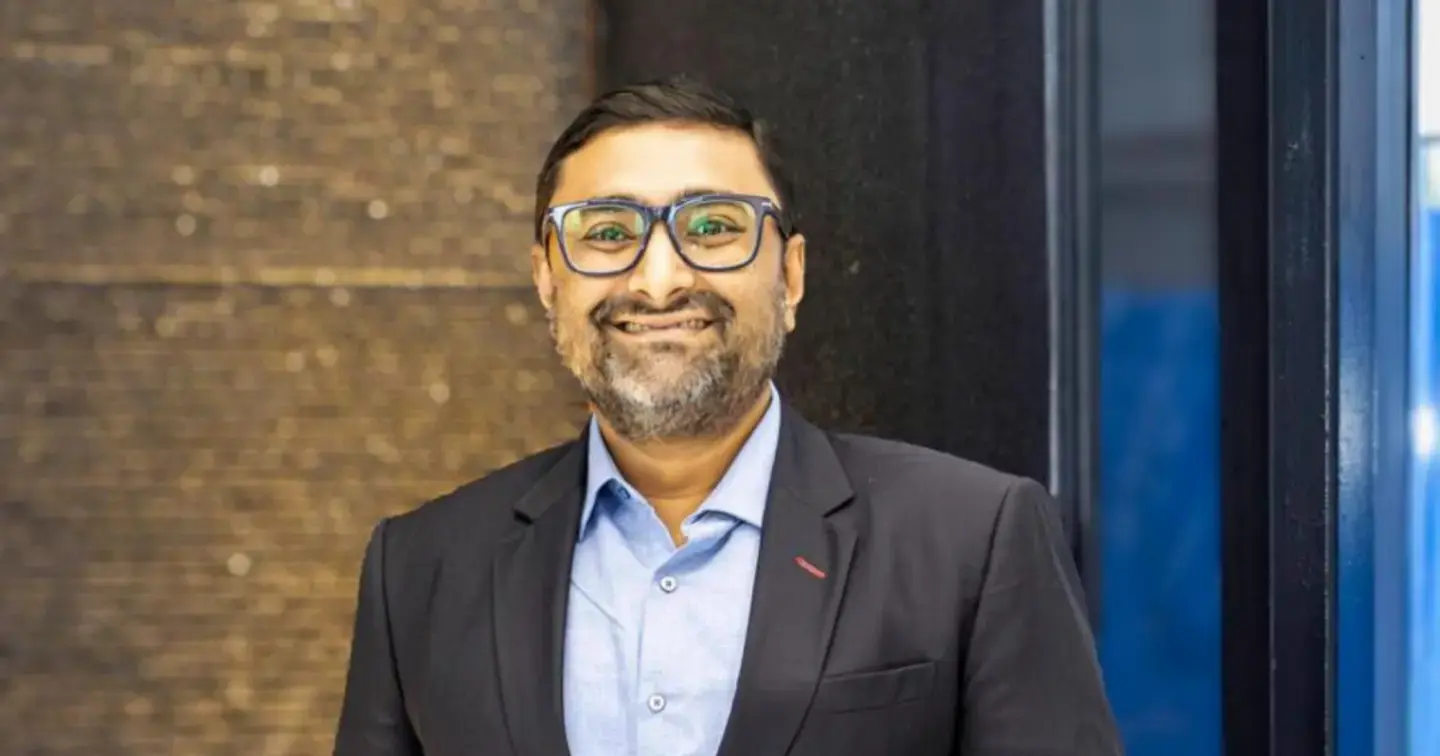
After more than two decades in conventional automotive markets across Asia, Latin America and Africa, the former DAG Industries chief executive is taking charge of Spiro’s mobility business in West and Central Africa. His assignment brings the disciplines of distribution, aftersales and market expansion into a business where motorcycles, batteries and energy infrastructure must scale together.
Why this appointment matters
Choudhuri is moving from the incumbent petrol-motorcycle ecosystem into a battery-swapping platform that must compete on rider economics, uptime, service reach and infrastructure density—not vehicle technology alone.
Auroasish Choudhuri has spent much of his automotive career in markets where selling a motorcycle is only the beginning of the commercial problem. Distribution has to reach customers beyond the main cities. Spare parts have to follow the vehicles. Workshops need trained technicians. Dealers need viable economics. Products have to survive difficult roads, high utilisation and customers whose purchasing decisions are frequently determined by daily income rather than annual salaries.
Those conditions have shaped more than two decades of Choudhuri’s career across Africa, Asia, Central America and South America. They now provide the operating background to his latest assignment.
Spiro has appointed him Managing Director for West and Central Africa, placing him in charge of the company’s mobility business across two regions that include some of its most established markets. He reports to Kaushik Burman, Spiro’s CEO of Mobility, following a wider restructuring of the electric motorcycle company’s leadership.
The appointment is notable because Choudhuri arrives largely from the conventional automotive industry. Most recently he was Chief Executive Officer of DAG Industries across Nigeria and Benin, a business built around Bajaj motorcycles and three-wheelers, local assembly, parts, tyres and aftersales. Before DAG, he spent more than a decade at TVS Motor Company in international and regional leadership roles, including responsibility for Asia and later Latin America. Earlier, he handled international sales and business development at Escorts Limited across markets including the United States, Latin America, West Asia and Sri Lanka.
He now moves from businesses organised around internal-combustion vehicles into one where the motorcycle is only one component of the operating system. For Spiro, each vehicle deployed also creates demand on batteries, swapping infrastructure, charging capacity, digital systems and service operations. A rider’s experience depends on all of them working together.
That makes Choudhuri’s appointment less a break with his past than a test of how far conventional automotive operating disciplines can be applied to a different mobility model.
A career built outside mature automotive markets
Choudhuri’s professional trajectory has been unusually international. Public career records and current appointment reporting place him for more than a decade at TVS Motor Company, one of India’s largest two-wheeler manufacturers. He served as Regional Business Head for Asia before later taking responsibility for Latin America, after earlier country and international assignments.
Those markets are important because motorcycle expansion outside a manufacturer’s home country rarely depends on the product alone. Import rules, distributor quality, taxation, foreign exchange, credit availability, channel margins, spare-parts supply and workshop coverage can determine whether a technically suitable motorcycle succeeds commercially.
In some markets motorcycles are primarily household transport. In others they are productive assets used for passenger transport, delivery services and small business. The same model can therefore occupy a very different economic role from one country to another.
Choudhuri’s work at TVS placed him inside the kind of distribution architecture that has made Indian motorcycles particularly competitive in emerging markets: comparatively affordable vehicles, extensive dealer networks, established parts channels and products designed to tolerate hard everyday use.
His period at Escorts added another layer. His international sales and business-development responsibilities covered a disparate set of markets stretching from the United States to Latin America, West Asia and Sri Lanka. The common task was not geography but market adaptation—how to translate an industrial product, distributor structure and commercial proposition into countries with different customers and operating environments.
That experience is directly relevant to an electric mobility company trying to scale across West and Central Africa. Spiro can standardise technology, batteries and operating systems, but the economics of Nigeria, Benin, Togo and Cameroon are not interchangeable. Nor will prospective markets deeper into Central Africa necessarily resemble those in which the company already operates.
“If you operate in volatile markets, you don’t get to design for perfection. You design for pressure.”
— Auroasish Choudhuri, writing in 2026 about strategy and execution
The DAG years put him inside West Africa’s motorcycle economy
Choudhuri’s most recent chapter is the most directly relevant to Spiro. At DAG Industries, he led operations in Nigeria and Benin and described himself on departure as the first CEO responsible for the two-country business. In his own account, the assignment involved establishing systems, developing a culture of accountability and collaboration, and creating a platform for sustainable growth.
DAG operates in the centre of West Africa’s mass-market mobility economy. It is an authorised distributor of Bajaj motorcycles and three-wheelers and MRF tyres in Nigeria, supplying products including the Boxer motorcycle range, Pulsar and Dominar models and the Bajaj RE three-wheeler. Its proposition extends into genuine parts, lubricants and aftersales service.
The business also has a substantial assembly footprint. DAG says its motorcycle facility has capacity approaching one million units annually, supported by regional offices and warehouses and trained service technicians. During a 2024 visit by Nigeria’s National Automotive Design and Development Council, DAG officials described a plant capable of producing about 2,000 motorcycles a day and about 1,000 tricycles a month, while acknowledging that actual utilisation was being constrained by weaker demand and difficult market conditions.
Those conditions are significant. Nigerian vehicle assemblers have had to operate through foreign-exchange scarcity, high interest rates, weak purchasing power and regulatory restrictions on commercial motorcycles in parts of the country. The plant therefore exposed Choudhuri not only to growth but to the industrial consequences of demand volatility.
By 2025 and 2026, DAG was also pushing deeper into manufacturing systems. The company highlighted automated testing, digitally enabled production processes and IoT-linked checkpoints at its newly commissioned Bajaj three-wheeler manufacturing plant in Ikeja. It also received a Total Productive Maintenance award from Bajaj Auto, recognition tied to reducing losses and waste, improving productivity and embedding continuous-improvement disciplines in the plant.
The relevance to Spiro is broader than manufacturing technique. Choudhuri leaves a business that had to connect assembly, vehicle distribution, parts, service and market development. Spiro is building a similarly interconnected system, except that energy infrastructure now sits inside it as well.
Mobility as an income-producing asset
Choudhuri’s own public writing during his DAG period provides a useful view of how he thinks about the sector. He has described mobility as an economic catalyst and linked domestic assembly, service networks and entrepreneurship to broader industrial development. That perspective is particularly relevant in West Africa, where motorcycles and three-wheelers frequently function as tools of work.
For a commercial rider, a motorcycle is evaluated differently from a leisure vehicle. Purchase price matters, but so do daily fuel expenditure, maintenance frequency, tyre life, downtime, access to parts, financing repayments and the number of revenue-generating trips the vehicle can complete.
DAG’s 2026 partnership with Uber Nigeria and Flexi-Motion around the Bajaj Qute illustrated that widening mobility equation. DAG supplied the vehicle and local automotive expertise, Flexi-Motion supported vehicle access and Uber connected drivers to earning opportunities through its platform. The arrangement sat at the intersection of automotive distribution, finance or access, and digitally organised commercial mobility.
Spiro operates at another point along the same evolution. Its motorcycles are also productive assets, but the company participates much more deeply in the energy and operating infrastructure that determines how those assets are used.
From a vehicle business to a mobility-and-energy system
The most important change in Choudhuri’s new job is structural.
A petrol motorcycle manufacturer can assemble or import a vehicle, distribute it through dealers, support it with parts and workshops, and then rely on an energy network built by somebody else. The petrol station already exists. The motorcycle company does not normally need to finance, position and operate the refuelling infrastructure.
Spiro’s battery-swapping model removes that separation.
Every new concentration of motorcycles creates a corresponding requirement for charged batteries and swapping capacity. Stations need enough batteries to serve riders during peak periods. Battery inventory has to be balanced across the network. Charging equipment has to remain available. Batteries have to be monitored for health and degradation. The stations themselves need sufficient throughput to justify the capital tied up in them.
Vehicle expansion and infrastructure expansion therefore have to be coordinated.
That changes what market development means. Opening sales points without adequate swapping density could leave riders with inconvenient energy access. Building too many swapping sites before sufficient motorcycles are active could produce underutilised infrastructure. The problem is not simply to grow both sides, but to match them geographically and economically.
The operating equation
For a battery-swapping motorcycle business, fleet growth only works when vehicle density, battery availability, station throughput, service capacity and rider economics develop at compatible rates.
For Choudhuri, that means conventional automotive measures such as sales, market share, dealer coverage and workshop productivity sit alongside newer operating metrics: active riders, swaps per motorcycle, swaps per station, battery utilisation, station availability, energy cost per kilometre, rider retention and battery lifecycle.
It also changes the importance of data. A connected swapping platform can see where batteries are being used, how frequently riders swap, which stations are congested, how batteries are ageing and which vehicle populations are accumulating the most kilometres. Used well, that information can guide network expansion and maintenance planning in a way that conventional motorcycle distributors rarely achieve at the same level of granularity.
He joins a much larger Spiro
Choudhuri is not arriving at a pilot-stage electric vehicle company.
Spiro said in September 2026 that it had more than 130,000 electric motorcycles on the road and had completed more than 50 million battery swaps. That represents a rapid increase from February, when it reported more than 80,000 motorcycles, over 2,500 swapping stations and more than 30 million swaps.
The capital base has expanded just as quickly. In February 2026, Spiro announced $50 million in debt funding involving Afreximbank, the Africa Go Green Fund and Nithio. In June it raised $215 million in equity from investors including Impact Fund Denmark and Equitane. A further $55 million from NewTrails Capital took that equity round to $270 million.
At the June closing, Spiro said it was operating across seven African markets and had deployed 100,000 motorcycles and 2,500 smart swapping stations. The company said the new capital would support expansion of its swapping network, industrial footprint and next-generation EV infrastructure.
The sequence matters. Between February and Choudhuri’s September appointment, the company moved from 80,000-plus motorcycles to more than 130,000. At that scale, organisational discipline becomes increasingly important. Small inefficiencies in workshop turnaround, battery allocation, station utilisation or rider retention can become material when repeated across tens of thousands of vehicles.
Spiro is also moving upstream into engineering and industrialisation. In May it acquired Coexlion, a motorcycle engineering and design specialist whose 28-person team has contributed to more than 25 motorcycle programmes spanning chassis development, vehicle integration, reliability engineering, battery systems and industrial design. Spiro also announced its first African R&D centre in Kenya.
In August, it appointed Huy Chieu as Chief Development Officer. Chieu brought nearly three decades of experience across General Motors, VinFast and Hero MotoCorp and was given responsibility for end-to-end product development and operationalisation.
The pattern is clear: Spiro is adding management capability around engineering, manufacturing, energy infrastructure and mobility operations at the same time.
A leadership reset around scale
Choudhuri’s appointment should therefore be read within a broader restructuring of Spiro rather than as an isolated executive hire.
In June, following its $215 million equity raise, Spiro appointed Anant Badjatya as Group CEO. Badjatya came from Indofast Energy, the Indian Oil and SUN Mobility battery-swapping joint venture, where Spiro says he helped build a network of more than 1,800 swapping stations serving about 90,000 vehicles daily.
Kaushik Burman, previously Spiro’s Group CEO, moved to lead the Mobility business. Choudhuri now reports to him.
The structure creates clearer separation between the market-facing mobility operation and the wider industrial and infrastructure platform. Badjatya’s remit spans the broader group, while Burman focuses on mobility services and regional deployment. Choudhuri’s role brings another layer of geographic operating responsibility below that.
For Spiro, this is the sort of management architecture that becomes necessary as a company moves from entrepreneurial market entry into multi-country operating scale. Country operations have to remain locally responsive, while procurement, product standards, battery technology, digital systems and capital allocation benefit from regional or group-level control.
Choudhuri’s international background fits that structure. His career has repeatedly required managing the tension between common automotive systems and local market realities.
The commercial test remains the rider
For all the complexity of batteries and infrastructure, the commercial test remains simple: the motorcycle has to improve the economics of mobility for the person using it.
That is particularly important in West Africa, where professional motorcycle riders often operate on thin daily margins. Fuel is purchased repeatedly. Maintenance removes the motorcycle from revenue-generating work. Financing repayments continue regardless of whether the asset is operating. Unplanned repairs can absorb several days of income.
An electric motorcycle can reduce some of those costs, particularly energy and conventional engine maintenance, but the savings only matter if they are dependable. A rider who saves money per kilometre but loses working hours because batteries are unavailable or repairs take too long has not necessarily gained a better productive asset.
That is where Choudhuri’s conventional two-wheeler background becomes especially relevant. The petrol motorcycle system Spiro is competing with has decades of accumulated advantage: independent mechanics, informal parts traders, familiar repair methods, liquid used-vehicle markets and fuel stations available almost everywhere.
Spiro does not need to reproduce that system exactly, but it does need to match or improve the outcomes that riders value: predictable operating cost, high availability, quick energy access and confidence that the vehicle can be supported.
Aftersales therefore remains fundamental. Electric motorcycles remove oil changes and many engine components, but tyres, brakes, suspension, bearings, frames and electronics still wear. Battery health adds a new maintenance discipline. Diagnostic equipment and software become more important. Technician training shifts rather than disappears.
At 130,000 vehicles, even modest differences in repair turnaround or battery availability become large operational numbers.
West and Central Africa will test whether the model travels
Choudhuri’s title covers a large geography, but the markets within it cannot be treated as a single commercial unit.
Spiro already operates in Benin, Togo, Nigeria and Cameroon. Nigeria offers enormous potential scale but also unusually fragmented motorcycle regulation, with restrictions differing between states and cities. Benin and Togo have smaller populations and different regulatory environments. Cameroon introduces another transport, language and policy context. Expansion further into Central Africa would add additional differences in infrastructure, income, electricity supply and distribution depth.
The regional task therefore combines standardisation with adaptation.
Spiro needs enough commonality in motorcycle platforms, batteries, software, swap-station design and service systems to capture economies of scale. But financing, pricing, partnerships, route targeting and infrastructure density may need to be configured city by city.
Choudhuri has encountered versions of that challenge throughout his career. His TVS years exposed him to multiple Asian and Latin American distribution systems. Escorts added another set of markets. DAG put him inside the day-to-day realities of Nigeria and Benin, including local assembly, supply-chain constraints, aftersales and the economics of commercial mobility.
His own writing suggests he is particularly attentive to constraints. In March 2026, he argued that strategy becomes meaningful only when businesses design around operational pressure rather than assuming ideal conditions. That idea may be more useful at Spiro than a conventional expansion playbook.
The company now has substantial capital, a rapidly growing vehicle base and an expanding engineering organisation. The constraints increasingly move into execution: where to put the next swapping stations, how to keep batteries circulating efficiently, how to retain riders, how to grow without weakening service quality, and how to adapt the model to countries whose transport markets do not behave in the same way.
Those are not questions of whether electric motorcycles can work. Spiro’s existing scale has moved the discussion beyond that point. They are questions about whether the operating system around the motorcycle can remain productive as it becomes larger and more geographically dispersed.
What changes — and what does not
Choudhuri’s move from DAG to Spiro can be described as a transition from internal-combustion motorcycles to electric mobility. Commercially, the distinction is less absolute.
The propulsion system changes. Energy distribution changes substantially. Software and battery management become more important. The operator has to think about infrastructure that a petrol motorcycle company can largely leave to the fuel industry.
But many of the fundamentals remain familiar.
The vehicle has to be affordable. It has to survive the operating environment. Parts and technicians have to be available. Financing has to match customer cash flow. Dealers, agents or service points need viable economics. Downtime has to be controlled. Customers have to believe that the company supporting the vehicle will remain present throughout its working life.
These are conventional automotive disciplines, and Choudhuri has spent much of his career working inside them.
The difference at Spiro is that they now have to be combined with the economics of a distributed energy network.
That is what makes his appointment significant. Spiro has already demonstrated that it can deploy electric motorcycles quickly. Its next phase depends increasingly on whether it can turn that fleet into a durable operating system across multiple African markets.
Choudhuri arrives with experience from the industry that electric motorcycles are trying to displace, including years spent managing the motorcycles, distribution networks, assembly operations and aftersales systems that African riders already understand.
His new task is to help make the alternative work at comparable depth.
Executive and company profile
Current mandate: Managing Director, West and Central Africa, Spiro Mobility. Reports to Kaushik Burman, CEO of Mobility.
Spiro at a glance
| Indicator | Reported figure |
|---|---|
| Electric motorcycles | More than 130,000 |
| Battery swaps completed | More than 50 million |
| June equity round | US$270 million |
| African markets at June closing | Seven |
Career history
| Company | Experience |
|---|---|
| TVS Motor Company | More than a decade in international and regional roles, including Asia and Latin America |
| Escorts Limited | International sales and business development across the United States, Latin America, West Asia and Sri Lanka |
| DAG Industries | First CEO for Nigeria and Benin; automotive distribution, assembly, parts and aftersales |
| Spiro | West and Central African mobility operations during a major expansion of fleet and swapping infrastructure |
DAG operating context
DAG officials cited production capacity of approximately 2,000 motorcycles per day at the Lagos Bajaj plant during a 2024 industry visit. Actual utilisation was reported to be below capacity because of market conditions.