
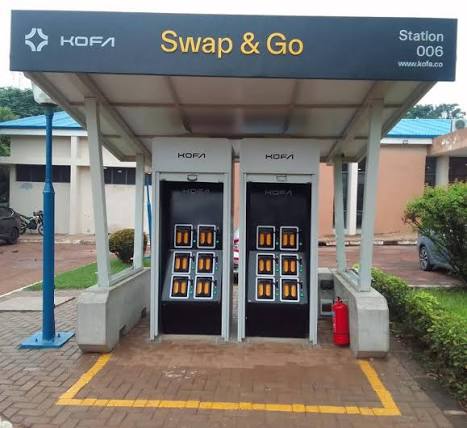
Ghana has officially transitioned from interim guidelines to binding national law for its electric vehicle ecosystem, following the activation of the Energy Commission (Electric Vehicle Charging Stations and Battery Swap Systems) Regulations, 2026. Brought into force on November 10, 2026, by Ghana’s Energy Commission, the legislative instrument establishes strict licensing, grid reliability, safety, and environmental standards. The landmark framework is designed to de-risk the sector and unlock an estimated US$7 billion energy transition investment opportunity across the country.
The enactment of the regulations represents a coordinated effort across Ghana’s energy, finance, and parliamentary institutions. Adwoa Serwaa Bondzie, Acting Executive Secretary of the Energy Commission, spearheaded the regulatory framework, laying the legislative instrument before Parliament in September 2026 before announcing its formal activation on November 10. Speaking on the milestone, Bondzie emphasized that the Commission is now shifting its focus from policy design to active enforcement and grid capacity coordination. Her efforts were backed by John Abdulai Jinapor, Minister for Energy and Green Transition, who had previously previewed the legislation at the Future of Energy 2026 conference in August as a cornerstone of Ghana’s broader green transition mandate.
Key technical and financial alignment also underpinned the rollout. Dr. Theo Acheampong, Technical Advisor to the Minister of Finance, highlighted the regulations’ entry into force as a vital step toward aligning private capital mobilization with Ghana’s long-term 2050 and 2070 electrification goals. Meanwhile, Joyce Caitlyn Ocansey, Programme Coordinator for Drive Electric Programmes at the Energy Commission, led technical stakeholder consultations and collaborated with the Ministry of Transport to harmonize vehicle import standards for electric cars, motorcycles, and tricycles with the new charging rules. Institutional approval and inter-agency collaboration with the Office of the Attorney-General and Parliament’s Subsidiary Legislation Committee were overseen by Prof. John Gartchie Gatsi, Board Chairman of the Energy Commission.
Until this week, pioneering Ghanaian e-mobility operators—including Kofa, Solar Taxi, Wahu, and iJANU—scaled their charging corridors and two- and three-wheeler battery-swap networks under an interim public notice issued by the Energy Commission. While rapid adoption demonstrated strong domestic demand, investors and utilities increasingly called for formal rules to protect the national grid and standardize infrastructure. Issued pursuant to the Energy Commission Act, 1997 (Act 541), the new regulations introduce mandatory licensing and certification requirements across the value chain. Commercial charging station operators, battery-swapping businesses, and equipment suppliers must now secure formal operating licenses from the Energy Commission, while residential and workplace chargers require official registration and must be installed by certified electrical wiring professionals.
To safeguard grid stability as electric vehicle adoption scales, the framework requires operators to obtain prior technical clearance before installation so distribution utilities can reinforce local networks and prevent transformer overloads. In tandem, the Energy Commission and the Ministry of Energy and Green Transition are deploying a centralized digital platform to track station locations, electricity consumption, and real-time outages. Beyond grid management, the law enforces consumer protection and safety by requiring all infrastructure to comply with Ghana’s updated Electrical Wiring Code, alongside strict rules mandating transparent tariff pricing and accessible station information for drivers.
Environmental sustainability is also embedded in the legislation through circular battery lifecycle management rules. Operators are now legally required to manage end-of-life battery collection and recycling by partnering with licensed waste management agents to safely recover, repurpose, or dispose of spent batteries in compliance with Ghana’s Environmental Protection Agency guidelines and the broader ECOWAS battery framework.

