The challenge to Europe’s premium automakers is real, but not yet existential
For much of the past century, luxury cars were one of Europe’s most reliable exports of prestige. Mercedes-Benz defined executive comfort, BMW engineered driving pleasure, and Porsche turned performance into a global aspiration. China, by contrast, was the factory floor: a mass producer of inexpensive vehicles for domestic consumption and export.
That division is breaking down.
A new generation of Chinese carmakers is moving decisively upmarket. Brands such as BYD’s Yangwang and Denza, Geely’s Zeekr, NIO, XPeng and SAIC’s IM Motors are no longer competing on cost alone. They are competing on software-defined vehicles, battery integration, and rapid innovation cycles; areas where EV-native architectures provide structural advantages over legacy European platforms.
The question is no longer whether Chinese firms can build good cars. They already do. The question is whether they can build luxury brands.
China’s automotive industry is undergoing a structural pivot driven by saturation in its domestic EV market and intensifying price competition. As a result, manufacturers are shifting toward higher-margin segments, including premium EVs and export-oriented luxury sub-brands. This is not marginal: China’s premium EV ecosystem now spans multiple groups and is expanding rapidly across both domestic and overseas markets.
The export footprint already reflects this shift. Chinese automakers accounted for roughly 6% of total European passenger car sales in 2025, rising to around 8–10% when including all Chinese-controlled brands such as Volvo-linked volumes. In the electric vehicle segment specifically, their penetration is significantly higher, around 11% of EU EV sales in 2025, with some estimates placing peak monthly market share closer to 10% of total European new car sales at end-2025. MG and BYD are currently the largest contributors, while premium-oriented entrants such as Zeekr, NIO, and XPeng remain smaller but growing rapidly.
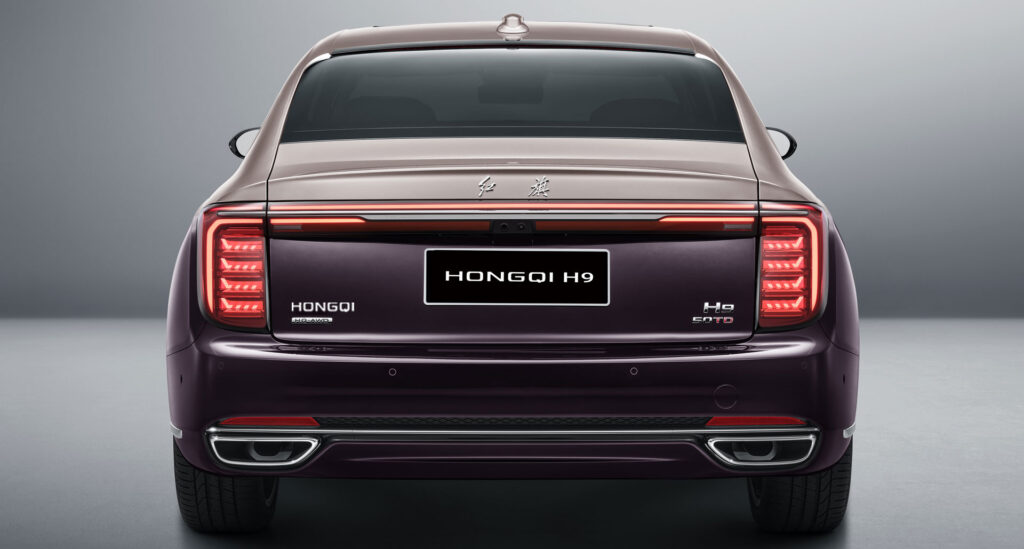
This is still not a luxury revolution. It is a scale-driven expansion into Europe’s lower and mid-premium EV segments, with selective forays into higher-end positioning.
Europe remains the symbolic centre of global automotive luxury, but it is increasingly contested. Chinese EV makers benefit from structural advantages: EV-native platforms, vertically integrated battery supply chains, and software-centric design philosophies. These allow faster iteration cycles, often measured in 18–24 months, compared to multi-year development cycles in traditional European OEMs.
European incumbents remain powerful. BMW, Mercedes-Benz, Audi, and Porsche continue to dominate high-end combustion and hybrid segments, supported by strong brand equity, global service networks, and deep residual-value ecosystems. However, their transition to EVs is uneven. Legacy architecture constraints mean that software integration, battery optimization, and digital user experience often lag behind newer entrants in specific product categories.
This is narrowing the performance gap in measurable ways. In several mid-to-upper EV segments, Chinese vehicles now match or exceed European specifications in infotainment systems, driver-assistance capabilities, and charging efficiency, often at price points 10,000–15,000 euros lower than comparable European models. This has driven rapid adoption in price-sensitive European markets such as the UK, Spain, and Italy, where Chinese brands have reached double-digit share in certain segments.
Yet luxury markets are not primarily defined by specification parity.
The European luxury automotive industry is anchored in intangible assets: heritage, continuity, and emotional association. A Mercedes S-Class is not simply a vehicle; it is a signal shaped by decades of executive use. A Porsche 911 carries lineage as much as performance. These associations translate into pricing power, customer loyalty, and most importantly, residual value stability—an essential pillar of luxury economics.
Chinese brands largely lack this historical depth. Their positioning is technologically credible but culturally underdeveloped in global luxury terms. Even where performance or features match or exceed competitors, brand equity remains in formation.
Instead of attempting to replicate European luxury, Chinese firms are redefining it around a different axis: technological immersion. High-end Chinese EVs increasingly resemble advanced consumer electronics on wheels, with large digital ecosystems, AI-enabled interfaces, and integrated mobility platforms. Brands such as NIO and Zeekr emphasize connectivity, autonomous features, and software updates as core luxury attributes, not supplementary ones.
This reflects a broader shift in China’s domestic market, where rapid technological diffusion has compressed traditional luxury hierarchies. In such an environment, innovation velocity can substitute for heritage—at least in early-stage adoption cycles.
The geographic expansion of Chinese premium vehicles reinforces this dynamic. Europe remains the primary strategic target, both for symbolic validation and market scale. However, regulatory friction, anti-subsidy tariffs (in some cases exceeding 30%), and political sensitivity mean expansion will likely remain gradual rather than explosive.
Other regions are emerging as faster adopters of Chinese luxury EVs. The Middle East, particularly the Gulf states, is becoming a key early premium market due to high disposable income, preference for large SUVs, and lower trade barriers. Southeast Asia is also developing as a technology-forward EV adoption hub, while Latin America is seeing rapid overall Chinese automotive growth, albeit with a more mid-premium skew. Recent export data shows Chinese passenger vehicle shipments rising sharply in both Europe and emerging markets, with some regions recording 400%+ growth rates in specific brand segments such as Geely and BYD exports.
Despite this momentum, structural constraints remain significant.
First, brand equity is still shallow. Luxury automotive positioning typically requires decades of consistency across markets, reinforced by secondary resale markets and generational perception. Chinese brands are attempting to compress this timeline into a single product generation.
Second, aftersales infrastructure outside China remains uneven. Luxury customers expect uniform service quality across geographies, a standard European incumbents have refined over decades.
Third, residual value uncertainty remains a key barrier. In premium automotive markets, perceived depreciation risk can be as influential as purchase price in shaping buying decisions.
Looking ahead, forecasts suggest not displacement but segmentation. By the early 2030s, Chinese luxury EV brands are likely to account for a single-digit to low-double-digit share (approximately 8–12%) of Europe’s EV premium segment, with stronger performance in technology-driven SUVs and digital-first sedans. European manufacturers are expected to retain dominance in high-prestige segments and performance heritage categories, even as they accelerate their own software and electrification strategies.
Tesla remains an additional disruptive force, occupying a hybrid space between mass premium and technology luxury, further complicating the competitive landscape.
The result is not a binary contest between China and Europe, but a structural redefinition of luxury itself.
China’s automotive rise is no longer about scale. It is about category creation. European brands still define luxury as continuity; Chinese brands increasingly define it as capability. Between them lies a consumer market that is gradually renegotiating what premium means in an electric, software-driven era.
Whether Chinese automakers ultimately rival Europe’s luxury incumbents will depend less on engineering convergence and more on whether global consumers are willing to accept that luxury no longer needs history to justify its price.