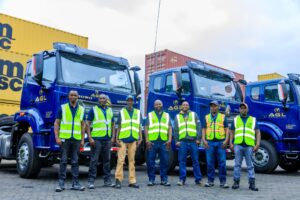
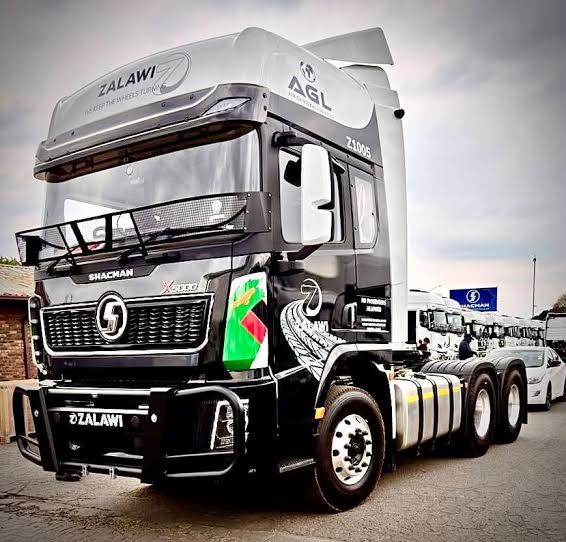
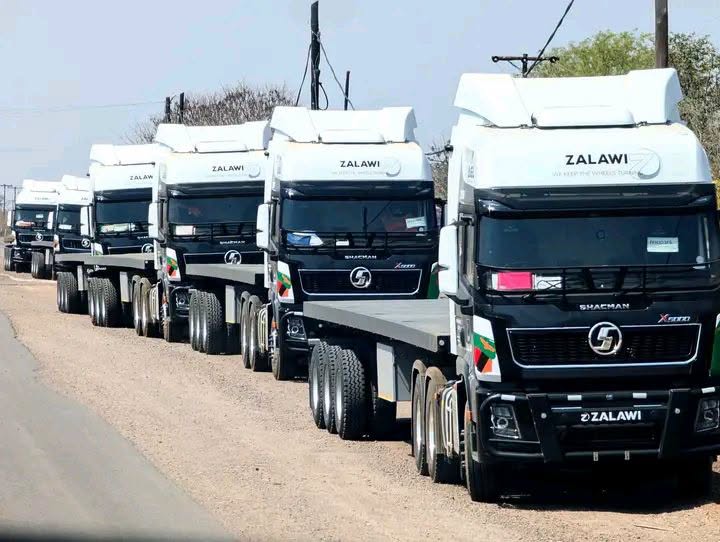
Zambia’s Chingola-based transporter has introduced 50 Shacman X5000 heavy-duty trucks as it expands its cross-border road freight operations within the Africa Global Logistics network.
Zalawi Group has put 50 new Shacman X5000 trucks into service, adding heavy-duty capacity to a transport operation built around the mineral-producing regions of Zambia and the Democratic Republic of Congo (DRC). The acquisition comes as the Copperbelt’s freight operators compete to move mining supplies and exports through Southern Africa’s increasingly contested trade corridors.
The purchase price and financing arrangements have not been made public, and it remains unclear whether all 50 vehicles add capacity or some replace older trucks.
A new fleet investment
The X5000 is a long-distance heavy-duty platform produced by China’s Shaanxi Automobile. Available configurations use Weichai or Cummins engines and manual or automated transmissions, with power ratings ranging from 340 to 560 metric horsepower. Zalawi has not identified the specifications of the vehicles delivered.
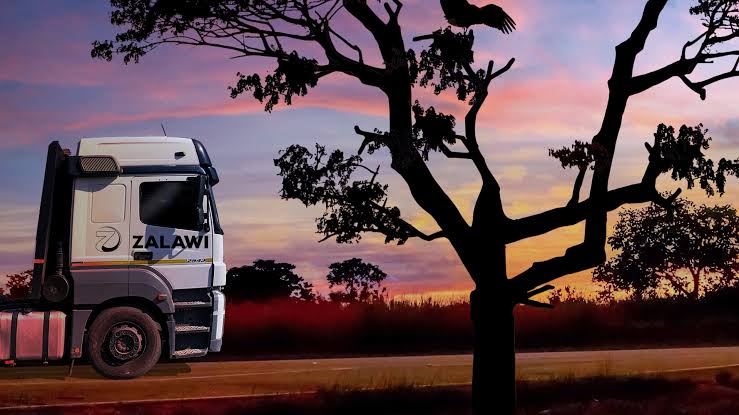
The trucks enter a mixed-brand operation that has included Mercedes-Benz Actros, Scania, MAN and earlier Shacman X3000 models. Zalawi uses heavy-duty tractors with super-link and flatbed semi-trailers to carry mineral products, industrial materials, containers and project cargo. Its latest purchase adds to the presence of Chinese manufacturers in a regional long-haul market where acquisition costs, fuel consumption, workshop support and vehicle availability shape procurement decisions.
Zalawi’s fleet exceeds 500 trucks, although a precise total following the latest delivery is not available.
From Chingola to a global logistics network
Established in 1974, Zalawi developed its business around Zambia’s Copperbelt and the cross-border movement of freight to and from the DRC. The wider group has included Zalawi Haulage, White Horse Carriers, Rainbow Investments and Trailercorp. Its principal operating businesses, Zalawi Haulage and White Horse Carriers, are now part of Africa Global Logistics (AGL), owned by the MSC Group.
AGL emerged from the former Bolloré Africa Logistics following MSC’s acquisition of the business in 2022. The relationship places Zalawi’s established road freight operation alongside a wider network of ports, warehousing, freight forwarding and inland logistics services. For cargo owners moving between the Copperbelt and maritime gateways, the potential advantage is closer coordination between the port and inland stages of a shipment.
The executives behind the operation
Mike Davis
Director · Zalawi HaulageA director since March 2021, Davis previously led Kenya’s Rongai Workshop & Transport as chief executive from 2019 to 2021. An Imperial College London engineering graduate, he brings more than 25 years of East African business and management experience to Zalawi.
Boniface Wambua
Managing Director · Zalawi Whitehorse GroupWambua leads the Zalawi Whitehorse Group after a logistics career spanning Kenya, Mozambique and Zambia. Educated at Kenyatta University, he has managed freight operations across markets where border delays, road capacity and rail connections shape delivery schedules.
Shenford Siamutwa
Operations Manager · Zalawi GroupBefore joining Zalawi, Siamutwa held fleet and transport management roles at J&J Transport Zambia and Alistair Logistics. His experience covers freight movements across Zambia, the DRC, Tanzania and South Africa, with a focus on dispatch, drivers and operating costs.
Freight corridors and cargo
Zalawi’s principal routes link the Copperbelt and the DRC’s mineral-producing provinces with the Port of Durban in South Africa and Walvis Bay in Namibia, with Botswana providing an important transit connection. Northbound traffic includes industrial equipment, chemicals and manufactured goods; outbound cargo includes copper products, cobalt and other commodities.
In 2025, Zalawi established a dedicated fleet at Walvis Bay, expanding its Atlantic corridor presence. The Namibian operation provides an alternative gateway for customers moving cargo into Zambia and neighboring markets, although Zalawi has not disclosed the initial truck allocation or measured changes in transit times.
The group’s cargo portfolio extends from copper cathodes, concentrates and cobalt to mining equipment, steel, cement, containers, palm oil and regulated goods including industrial chemicals and explosives. The latter require specialized handling, driver preparation and compliance procedures; the high value of mineral shipments also places particular demands on cargo security.
Maintenance, tracking and driver training
Zalawi’s operations are supported by facilities in Chingola, Lusaka and Johannesburg. The Chingola headquarters occupies approximately 60,000 square meters, the Lusaka depot 13,000 square meters and the Johannesburg site 20,000 square meters—a combined property area of about 93,000 square meters.
The Johannesburg operation provides major repairs, maintenance, fleet monitoring and driver training. An in-house satellite tracking system transmits vehicle-position updates every ten minutes, supporting round-the-clock journey monitoring. Its training program covers defensive driving, load securement, dangerous goods and emergency procedures.
Capacity on demanding routes
The 50-truck purchase adds equipment to a business whose economics depend on vehicle availability, fuel costs, border processing and the ability to secure paying freight in both directions. Long queues at crossings can keep a truck out of service even when it is mechanically ready to operate; an additional vehicle earns its return only when it can be deployed productively.
The new trucks strengthen Zalawi’s equipment base on the freight corridors connecting the Copperbelt and Katanga with Southern Africa’s ports.