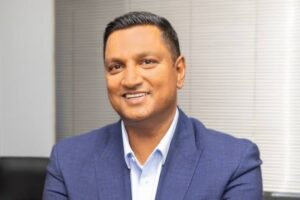
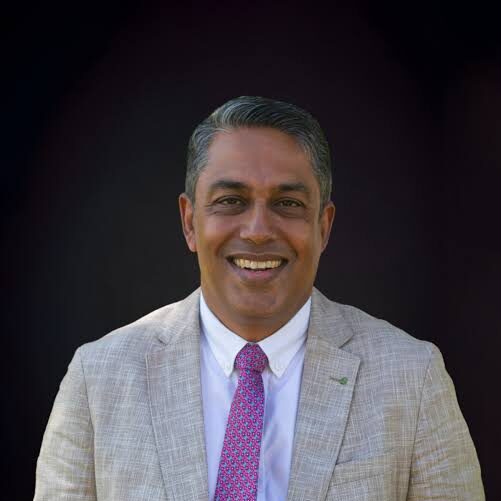
At the helm of one of Mauritius’ oldest passenger transport enterprises, Dr. Sidharth Sharma is navigating a difficult transformation: turning a conventional bus operator into a diversified mobility business while confronting the financial realities of regulated public transport, changing passenger demand and the capital-intensive transition to electric vehicles.
When Dr. Sidharth Sharma assumed the leadership of RHT Holding Ltd in March 2012, the Mauritian transport group was approaching six decades of operations. Its principal business, Rose-Hill Transport, had grown from a modest enterprise established with five buses in 1954 into one of the island nation's longstanding passenger transport operators.
For Sharma, a chartered engineer whose professional background lay in telecommunications research rather than conventional transport management, the challenge extended beyond preserving an established family business. Mauritius' public transport industry was changing, and the economics that had sustained traditional bus operations were becoming increasingly difficult.
Fourteen years later, Sharma is overseeing a transition that could fundamentally alter the company's operating model. RHT is progressively introducing battery-electric buses, pursuing investment in renewable electricity generation and extending its interests into technology-enabled mobility services and other commercial sectors.
The transformation reflects a career in which engineering, corporate management and entrepreneurship have remained closely connected.
From telecommunications to transport
Born in 1974, Sharma grew up around the family enterprise. His grandfather's involvement in Rose-Hill Transport exposed him to the practical demands of operating a passenger transport company from an early age. Yet his initial professional interests took him towards electrical engineering and telecommunications, disciplines that would subsequently influence his approach to managing the business.
He studied at Saint Joseph's College in Mauritius before proceeding to the University of Cape Town, where he obtained a degree in electrical engineering. He later attended the University of Bristol in the United Kingdom, completing postgraduate studies in communications engineering and a doctorate specializing in wireless network planning.
His doctoral research was supported by British Telecom, where he subsequently worked as a research engineer. The experience placed him in an environment concerned with communications infrastructure, network optimization and the commercial application of emerging technologies.
Although Sharma had initially joined RHT in 1996 as a logistics manager, his return to Mauritius in 2005 marked the beginning of a more sustained involvement in the group's technological and operational development.
His engineering background proved particularly relevant to fleet management.
Long before connected vehicle technologies became commonplace among African transport operators, RHT had begun experimenting with satellite-based vehicle tracking. Sharma was involved in introducing GPS fleet management capabilities, allowing the company to improve visibility over vehicle movements and operations.
Further investments followed in electronic systems, inventory management and passenger-facing technologies. By 2013, the company had equipped approximately one-fifth of its buses with wireless internet connectivity.
These developments represented an early attempt to introduce digital capabilities into an industry still heavily dependent on mechanical assets, manual processes and established operating practices.
Taking charge of a changing enterprise
Sharma's appointment as Group Chief Executive Officer and Executive Director on 7 March 2012 placed him in charge of a business whose future would increasingly depend on its ability to adapt to changing transport demand.
Under his leadership, RHT Holding continued developing interests beyond passenger transport, including property, corporate investments and mobility-related services.
The diversification was commercially significant. Conventional bus operations in Mauritius are subject to regulated fares, substantial employment costs and considerable exposure to fuel prices. Operators cannot necessarily recover rising costs through fare adjustments, while fleet replacement requires significant capital expenditure.
For an established operator, diversification offered opportunities to generate income outside the constraints of regulated passenger services.
It also allowed the group to pursue commercial activities built around capabilities accumulated through decades of operating transport assets.
RHT's interests consequently expanded into mobility technology and services, including activities associated with FLO Mobility Services and investments beyond Mauritius.
Ambitions beyond Mauritius
The group's African ambitions have included transport-related ventures in Uganda and discussions surrounding larger urban mobility projects.
Among the most substantial proposals disclosed by RHT was a prospective 600-bus public transport initiative in Cameroon, covering Yaoundé and Douala.
In its 2024 annual report, the company described engagement with Scania, Swedish development finance institution Swedfund and Cameroonian authorities over the proposed undertaking.
The project illustrated the scale of RHT's ambitions beyond its domestic market, although the discussions did not constitute a completed vehicle order or confirmed operational deployment.
Expansion has also exposed the group to commercial setbacks. RHT's 2024 financial disclosures included the full impairment of receivables associated with its Tondeka project, demonstrating the financial risks inherent in developing transport businesses across different African markets.
The difficult economics of passenger transport
At home, Sharma has faced an equally demanding operating environment.
The development of Mauritius' Metro Express light rail network introduced a significant change to the country's passenger transport system. For established bus companies, the new infrastructure altered passenger movements and intensified competition along certain corridors.
In a 2022 interview, Sharma estimated that RHT had lost approximately 40% of its business following the introduction of Metro Express.
His response was to advocate greater integration between transport modes rather than treating rail and buses as competing systems.
He envisaged a network in which rail would serve major passenger corridors, buses would provide connecting services and smaller vehicles would accommodate shorter journeys.
The proposal reflected a broader concern with the efficiency of Mauritius' transport system, particularly the duplication of services and the financial consequences of operating different modes without sufficient coordination.
Rising operating costs compounded the challenge.
In its 2024 financial year, RHT Bus Services reported a loss of MUR 3.3 million, with government-mandated wage adjustments contributing to pressure on operating expenditure.
For Sharma, these financial constraints have made the modernization of the bus fleet both more urgent and more difficult.
Making the case for electric buses
His most consequential undertaking has been the transition towards electric mobility.
RHT introduced its first two electric buses in 2019, gaining early operational experience with battery-electric passenger vehicles before committing to a wider fleet replacement program.
The initial investment allowed the company to examine vehicle performance, energy consumption and the operating costs associated with electric propulsion.
In 2022, Sharma reported that the company's experience suggested electric buses could deliver operating cost savings of between 60% and 80%, despite acquisition prices approximately twice those of comparable diesel vehicles.
The figures reflected RHT's early experience rather than a universal cost comparison. Nevertheless, they helped establish the commercial rationale for a transition that would require substantially higher initial investment.
The strategy subsequently developed into a commitment to replace the company's conventional fleet with electric vehicles by 2030.
RHT engaged PwC to assist in developing a roadmap for the transition, incorporating vehicle acquisition, energy requirements and the financial arrangements necessary to support fleet renewal.
In 2025, the group introduced its NEXTGenEV initiative, outlining plans to acquire approximately 20 electric buses annually and work towards a fleet of around 100 electric vehicles by the end of the decade.
The program began gathering momentum in 2026.
In March, RHT introduced three Higer KLQ 6106 electric buses, each designed to carry approximately 47 passengers. Their deployment brought the company's reported electric fleet to six vehicles at that stage.
Further expansion followed in October with the introduction of two electric minibuses serving the Rose-Hill–Tribeca corridor.
The vehicles formed part of Project Helios, a wider initiative intended to combine fleet electrification with investment in renewable energy infrastructure.
Powering the fleet with renewable energy
Unlike transport operators whose electrification programs concentrate principally on vehicle procurement, RHT has sought to address the source and cost of the electricity required to operate its buses.
The company's plans include developing approximately 5.5 megawatts of solar generation capacity, building on an earlier proposal for a 5 MW photovoltaic installation supported by battery energy storage.
The investment is intended to reduce the group's dependence on purchased electricity and imported fossil fuels while improving the long-term economics of electric bus operations.
For Mauritius, an island economy exposed to international energy prices, the relationship between transport electrification and domestic renewable energy generation carries particular significance.
Electric buses eliminate diesel consumption at the vehicle level, but the economic and environmental benefits of electrification also depend on electricity generation costs, the composition of the power supply and the availability of charging infrastructure.
By linking vehicle replacement with renewable energy investment, Sharma is attempting to address several of these challenges within a single corporate strategy.
The approach is ambitious for a privately operated passenger transport company whose core revenues remain influenced by government regulation.
It also requires substantial financing.
Battery-electric buses command higher acquisition prices than conventional diesel vehicles, while charging facilities, electrical infrastructure and renewable generation assets introduce additional capital requirements.
The transition therefore depends on RHT's ability to secure investment while maintaining existing transport services and meeting its operating obligations.
Sharma has repeatedly called for stronger government support to accelerate electric bus adoption, arguing that the financial pressures confronting conventional operators make the transition difficult without appropriate incentives.
A changing national transport industry
The broader policy environment has begun moving in the same direction.
Mauritius has expanded its electric public transport fleet, with the state-owned National Transport Corporation reporting 106 electric buses in operation by September 2026.
The government has also pursued international partnerships supporting low-carbon transport, including a project backed by the Global Environment Facility and implemented with the United Nations Development Programme.
These developments are gradually changing the competitive environment in which RHT operates.
For Sharma, the challenge is to ensure that the company's electrification program produces a financially sustainable business rather than merely a technologically modern fleet.
Engineering a new generation of expertise
His engineering background continues to influence other aspects of the group's operations.
RHT has invested in developing technical expertise within its workforce, including support for postgraduate training in artificial intelligence and the Internet of Things among members of its technical management team.
Such capabilities are becoming increasingly important as commercial vehicles incorporate connected systems, advanced diagnostics, electronic controls and digital maintenance technologies.
The growing complexity of electric fleets also demands new competencies in electrical engineering, battery management, charging infrastructure and energy systems.
Beyond RHT, Sharma has established a corporate career extending into governance, investment and technology.
A Fellow of the Mauritius Institute of Directors, he has served on several corporate boards, including positions associated with Semaris, Courts Mammouth Mauritius and 4Sight Holdings, the Johannesburg-listed technology group.
His professional activities have also included involvement in urban development initiatives and road safety institutions in Mauritius.
These responsibilities have broadened his exposure to sectors whose development increasingly intersects with transport, including real estate, digital infrastructure and urban planning.
The commercial test ahead
Yet his principal undertaking remains the transformation of the enterprise founded by his family more than seventy years ago.
RHT's history reflects the evolution of Mauritius itself, from an economy in which conventional buses formed a central part of daily mobility to one increasingly investing in rail infrastructure, electric vehicles and integrated transport systems.
Sharma has spent much of his executive career attempting to position the company within that transition.
The early introduction of GPS tracking, investments in mobility technology, corporate diversification and the current electrification program all reflect a willingness to reconsider how a traditional transport company should operate.
But the financial performance of the underlying bus business remains an important qualification to the company's ambitions.
Technological investment cannot, by itself, resolve the consequences of regulated fares, declining passenger revenues, rising employment costs or the financing demands of fleet replacement.
Nor does the introduction of electric vehicles automatically guarantee improved profitability.
For RHT, the commercial test will be whether lower energy and maintenance costs, improved fleet utilization and renewable electricity generation can eventually compensate for the higher capital costs of electrification.
The outcome will have implications beyond Mauritius.
Across Africa, established bus operators face similar questions about aging fleets, fuel dependence, financing constraints and the changing economics of passenger transport.
Sharma's experience illustrates both the possibilities and the limitations of technological transformation within an industry whose financial sustainability depends as much on public policy and passenger demand as on engineering.
By 2030, RHT intends to operate an entirely electric bus fleet, supported by a substantial investment in renewable energy. Whether the company achieves that target will depend on the pace of vehicle acquisition, the availability of financing and the commercial performance of its existing operations.
For Sharma, who began his career studying communications networks before returning to the family transport business, the undertaking represents the most demanding engineering and corporate management challenge of his tenure: replacing the technological foundations of a seventy-year-old enterprise without compromising its ability to continue carrying passengers.