Fleet Intelligence® · Comoros Bus Safety Index 2026
Comoros’ passenger network enters the index without a company winner
Collective taxis and independently operated minibuses carry the islands, while three serious crashes expose the consequences of weak operator identification and a thin public safety record.

The first Comoros Bus Safety Index finds an essential passenger service with almost no visible corporate layer. Travel within Ngazidja, Ndzuwani and Mwali depends largely on shared taxis, taxi-brousses and small minibuses whose owners are seldom named in timetables, official notices, passenger accounts or crash reports.
That structure leaves the 2026 index without a Comoros-headquartered bus company that can be identified, researched and scored with confidence. The outcome reflects the organization of the market. Public reporting consistently describes vehicles and routes, while the businesses responsible for them remain outside view.
A public service carried by small vehicles
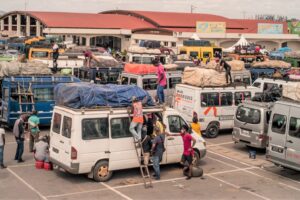
Moroni has no conventional urban bus network. Shared taxis dominate movement in the capital, while collective taxis and minibuses connect towns and villages beyond it. The same pattern is visible on Anjouan and Mohéli: vehicles operate recognizable corridors, but passengers encounter a dispersed group of drivers and owners rather than a fleet brand with published schedules, safety commitments or a central complaints channel.
The distinction matters because a safety index follows responsibility. A vehicle can be traced to a route and an incident, yet a company score also needs a confirmed operator identity, a fleet, an operating base and evidence that management controls the driver and vehicle. Those links could not be established for the public-service vehicles found during the reporting period.
Three crashes define the reporting period
The public record contains several serious events involving buses and minibuses. None of the reports reviewed names a fleet company, preventing the events from being assigned to an operator. Together, they show the severity of the risks facing passengers on the islands’ steep and uneven roads.
A public-service minibus travelling from Moroni towards Didjoni struck a wall on the national road at Dembéni Mbadjini. The vehicle was identifiable; its operating company was not.
A bus carrying passengers left the road and plunged into a ravine at Mlimaju Adda in Nyumakélé, Anjouan. Eleven people died. Contemporary reporting later cited brake failure, making vehicle condition central to the tragedy.
A landslide swept a minibus from the road at Bandrani, Anjouan. Three people were reported dead. The event underlined the exposure of passenger vehicles to unstable slopes and difficult terrain.
A minibus and a bus collided in Washili-Dimani on Ngazidja, leaving four people injured. As in the other cases, reporting did not identify the owners or operating businesses.
Passengers face crowding, uncertain service and difficult roads
Passenger accounts describe an inexpensive but limited system. Collective vehicles leave when seats fill, service becomes harder to find outside the principal towns and journeys are shaped by road condition, congestion and the availability of vehicles. International travel advisories during the period described public transport as limited, unreliable, crowded and at times dangerous.
These accounts support a national assessment, though they cannot establish which proprietor performs better. Social-media posts, travel reports and local news commonly refer to “the minibus,” “the bus” or “the taxi” without a registration number or business name. The absence of durable operator identities makes recurring complaints difficult to group and denies passengers a visible management body to answer them.
Fleet development remains fragmented
No verified company-level delivery of buses or minibuses was found within the reporting period. Vehicle supply appears through individual imports and small ownership units rather than announced fleet acquisitions. No Comoros-headquartered operator published an active fleet count, principal OEM mix, average vehicle age or renewal programme that could be tested against its service footprint.
The vehicles visible in reporting are predominantly older Japanese light-commercial vans adapted or configured for passenger service. Public evidence did not establish consistent inspection results, maintenance intervals, driver training, fatigue controls, speed monitoring or post-incident corrective action at operator level.
No leader or finalist title is awarded in the 2026 Comoros index. The research did not identify a Comoros-headquartered scheduled bus or minibus company with enough verified operator-level information to enter the ranking.
The safety story sits with the whole network
Comoros’ road passenger system keeps communities moving across three islands with modest vehicles and highly localized operations. Its importance is clear in every crowded taxi rank and inter-town minibus. The public record also places a heavy burden on drivers, owners, inspectors and road authorities after a reporting period marked by fatal loss.
The 2026 index records that market honestly. The country has routes, vehicles and passengers, but no sufficiently identifiable corporate operator to carry a safety title. For Comorian passengers, accountability currently rests across a network of individual owners and public authorities rather than with a visible fleet company.