




 The transition from internal combustion engine forklifts to electric material handling equipment continues to gather pace, albeit gradually, as more industrial businesses in East Africa begin adopting battery-powered fleets. While diesel forklifts still dominate warehouses, manufacturing plants and logistics operations, recent deployments indicate that the shift toward electrification is steadily moving from discussion to implementation.
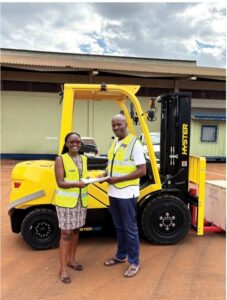
A recent example is the delivery of a Hyster lithium-ion electric forklift by Achelis Uganda Limited to Koudijs Uganda. The electric forklift combines the performance traditionally associated with diesel-powered equipment with the advantages of lithium-ion technology, including lower operating costs, quieter operation, reduced maintenance requirements and zero tailpipe emissions. The investment reflects a growing interest among businesses in improving operational efficiency while reducing their environmental footprint.
Achelis Uganda Limited is part of the Achelis Group, an international industrial equipment and engineering group with a presence across Africa and Europe. The group supplies equipment and technical solutions for sectors including construction, agriculture, mining, logistics, power generation and material handling, representing globally recognized brands while providing aftersales support and technical services.
In Uganda, Achelis has established itself as a supplier of industrial machinery and equipment, serving customers across manufacturing, logistics, agriculture and infrastructure projects. Its portfolio includes material handling solutions from Hyster, one of the world’s leading forklift manufacturers.
Although the electrification of industrial vehicle fleets in Africa remains at an early stage, deployments such as this demonstrate that businesses are increasingly willing to evaluate electric alternatives where operational requirements, total cost of ownership and charging infrastructure align. As lithium-ion technology matures and sustainability targets become more prominent, electric forklifts are expected to become a more common feature of warehouses and production facilities across the region.